Temple Architecture
Thousand Pillar Temple Warangal: History, Religious Significance & Kakatiya Architecture
- Published date
- 6 Oct 2026
- Author
- TempleViews Editorial
- Category
- Temple Architecture
The Thousand Pillar Temple Warangal, also known as the Sri Rudreshwara Swamy Temple, is one of Telangana's best-known historic temples. Located at Hanamkonda, near Warangal, the temple is a remarkable example of Kakatiya architecture and remains an important pilgrimage and heritage destination.
Dedicated primarily to Lord Shiva, the temple is traditionally associated with the Kakatiya ruler Rudra Deva. Its intricate stonework, sculpted pillars, and distinctive layout offer visitors a glimpse into the artistic and religious traditions of medieval Telangana.
Thousand Pillar Temple History
The Thousand Pillar Temple history dates to the 12th century, during the reign of Kakatiya ruler Rudra Deva. The temple is generally dated to around 1163 CE and is traditionally associated with the Kakatiya period of architectural development.
The temple's original religious character was trikutalaya, meaning it was designed around three principal shrines. These were dedicated to Lord Shiva, Lord Vishnu, and Lord Surya.
Over time, the complex suffered damage and underwent conservation efforts. Today, it is valued not only as a place of worship but also as an important monument representing Kakatiya craftsmanship.
Who Built the Thousand Pillar Temple?
The Thousand Pillar Temple was built during the reign of Kakatiya ruler Rudra Deva in the 12th century. It is commonly attributed to his patronage and reflects the architectural sophistication of the Kakatiya period.
Thousand Pillar Temple Architecture
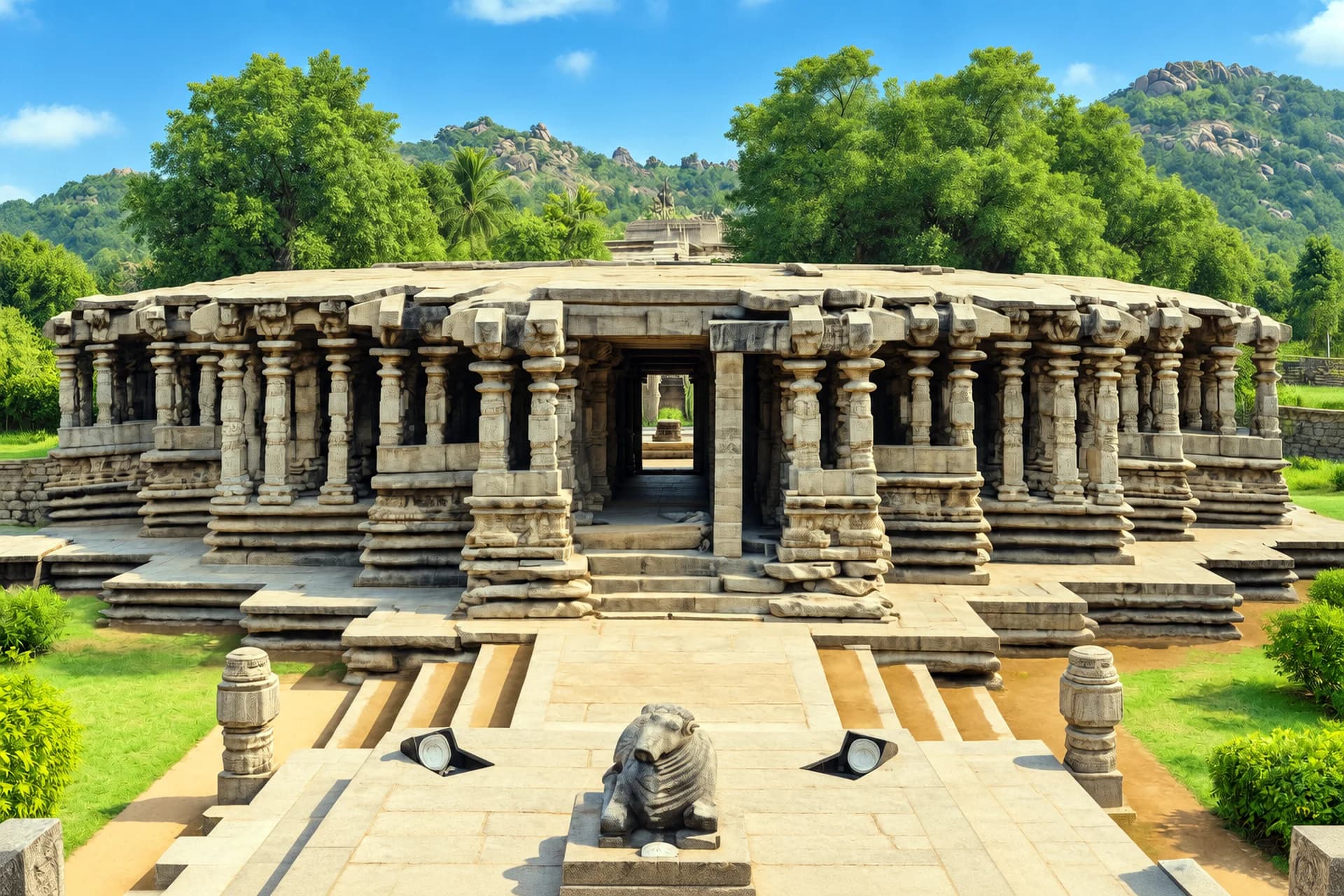
The Thousand Pillar Temple architecture is its greatest attraction for many visitors. Despite its popular name, the temple is not simply a hall containing exactly 1,000 free-standing pillars. The name refers to the temple's extensive and intricate system of pillars and structural elements.
The complex demonstrates several characteristics of Kakatiya craftsmanship:
-
Intricately carved stone pillars
-
Decorative sculptures and motifs
-
A distinctive star-shaped architectural plan
-
Detailed ceilings and stone ornamentation
-
A large Nandi sculpture facing the Shiva shrine
-
Carefully balanced structural proportions
The temple was constructed primarily using stone, and its sculptural details reveal the skill of medieval artisans.
The Thousand Pillar Temple is best understood as an architectural and religious complex rather than simply a monument of pillars.
Religious Significance of Thousand Pillar Temple
For devotees, the temple is an important Lord Shiva Temple in Warangal and is associated with Sri Rudreshwara Swamy, a form of Shiva.
The original trinity of Shiva, Vishnu, and Surya is particularly significant because it reflects a broader tradition of accommodating different forms of Hindu worship within a single temple complex.
Why Is It Important to Devotees?
Visitors come to the temple for several reasons:
-
Shiva worship and darshan
-
Appreciation of Kakatiya heritage
-
Religious festivals and rituals
-
Architectural and cultural interest
-
A peaceful pilgrimage experience near Warangal
For families and first-time visitors, combining the temple with other heritage attractions around Warangal and Hanamkonda can make for a rewarding day trip.
Visiting Thousand Pillar Temple Warangal
Before visiting the Thousand Pillar Temple in Hanamkonda, check current temple timings and local restrictions, as schedules may change during festivals or special occasions.
A few practical tips:
-
Dress respectfully when visiting the shrine.
-
Visit earlier in the day if you prefer a quieter experience.
-
Carry water, particularly during Telangana's hotter months.
-
If photography is important to you, confirm the current rules at the temple.
-
Consider combining your visit with Warangal Fort and other nearby heritage attractions.
Conclusion
The Thousand Pillar Temple, Warangal, is a beautiful blend of devotion, history, and Kakatiya craftsmanship. Dedicated to Lord Shiva and associated with Sri Rudreshwara Swamy, the temple continues to attract devotees, families, and heritage enthusiasts. Its intricate carvings, distinctive architecture, and spiritual atmosphere make it a memorable place to visit. Templeviews helps you discover the stories and significance behind India’s remarkable temples.
Frequently Asked Questions
The Thousand Pillar Temple was built during the reign of Kakatiya ruler Rudra Deva, around the 12th century.
The temple is generally dated to around 1163 CE, during the Kakatiya period.
The temple is located in Hanamkonda, Telangana, near the city of Warangal.
The name refers to the temple's extensive arrangement of pillars and intricate structural elements. It does not necessarily mean there are exactly 1,000 individually numbered pillars.