Temple History & Heritage
Kanaka Durga Temple History: The Legend of the Goddess on Indrakeeladri Hill
- Published date
- 29 Oct 2026
- Author
- The Temple Pilgrim
- Category
- Temple History & Heritage
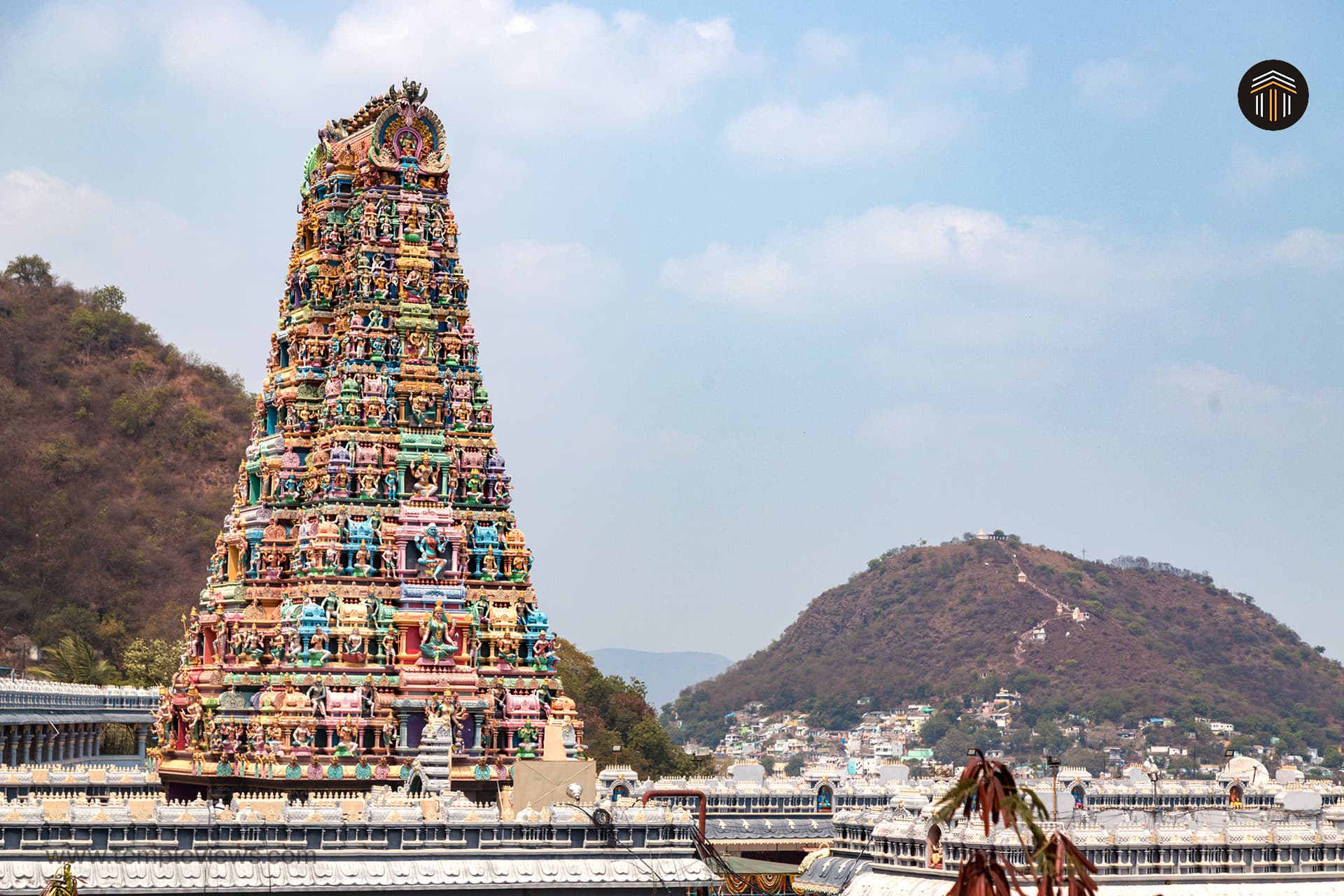
The Kanaka Durga Temple in Vijayawada, Andhra Pradesh, is one of the most revered Hindu pilgrimage destinations in South India. Situated on the sacred Indrakeeladri Hill overlooking the Krishna River, this ancient shrine is dedicated to Goddess Kanaka Durga, worshipped as a powerful manifestation of divine feminine energy.
As Sri Durga Malleswara Swamy Varla Devasthanam, the temple holds a special place in the spiritual and cultural life of Vijayawada. Its legends connect Goddess Durga with the protection of the world, the victory of good over evil, and the blessings sought by generations of devotees.
Understanding the Kanaka Durga Temple history offers more than a glimpse into an ancient place of worship. It reveals the mythology, traditions, and religious practices that continue to make this sacred hill a destination for pilgrims, families, and spiritual seekers.
The History of Kanaka Durga Temple
The history of Kanaka Durga Temple is closely connected with the sacred Indrakeeladri Hill and the religious traditions of Andhra Pradesh. According to temple tradition, Goddess Kanaka Durga resides on this hill as a self-manifested, or Swayambhu, deity. Devotees believe her divine presence makes Indrakeeladri a sacred place of spiritual power and protection.
Located overlooking the Krishna River in Vijayawada, the temple holds a special place in the region's religious and cultural heritage. Although ancient legends describe the Goddess's divine presence, they should be distinguished from the documented history of the present temple structures. The continuing worship of Kanakadurgamma reflects the enduring faith and devotion of generations of pilgrims.
From the Epic, legend states that the third Pandava, Arjuna, performed severe penance (tapas) to Lord Shiva on Indrakeeladri and received the Pashupata Astra here. The city of Vijayawada is said to derive its name from Arjuna's victory (Vijaya). Also Adi Shankaracharya later visited the shrine, installed the sacred Sri Chakra, and standardized Vedic worship.
The Legend of Goddess Kanaka Durga on Indrakeeladri Hill
The most celebrated story associated with the temple explains how Goddess Durga came to reside on Indrakeeladri.
The Story of Sage Keela and Goddess Durga
According to local temple mythology, a devoted figure named Keela performed intense penance to please Goddess Durga. Pleased with his devotion, the Goddess granted him a boon.
Keela requested that the Goddess remain on him and bless devotees who came seeking her grace. His wish was fulfilled, and the hill became known as Indrakeeladri, a name associated with the sacred legend of Keela.
This story explains why the hill itself is considered holy. For devotees, the journey to the shrine is not simply a visit to a temple building; it is an opportunity to approach the place believed to be the Goddess's chosen abode.
The Victory of Durga Over Mahishasura
Another important part of the Kanaka Durga Temple history is the legend of Goddess Durga's victory over Mahishasura, the demon who threatened the world.
In Hindu mythology, Mahishasura received powerful boons and became a source of suffering for the gods and other beings. To restore balance, the divine powers united to manifest Goddess Durga.
Armed with divine weapons, she fought Mahishasura and ultimately defeated him. Her victory represents the triumph of righteousness over evil and the power of divine protection.
Temple traditions associate the Goddess with the form of Mahishasura Mardini, the destroyer of Mahishasura. This connection makes the shrine especially meaningful to devotees who pray for courage, strength, and the ability to overcome difficulties.
Why Is She Called Kanaka Durga?
The word Kanaka means gold, while Durga refers to the Goddess. The name Kanaka Durga is traditionally associated with the Goddess's radiant, golden appearance and divine splendour.
For devotees, this name conveys more than physical radiance. It also evokes abundance, auspiciousness, grace, and the protective power of the Goddess. She is lovingly addressed as Kanakadurgamma or Durgamma by many Telugu-speaking devotees.
Spiritual Significance of Kanaka Durga Temple
The Kanaka Durga Temple significance comes from its association with Shakti, the divine feminine power believed to sustain and protect the universe.
Goddess Durga as a Symbol of Strength
Goddess Durga represents courage, protection, determination, and the victory of good over evil. Devotees visit the temple to seek her blessings during important life events, family milestones, and periods of uncertainty.
Many worshippers offer prayers for peace, prosperity, education, health, and success. These are expressions of faith rather than guaranteed outcomes, and the deeper spiritual message of the shrine is the cultivation of courage, devotion, and inner strength.
The Sacred Presence of Malleswara Swamy
The temple is associated with both Goddess Kanaka Durgamma and Lord Malleswara Swamy, a form of Lord Shiva. Their worship connects the shrine with two central traditions in Hindu spirituality: Shakti worship and Shaiva worship.
According to the temple's official description, the Goddess occupies a distinctive position on the right side of Malleswara Swamy. This arrangement is regarded as a special feature of Indrakeeladri and reflects the prominence of Shakti in the temple's religious tradition.
The Sacred Sri Chakra
The Sri Chakra is a sacred geometric representation associated with Sri Vidya and the worship of the Divine Mother. It symbolises the relationship between the divine, the universe, and spiritual realisation.
References to the Sri Chakra form part of the religious traditions associated with the Kanaka Durga shrine. Devotees interested in Shakti worship may find this aspect particularly meaningful.
Navaratri and Other Important Festivals
The temple is especially famous for its grand celebrations during Navaratri and Dasara, when large numbers of devotees visit Indrakeeladri.
Navaratri Celebrations
Navaratri is a nine-night festival dedicated to the worship of the Goddess. At Kanaka Durga Temple, the celebrations include special rituals, prayers, and daily alankarams, or ceremonial decorations of the deity.
The Goddess is presented in different forms during the festival, highlighting the many dimensions of divine feminine power. The celebrations conclude around Vijayadashami, which commemorates the victory of good over evil.
Because of the festival's popularity, waiting times and crowd-management arrangements can differ considerably from ordinary days. Pilgrims should check official announcements before travelling.
Other Religious Observances
Other festivals and observances contribute to the temple's annual religious calendar. Depending on the temple schedule, devotees may participate in special pujas, abhishekams, archana, and other sevas.
The temple also has a tradition of seasonal and devotional celebrations. Since dates, rituals, and booking arrangements may change each year, the official Devasthanam website is the best source for current information.
What Makes Kanaka Durga Temple Unique?
Several features distinguish this shrine from other Durga temples in India.
-
Sacred hilltop location: The temple stands on Indrakeeladri Hill, overlooking the Krishna River.
-
A Swayambhu tradition: Devotees believe the Goddess is self-manifested at this sacred site.
-
Worship of Durga and Shiva: The association with Malleswara Swamy gives the temple an important place in both Shakti and Shaiva traditions.
-
Distinctive alankarams: The Goddess is ceremonially adorned in different forms, particularly during Navaratri.
-
Regional importance: Kanaka Durga is widely revered as the presiding deity of Vijayawada and is an important part of Andhra Pradesh's religious heritage.
Together, these features make the Kanaka Durga Temple Vijayawada an important destination for religious tourism as well as personal pilgrimage.
How to Visit Kanaka Durga Temple in Vijayawada
If you are planning a visit, a little preparation can make your pilgrimage more comfortable.
Location and Transport
The temple is located on Indrakeeladri Hill in Vijayawada, NTR District, Andhra Pradesh.
Visitors can reach the city through the following transport options:
-
By air: Vijayawada Airport at Gannavaram is the nearest airport.
-
By train: Vijayawada Junction connects the city with major railway routes.
-
By road: State and private buses, taxis, and other road transport connect Vijayawada with nearby towns and cities.
From the city, visitors can continue to the temple using local transport and follow the current access arrangements announced by the temple authorities.
Best Time to Visit
You can visit the temple year-round, but the ideal time depends on your priorities.
-
For festival experiences: Visit during Navaratri or Dasara, keeping in mind that crowds can be exceptionally heavy.
-
For a quieter pilgrimage: Consider an ordinary weekday outside major festival periods.
-
For sightseeing: Choose a time that allows you to appreciate the hilltop setting and views of the Krishna River.
-
Massive Annadanam (Free Meals): The temple runs a massive, high-capacity free dining facility (Annadanam Sadanam) that feeds thousands of pilgrims daily (and up to over a lakh during peak festival days).
- Accessibility & Transport: Accessible by climbing the traditional stairs or via ropeway and lift services built for elderly visitors and children.
- Dress Code: A strict traditional dress code is enforced (dhotis/kurtas for men; sarees, salwar kameez, or lehengas for women; western attire like jeans and t-shirts is restricted).
- Digital & Queue Facilities: Online booking for special sevas and darshan tickets is managed via the Official Kanaka Durga Temple Portal.
Useful Tips for Devotees
Before travelling, keep these practical points in mind:
-
Check current darshan timings, ticket options, and seva availability through the official temple website.
-
Arrive early during weekends and festival periods if your schedule permits.
-
Follow the temple's dress, photography, queue, and security rules.
-
Allow extra time for traffic, parking, walking, and crowd-control arrangements.
-
Families travelling with older adults or young children should confirm available transport and accessibility arrangements in advance.
For updated visitor information, consult the official Sri Durga Malleswara Swamy Varla Devasthanam website. Templeviews also encourages pilgrims to verify practical details before beginning their journey.
Conclusion
The Kanaka Durga Temple history is a story of faith, divine protection, and the enduring power of sacred tradition. From the legend of Keela and the holiness of Indrakeeladri Hill to Goddess Durga's victory over Mahishasura, the temple's mythology continues to inspire devotees across generations.
Its association with Lord Malleswara Swamy, distinctive rituals, and vibrant Navaratri celebrations make it an essential part of Andhra Pradesh's spiritual heritage. Whether you visit to offer prayers, learn about Hindu mythology, or explore Vijayawada's cultural landmarks, the shrine offers an opportunity to connect with a living religious tradition.
For devotees and travellers, Kanaka Durgamma Temple offers a meaningful experience of devotion, history, and spirituality. Explore Kanaka Durga Temple history, its significance, and the legends of Indrakeeladri Hill with Templeviews, your guide to India's sacred temples and pilgrimage destinations.
Frequently Asked Questions
The temple's history combines ancient religious traditions with local legends about Goddess Durga's divine presence on Indrakeeladri Hill. The Goddess is worshipped as Swayambhu, and the shrine is closely associated with her victory over Mahishasura.
The temple is famous for its hilltop location, its association with Goddess Durga, and its grand Navaratri and Dasara celebrations. It is one of Vijayawada's most important pilgrimage destinations.
The temple is situated on Indrakeeladri Hill in Vijayawada, NTR District, Andhra Pradesh, overlooking the Krishna River.
Sri Durga Malleswara Swamy Varla Devasthanam is the temple's official name. It reflects the worship of Goddess Kanaka Durga alongside Lord Malleswara Swamy, a form of Lord Shiva.
You can visit the temple year-round. Navaratri is especially significant for devotees, while weekdays outside major festivals may offer a less crowded experience.