Pilgrimage & Travel
Madurai Meenakshi Temple: A Traveler's Guide to the Heart of Tamil Nadu
- Published date
- 14 Oct 2026
- Author
- The Temple Pilgrim
- Category
- Pilgrimage & Travel
The Madurai Meenakshi Temple stands at the center of the old city, and the streets around it are laid out in concentric squares. Nearly everything in Madurai, from markets to festivals, revolves around it. Whether you come for darshan, for the architecture, or simply to see a living temple at work, this guide from Templeviews covers what you need to know before you go.
Quick Facts About Meenakshi Amman Temple Madurai
-
Location: Madurai, Tamil Nadu, India, on the south bank of the Vaigai River
-
Presiding deities: Goddess Meenakshi (Parvati) and Lord Sundareswarar (Shiva)
-
Architecture: Dravidian style, with colorful gopurams and pillared halls
-
Major festival: Chithirai Festival (April-May), including Meenakshi Thirukalyanam
-
Admission: Entry to the temple is generally free; special darshan tickets are optional
Who Is Worshipped Here?
Unlike most Shiva temples, the Goddess takes the lead here. Meenakshi, a form of Goddess Parvati, is regarded as the ruling queen of Madurai, and her shrine is traditionally visited first. Lord Sundareswarar, the form of Shiva who married her, has his own shrine in the same complex.
According to the legend, Meenakshi was born to a Pandya king, grew into a warrior queen, and married Shiva when he arrived in Madurai. This story is the basis of the temple's biggest festival.
Madurai Meenakshi Temple History
Pandya Roots
Madurai was the capital of the Pandya kings, and Pandya dynasty history is closely tied to this temple. The shrine is very old: Tamil literature refers to Madurai and its Shiva worship, and tradition credits early Pandya rulers with building the original temple.
Destruction and Rebuilding
The temple you see today is mostly later construction. It suffered damage during the invasions of the early 14th century, and much of it was rebuilt under the Nayak rulers from the 16th century onward. Rulers such as Vishwanatha Nayak and Thirumalai Nayak are associated with the expansion of its halls, towers, and corridors. Dates and attributions for individual structures vary between sources, so treat precise years as approximate.
Architecture: What to Look For
Gopurams and the Raja Gopuram
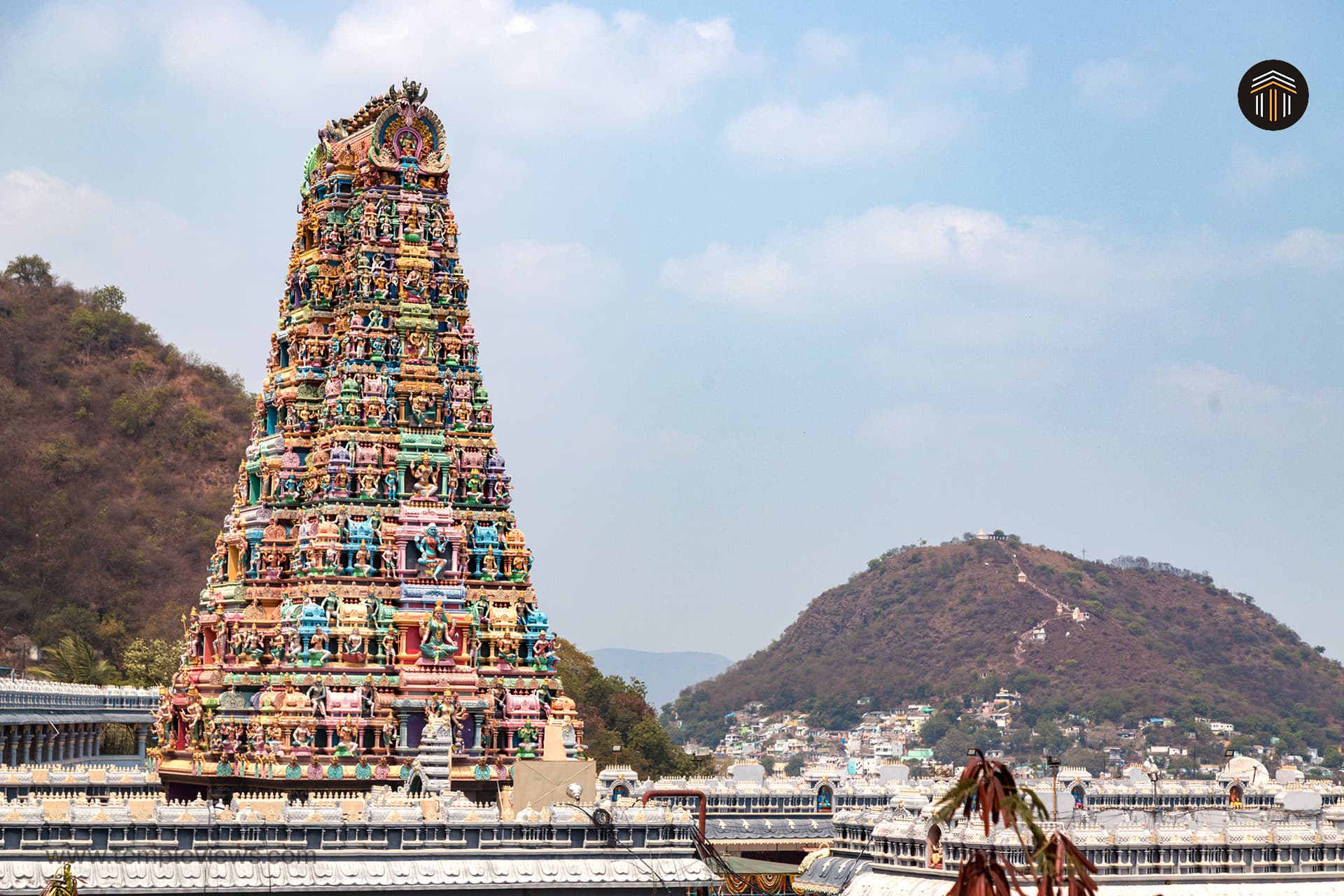
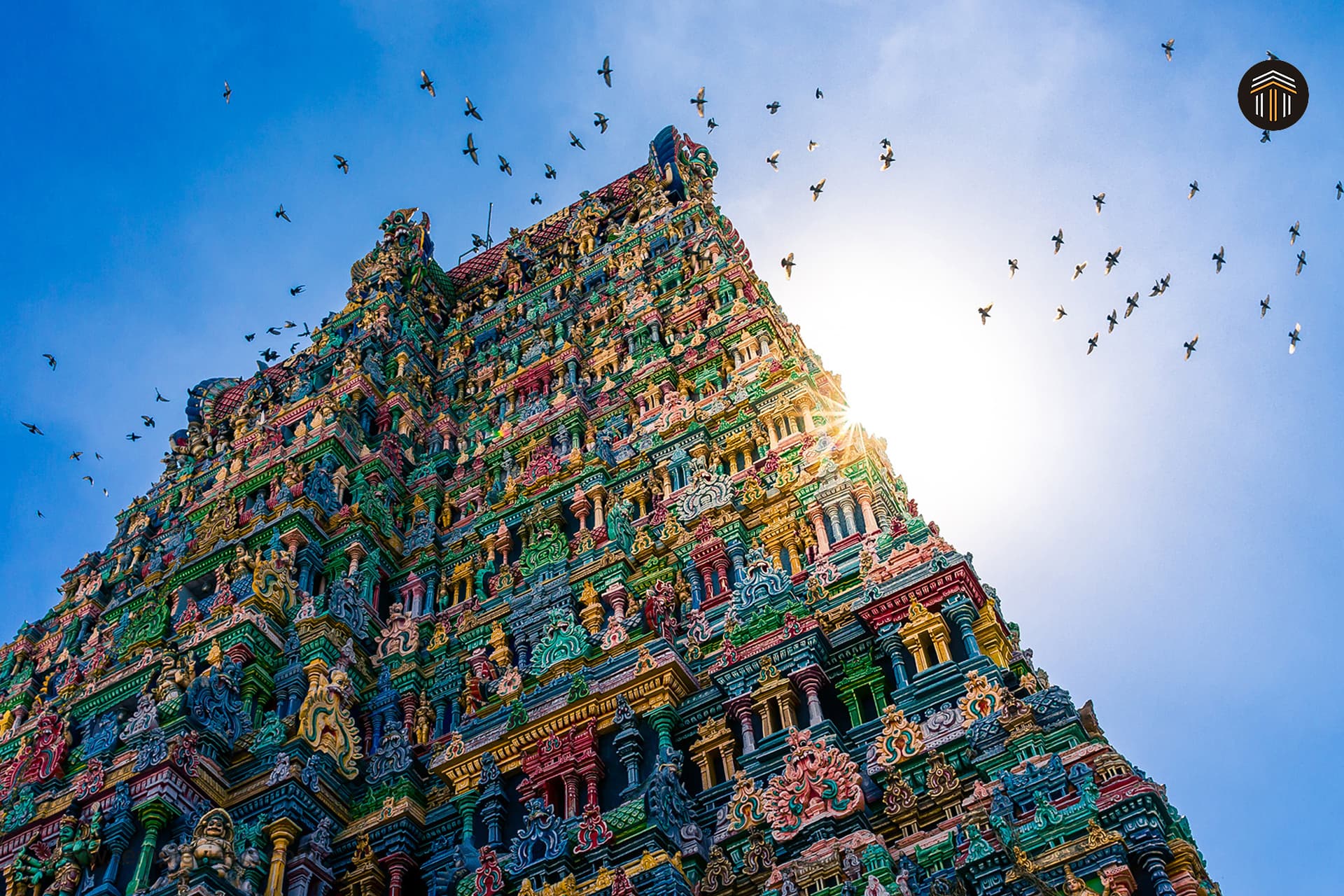
The complex is usually described as having 14 gopurams (gateway towers), covered in thousands of painted stucco figures of gods, animals, and mythical beings. The southern tower is the tallest, at roughly 50 meters. If you want to compare gopuram styles, look at the four outer towers first, then the smaller inner ones.
The towers are repainted periodically, so their colors can look different from older photographs.
Hall of a Thousand Pillars (Ayirakkal Mandapam)
The Hall of a Thousand Pillars was built in the 16th century and is known for its carved pillars, each with its own sculpted detail. The pillar count is commonly given as 985 rather than exactly 1,000. The hall now houses a temple art museum with bronzes, sculptures, and paintings, which is a good stop if you want historical context.
Golden Lotus Tank (Potramarai Kulam)
The Golden Lotus Tank sits inside the complex and is a calm spot between shrines. Devotees often pause here before or after darshan. Access to the water itself is restricted, so you will usually view it from the surrounding corridor.
Meenakshi Thirukalyanam and the Chithirai Festival
The Madurai Meenakshi Temple festival that draws the largest crowds is the Chithirai Festival, held in the Tamil month of Chithirai (roughly April-May).
-
Meenakshi Thirukalyanam is the ceremonial wedding of Meenakshi and Sundareswarar, held during the festival.
-
Processions with decorated chariots move through the four Masi streets around the temple.
-
Lord Kallazhagar travels from the Alagar Koil temple to the Vaigai River, a tradition linked to the wedding story.
Other festivals include Navaratri, with its display of golu dolls, and the Teppam (float) festival at Vandiyur Mariamman Teppakulam. Exact dates follow the Tamil calendar and change every year, so confirm them closer to your trip.
Darshan: Practical Tips
Nothing replaces checking the latest rules, which the temple administration can change. These are the points that usually matter most.
-
Timings: The temple generally opens in the early morning, closes around midday, and reopens in the late afternoon until about 10 PM. Confirm the current schedule before you go.
-
Queues: Free darshan lines can be long on Fridays, weekends, festival days, and holidays. Paid special darshan tickets shorten the wait.
-
Dress code: Modest, traditional clothing is expected. Cover shoulders and knees; sarees, salwar kameez, dhoti, or kurta-pajama are common choices.
-
Footwear: Leave footwear outside; the stone floors can get hot at midday.
-
Phones and cameras: Mobile phones and cameras are generally restricted inside. Use the cloakroom or locker facilities near the entrances.
-
Evening ceremony: The nightly Palliyarai ritual, in which Sundareswarar is ceremonially taken to Meenakshi's chamber, is worth attending if you can.
A useful tip is to arrive early in the morning or later in the evening. The corridors are cooler, the light is better for taking in the carvings, and the crowd is typically smaller.
Best Time to Visit Madurai Meenakshi Temple
-
October to March: The most comfortable weather. This is the best window for families and first-time visitors.
-
April to May: Hot, but this is when the Chithirai Festival takes place. Choose this period only if you want the festival atmosphere and can handle large crowds and heat.
-
Weekday mornings: Typically the quietest time of day and week.
How to Reach the Temple
-
By air: Madurai Airport is about 12 km from the temple. Taxis and app cabs are available.
-
By train: Madurai Junction is roughly 2 km away. Autos and cabs run frequently.
-
By road: Madurai is well connected by bus to Chennai, Coimbatore, Trichy, Rameswaram, and Kanyakumari.
Distances are approximate, so check your map app on the day.
Places to Visit Nearby
-
Thirumalai Nayak Palace: An Indo-Saracenic palace from the 17th century.
-
Gandhi Memorial Museum: A museum on the freedom struggle.
-
Vandiyur Mariamman Teppakulam: A large temple tank.
-
Thiruparankundram Murugan Temple: A rock-cut temple a short drive away.
-
Alagar Koil: A Vishnu temple in the foothills, connected to the Chithirai Festival.
For food, try local specialties like jigarthanda and kari dosai. The area around the temple also has shops for sarees, brass lamps, and flower garlands.
Final Thoughts
The Madurai Meenakshi Temple rewards visitors who slow down: the carvings take time to notice, and the rituals make more sense once you know the legends behind them. Go early, dress appropriately, and verify timings and ticket details before you travel. For more temple guides like this, visit Templeviews.
Stand before Goddess Meenakshi with a calm mind, and the city noise fades. Whether you come to pray or simply to watch, the chants, lamps, and quiet devotion here have a way of staying with you long after you leave.
Frequently Asked Questions
It is famous for its Dravidian architecture, its tall gopurams, the Hall of a Thousand Pillars, and the annual Meenakshi Thirukalyanam during the Chithirai Festival. It is also one of the best-known temples dedicated to Goddess Meenakshi.
The main deities are Goddess Meenakshi (Parvati) and Lord Sundareswarar (Shiva). Meenakshi is traditionally given prominence.
Plan two to three hours on a normal day, longer during festivals or weekends. If you also want to see the museum and the Hall of a Thousand Pillars, allow more time.
The cooler months from October to March are the most comfortable. Visit in April-May if you want to experience the Chithirai Festival.
Yes, modest traditional clothing is expected. Because rules can be updated, check the temple's official notices before your visit.