Gods & Deities
Lord Ganesha: The Deity of Wisdom, Beginnings and Removing Obstacles
- Published date
- 15 Sept 2026
- Author
- TempleViews Editorial
- Category
- Gods & Deities
Lord Ganesha, also known as Ganesh, Ganapati, and Vinayaka, is one of Hinduism's most widely worshipped deities. Recognised by his elephant head and human body, Ganesha is traditionally associated with wisdom, auspicious beginnings, and removing obstacles.
Across India, devotees worship Ganesha before important occasions such as weddings, religious ceremonies, examinations, journeys, business ventures, and the beginning of new work. Museums and cultural institutions also describe Ganesha as a deity invoked at the beginning of important undertakings.
His popularity is especially visible during Ganesh Chaturthi, when families and communities install Ganesha images, perform prayers, and celebrate with music, offerings, and cultural activities.
Who Is Lord Ganesha?
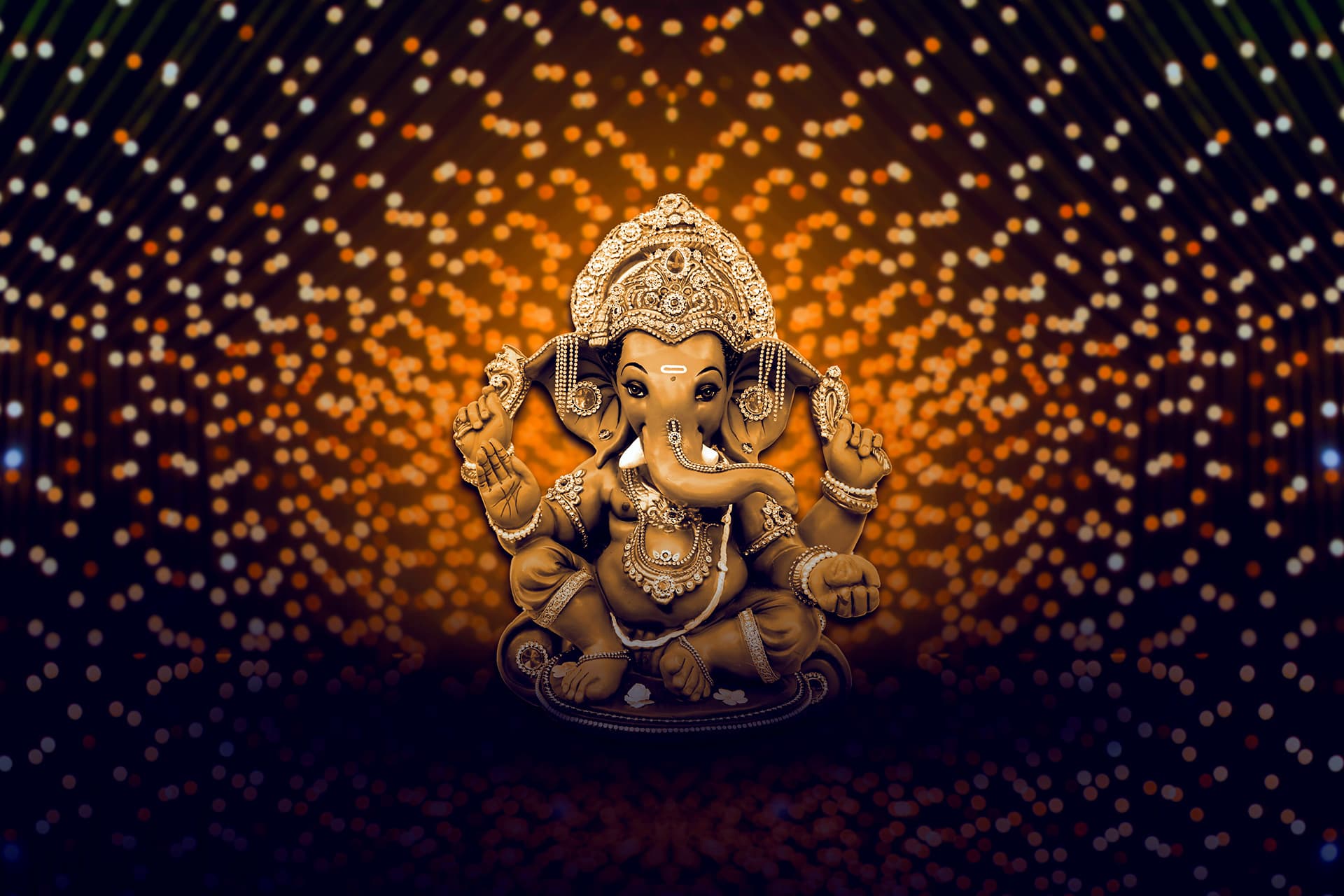
Lord Ganesha is traditionally regarded as the son of Lord Shiva and Goddess Parvati. He is generally depicted with an elephant head, a large belly, four arms in many common representations, and a mouse or rat as his vehicle (vahana).
Ganesha is known by many names, including:
-
Ganesha – commonly understood as Lord or leader of the ganas
-
Ganapati – another widely used name meaning leader of the ganas
-
Vinayaka – an important traditional name for Ganesha
-
Vighnaharta – a name associated with the removal of obstacles
-
Ekadanta – traditionally associated with his single tusk
-
Lambodara – referring to his large or prominent belly
The exact symbolism associated with these forms can vary across Hindu traditions, texts, and regional practices.
The Metropolitan Museum of Art describes Ganesha as the elephant-headed son of Shiva and Parvati and notes his widespread veneration throughout India. It also identifies him with the removal of obstacles and auspicious beginnings.
What Is the Meaning of Lord Ganesha?
The meaning of Lord Ganesha goes beyond his distinctive appearance. For many devotees, Ganesha represents wisdom, auspiciousness, discernment, and the ability to overcome obstacles.
His worship is particularly connected with beginnings. A devotee may pray to Ganesha before starting a new business, entering a new home, beginning studies, undertaking a journey, or performing an important ceremony.
This association with beginnings can be seen in Hindu artistic and ritual traditions. The Met notes that Ganesha's name is traditionally invoked before a new undertaking and that he is regarded as a guardian of doorways and lord of beginnings.
For a devotee, therefore, worshipping Ganesha can be understood as beginning an important task with prayer, humility, and a desire for clarity.
Why Is Lord Ganesha Worshipped First?
One of the most frequently asked questions about Ganesha is: Why is Lord Ganesha worshipped first?
Ganesha is traditionally associated with removing obstacles and ensuring an auspicious beginning. For this reason, prayers to him often precede other religious ceremonies and important activities.
This practice is not limited to temples. It can also be seen in households, businesses, educational settings, artistic performances, and public celebrations.
The tradition has a practical spiritual meaning: before beginning something important, devotees pause to seek divine blessings and mentally prepare themselves for the task ahead.
The Met's collections describe Ganesha as a protector of people beginning new ventures, including business, study, and travel.
What Does Lord Ganesha Symbolize?
Ganesha's unusual form has made him one of the most recognisable figures in Hindu art. Different traditions interpret his physical features symbolically in different ways.
Some commonly discussed associations include:
| Feature | Common symbolic association |
| Elephant head | Wisdom, strength, and understanding |
| Large ears | Listening and attentiveness |
| Trunk | Adaptability and practical intelligence |
| One tusk | Often associated with overcoming duality or preserving what is valuable |
| Large belly | Capacity to accept and assimilate life's experiences |
| Mouse or rat | Ability to move through small spaces and overcome obstacles |
| Modak or sweets | Joy, fulfilment, and the sweetness of spiritual knowledge |
These interpretations should not be treated as a single universally fixed code. Hindu iconography developed across different regions and periods, and individual traditions may explain Ganesha's attributes differently.
The Metropolitan Museum of Art notes, for example, that the elephant is associated with qualities such as wisdom and strength in its educational material about Ganesha.
Why Does Ganesha Have an Elephant Head?
The story of Ganesha's elephant head is one of the best-known Lord Ganesha stories.
A popular traditional account says that Goddess Parvati created Ganesha and instructed him to guard her doorway. When Lord Shiva returned, Ganesha prevented him from entering because he was following his mother's command.
A confrontation followed, and Shiva severed Ganesha's head. When Shiva learned that Ganesha was Parvati's son, he sought to restore him. According to the commonly told version, an elephant's head was placed on Ganesha, bringing him back to life.
The story has several versions and variations in Hindu literature and regional traditions. The Metropolitan Museum records this commonly told narrative while noting that there are multiple stories explaining how Ganesha received his elephant head.
The elephant head also gives Ganesha an instantly recognisable visual identity. In Hindu art, the combination of human and elephant characteristics has become one of the defining features of his iconography.
Lord Ganesha Birth Story
The Lord Ganesha birth story is traditionally connected with Goddess Parvati.
In one widely circulated version, Parvati created Ganesha while Shiva was away and appointed him as a guardian. Ganesha faithfully followed his mother's instructions, even when Shiva arrived and demanded entry.
After the conflict and the replacement of Ganesha's head with that of an elephant, Shiva recognised Ganesha and granted him an important divine status.
The story is often understood as a narrative about obedience, family relationships, transformation, and divine recognition.
Because Hindu mythology includes multiple textual and regional traditions, readers may encounter different details about Ganesha's birth and the circumstances surrounding his elephant head.
The Story of Ganesha and His Broken Tusk
Another famous Ganesha story concerns his single tusk.
Ganesha is often depicted with one complete tusk and one broken tusk, giving him the name Ekadanta in traditional usage.
One popular story connects the broken tusk with the writing of the Mahabharata. In artistic representations, Ganesha is sometimes shown as the scribe who recorded the epic as the sage Vyasa dictated it.
The Metropolitan Museum has an Indian artwork from the 19th century depicting Ganesha as the scribe of the Mahabharata.
Other traditional stories explain the broken tusk differently. This is another example of how Hindu mythology contains multiple narrative traditions rather than one single version.
Ganesha and His Mouse Vehicle
The small mouse or rat seen beneath Ganesha in many images is his traditional vahana, or vehicle.
At first glance, the contrast is striking: Ganesha has a large elephant head and body, while his vehicle is extremely small.
Traditional interpretations connect this contrast with the relationship between great power and even the smallest creature. Some explanations also associate the mouse with the ability to move into narrow spaces, suggesting that obstacles can be approached from unexpected directions.
The Met's educational material similarly discusses the mouse as an animal vehicle capable of moving through and around obstacles.
Importance of Lord Ganesha in Hinduism
The importance of Lord Ganesha in Hinduism can be seen through both personal worship and public religious traditions.
Devotees commonly turn to Ganesha when beginning:
-
A new business or professional project
-
Studies or examinations
-
A marriage or family ceremony
-
A journey
-
A housewarming
-
A religious ceremony
-
An artistic or cultural performance
-
A new stage of life
Ganesha is also deeply represented in Indian sculpture, painting, temple traditions, and popular religious art.
Historical artworks demonstrate how long-standing and geographically widespread Ganesha's presence has been. The Met's collections include representations of Ganesha from different periods and regions of India, including Tamil Nadu, Maharashtra, Rajasthan, and the Punjab Hills.
Ganesh Chaturthi and Its Importance
Ganesh Chaturthi, also known as Vinayaka Chavithi in several parts of India, is one of the most prominent festivals dedicated to Ganesha.
The Government of India's Ministry of Culture describes Ganesh Chaturthi as a festival traditionally celebrated for ten days and associated with the birthday of Lord Ganesha. It generally falls during August or September according to the Hindu calendar.
During the festival, devotees may:
-
Bring a Ganesha image or idol into the home or community.
-
Perform prayers and devotional ceremonies.
-
Offer flowers, fruits, sweets, and other traditional offerings.
-
Recite prayers and sing devotional songs.
-
Participate in community celebrations.
-
Conclude the festival with the immersion of the image in water according to local tradition.
Ganesh Chaturthi has a particularly strong public presence in Maharashtra, although the festival is celebrated in many other parts of India.
Why Is Ganesha Immersed After Ganesh Chaturthi?
The immersion ceremony is commonly known as Ganesh Visarjan.
Temporary Ganesha images are traditionally immersed in water at the conclusion of the festival. In contemporary practice, many communities also pay attention to environmental considerations and choose materials and practices intended to reduce harm to water bodies.
Smarthistory, drawing on material from the British Museum, describes the creation and worship of temporary Ganesha statues in Maharashtra and their immersion at the end of the celebrations.
The immersion can also be understood within the broader Hindu idea of impermanence and return to the natural world.
How Ganesha Is Worshipped at Home
For families who wish to offer a simple Ganesha prayer at home, elaborate arrangements are not necessarily required.
A basic devotional practice may include:
-
Cleaning the prayer space
-
Placing an image or murti of Ganesha respectfully
-
Lighting a lamp
-
Offering flowers
-
Offering fruits or traditional sweets such as modak
-
Reciting a Ganesha prayer or mantra
-
Spending a few quiet moments in prayer
Practices differ according to family tradition, region, community, and sampradaya. Those performing a formal ritual should follow the instructions of their family tradition or a knowledgeable priest.
Why Ganesha Is Important for Families and Pilgrims
For families, Ganesha worship can become part of everyday religious life as well as major celebrations.
Parents may introduce children to Ganesha through stories about his elephant head, his relationship with Shiva and Parvati, his mouse vehicle, and his association with wisdom and auspicious beginnings.
For pilgrims and tourists visiting Ganesha temples, the experience can also provide an opportunity to learn about regional architecture, local customs, festivals, and devotional traditions.
Ganesha temples across India vary considerably. Some are major pilgrimage destinations, while others are neighbourhood temples closely connected with local communities.
Conclusion
Lord Ganesha occupies a distinctive place in Hindu religious and cultural life. His elephant head, human form, mouse vehicle, and association with auspicious beginnings have made him one of the most recognisable deities in Indian religious art.
The stories surrounding his birth, elephant head, and broken tusk continue to be shared across generations, while festivals such as Ganesh Chaturthi bring families and communities together in worship and celebration.
For devotees, Ganesha represents a meaningful beginning: approaching a new task with prayer, wisdom, and humility. For pilgrims and visitors, Ganesha temples and festivals also offer a window into India's diverse religious traditions.
Whether you know him as Lord Ganesha, Lord Ganesh, Ganapati, or Vinayaka, his presence remains deeply connected with the idea of beginning a journey with devotion and seeking clarity along the way.
Frequently Asked Questions
Lord Ganesha is a major Hindu deity traditionally associated with wisdom, auspicious beginnings, and removing obstacles. He is commonly depicted with an elephant head and human body.
Ganesha is traditionally invoked at the beginning of important activities because of his association with auspicious beginnings and the removal of obstacles.
Ganesha is commonly associated with wisdom, strength, adaptability, auspiciousness, and overcoming obstacles. Specific interpretations of his iconography can differ between traditions.
A widely known traditional story says that Shiva severed Ganesha's original head during a confrontation and later restored him with an elephant's head. Different versions of the story exist.
Ganesh Chaturthi is a major festival dedicated to Ganesha. It is celebrated with household and public worship, cultural activities, offerings, and, traditionally, immersion of the Ganesha image at the conclusion of the celebrations.
Ganesha's traditional vahana is a mouse or rat. It is an important part of his visual representation and has several symbolic interpretations.