Temple History & Heritage
Kedarnath Temple: History, Spiritual Significance & Yatra Guide
- Published date
- 24 Sept 2026
- Author
- TempleViews Editorial
- Category
- Temple History & Heritage
Kedarnath Temple at a Glance
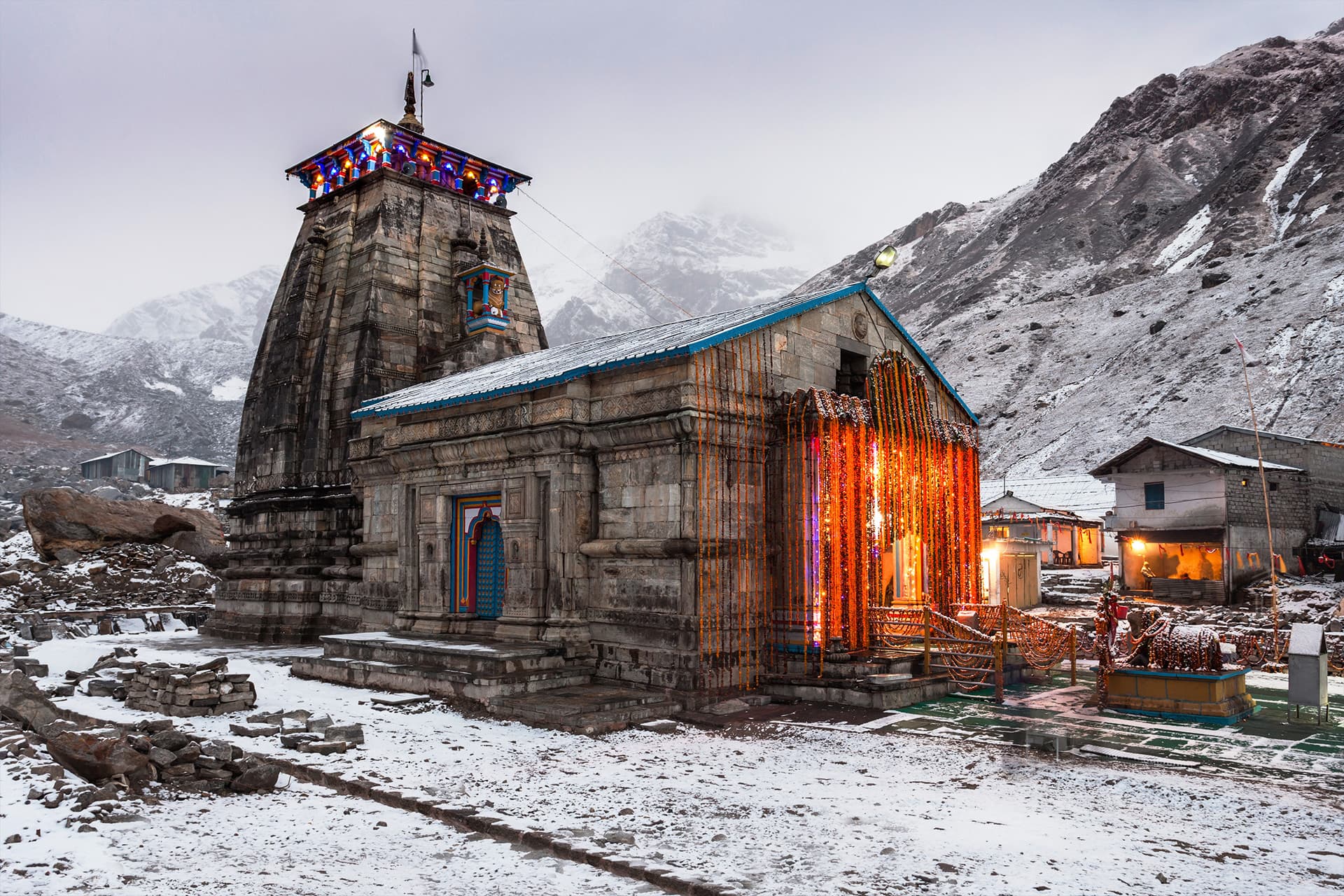
Located in the Garhwal Himalayas of Rudraprayag district, Kedarnath Temple, Uttarakhand, is one of India’s most revered shrines dedicated to Lord Shiva. The temple stands at approximately 3,580 metres above sea level near the source region of the Mandakini River. It is one of the twelve Jyotirlingas and an important destination in the Chota Char Dham Yatra.
The high-altitude shrine is surrounded by dramatic Himalayan peaks, making the journey both a spiritual pilgrimage and a demanding mountain experience. Because of snowfall and severe winter conditions, the temple generally closes around October or November and reopens between April and May, with exact dates announced by the temple authorities.
Kedarnath Temple History
Origins and legends
According to Hindu tradition, the history of Kedarnath is connected with the Pandavas of the Mahabharata. After the Kurukshetra war, the Pandavas are believed to have sought Lord Shiva’s blessings to atone for the loss of their relatives. Shiva is said to have appeared in the form of a buffalo and disappeared into the ground when the Pandavas approached him.
His hump is worshipped at Kedarnath, while other parts of the divine form are associated with Tungnath, Rudranath, Madhyamaheshwar, and Kalpeshwar. Together, these five shrines form the sacred Panch Kedar.
These accounts belong to religious tradition and should be understood separately from archaeological dating. The Shri Badarinath Kedarnath Temple Committee attributes the present shrine’s construction or revival to Adi Shankaracharya in the 8th century.
Architecture and resilience
Built from massive, carefully cut grey stone slabs, the temple includes a sanctum, assembly hall, and a prominent Nandi statue outside the entrance. Inside the sanctum, devotees worship the naturally shaped stone representing Lord Shiva in his Sadashiva form.
The structure survived the devastating 2013 Uttarakhand floods with its foundation intact, although the surrounding area suffered extensive damage. This event highlighted the importance of respecting weather alerts, route restrictions, and local safety instructions during the Kedarnath Yatra.
Spiritual Significance of Jyotirlinga Kedarnath
The word Jyotirlinga refers to a sacred manifestation of Shiva associated with divine light. For devotees, Jyotirlinga Kedarnath represents Shiva’s presence in one of the most remote and powerful landscapes of the Himalayas.
A visit is not only about reaching the temple. Many pilgrims regard the trek as a period of discipline, prayer, endurance, and reflection. The silence of the mountains, the Mandakini valley, and the rituals at the shrine contribute to the distinctive spiritual atmosphere of Kedarnath Dham.
Kedarnath Yatra Guide
How to reach Kedarnath
The road journey ends at Sonprayag or Gaurikund, depending on current administrative arrangements. From Gaurikund, pilgrims continue to the temple by:
-
Trekking on foot.
-
Hiring a pony or palki.
-
Using helicopter services from locations such as Phata, Guptkashi, or Sirsi, subject to weather and availability.
The trek is approximately 16 kilometres according to the official Kedarnath Dham portal, although route measurements and operational details may change. Walking time commonly varies with fitness, crowds, weather, and rest breaks.
Rishikesh, Haridwar, and Dehradun are common starting points for road travel. Dehradun’s Jolly Grant Airport is the nearest major airport, while Rishikesh and Haridwar provide rail and bus connections toward the Garhwal region.
Best time to visit
The main pilgrimage season usually runs from late spring through autumn.
-
May to June: Pleasant but often crowded.
-
July to mid-September: Rain can cause landslides and delays.
-
Late September to October: Often suitable for travel, but temperatures fall quickly.
-
Winter: The main shrine remains closed, and worship continues at Ukhimath according to the temple’s seasonal tradition.
Always confirm opening dates, weather, road conditions, and registration requirements before departure. For 2026, the official registration portal lists 22 April as the Kedarnath Dham opening date; timings and other arrangements may be updated by authorities.
Essential preparation tips
-
Register through the official Uttarakhand Yatra portal before travelling and keep the QR-based pass and identity document accessible.
-
Begin physical preparation several weeks in advance with walking, stair climbing, and moderate endurance exercise.
-
Carry layered clothing, rain protection, gloves, sturdy shoes, sunscreen, water, personal medicines, and basic first-aid supplies.
-
Walk slowly, take regular breaks, and do not ignore breathlessness, dizziness, chest discomfort, or unusual fatigue.
-
Check official weather and route advisories rather than relying only on social media or informal travel updates.
-
Keep emergency contacts, accommodation details, and a charged phone available.
Frequently Asked Questions
Kedarnath is famous as a major Lord Shiva shrine, one of the twelve Jyotirlingas, a Chota Char Dham destination, and a sacred Panch Kedar temple.
The trek from Gaurikund to Kedarnath is approximately 16 kilometres, although the exact route and access points can vary with official arrangements.
Pilgrims should complete registration through the official Uttarakhand portal and check the latest government instructions before travelling.
Yes, but the high altitude and trek require careful planning. Families should consider each traveller’s fitness, medical condition, acclimatisation needs, and transport option.