Pilgrimage & Travel
Shree Dwarkadhish Temple, Dwarka, Gujarat: Everything You Need to Know Before Visiting
- Published date
- 9 Oct 2026
- Author
- Admin
- Category
- Pilgrimage & Travel
Shree Dwarkadhish Temple, also known as Dwarkadhish Temple or Jagat Mandir, is one of the most revered Hindu temples in Gujarat. Located in the ancient pilgrimage city of Dwarka, the temple is dedicated to Lord Krishna, worshipped here as Dwarkadhish, meaning the “Lord of Dwarka.”
For devotees, pilgrims, families, and spiritual seekers, a visit to this temple is an opportunity to experience one of Gujarat’s most important sacred destinations. This guide from Templeviews covers the temple’s history, architecture, religious significance, practical visit information, and nearby attractions.
Where Is Shree Dwarkadhish Temple Located?
Shree Dwarkadhish Temple is located in Dwarka, in Devbhumi Dwarka district of Gujarat, India. The temple stands close to the Arabian Sea and the Gomti River, giving the pilgrimage site a distinctive coastal setting.
Dwarka is traditionally associated with Lord Krishna, who is believed in Hindu tradition to have established his kingdom here. The city is also an important pilgrimage destination and is associated with the Char Dham pilgrimage tradition.
Quick Facts
-
Temple: Shree Dwarkadhish Temple
-
Presiding Deity: Lord Krishna
-
Form of Deity: Dwarkadhish
-
Location: Dwarka, Gujarat, India
-
District: Devbhumi Dwarka
-
Temple also known as: Jagat Mandir
-
Tradition: Hinduism, particularly Vaishnavism
Dwarkadhish Temple History
The Dwarkadhish Temple history is closely connected with the traditional story of Lord Krishna and the ancient city of Dwarka.
According to Hindu tradition, Krishna established his kingdom at Dwarka after leaving Mathura. The present temple has undergone reconstruction and development over centuries, and its history combines religious tradition with the architectural heritage of Gujarat.
The temple is traditionally associated with Adi Shankaracharya, who established one of the important spiritual centres, or mathas, at Dwarka. Because of its religious importance, Dwarka became a significant destination for pilgrims travelling across India.
It is important to distinguish between religious tradition and archaeological history when discussing the origins of Dwarka. Stories concerning Krishna’s ancient city are part of Hindu sacred tradition, while the physical structures visible today belong to later historical periods.
Dwarkadhish Temple Architecture
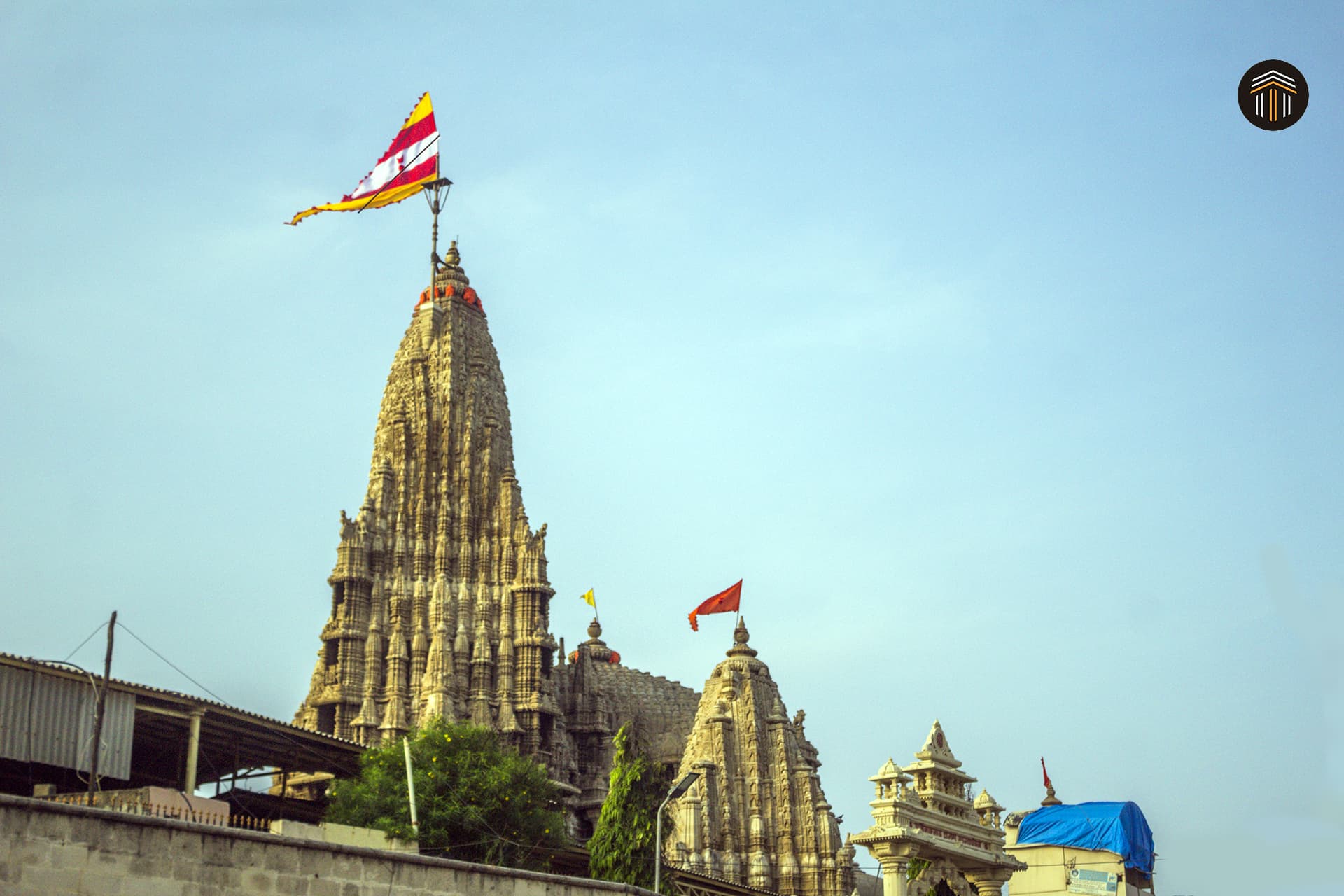
One of the most striking features of the temple is its tall shikhara, which rises prominently above the surrounding city.
The temple reflects the architectural traditions of western India and is particularly recognizable for its:
-
Elaborately carved stonework
-
Tall central shikhara
-
Ornamental pillars and architectural details
-
Large temple complex
-
Flag flown above the main shrine
The Dwarkadhish Temple architecture is not only visually impressive but also contributes to the spiritual atmosphere of the pilgrimage site.
Why Is the Temple Called Jagat Mandir?
The temple is popularly called Jagat Mandir, meaning “Temple of the World.” It is also commonly referred to as Dwarkadhish Temple because the principal deity is Lord Krishna in his form as the ruler or Lord of Dwarka.
Lord Krishna and Dwarka
For devotees, Lord Krishna Dwarka is more than a geographical association. Dwarka occupies an important place in Krishna traditions, and pilgrims visit the city to worship Krishna and experience its sacred landscape.
The name Dwarkadhish itself reflects Krishna’s connection with Dwarka. Devotees may use expressions such as “Jai Shree Dwarkadhish” while praying or greeting fellow pilgrims.
A visit can therefore combine temple worship with exploration of other sacred locations connected with Dwarka’s religious traditions.
Darshan and Visiting the Temple
Before visiting Shree Dwarkadhish Temple, pilgrims should check the latest official information for darshan timings, aarti schedules, festival arrangements, and entry-related rules, as schedules can change on special occasions.
Practical Tips for Visitors
-
Plan around darshan: Temple schedules may include breaks between different darshan periods.
-
Check festival dates: Major Hindu festivals can bring significantly larger crowds.
-
Dress respectfully: Modest clothing is appropriate for a religious site.
-
Allow extra time: Queues can become longer during weekends, holidays, and festivals.
-
Follow temple rules: Photography, mobile phones, footwear, and other items may be subject to restrictions in particular areas.
-
Keep valuables secure: Pilgrimage areas can become crowded, so carry only what you need.
For the most reliable information, verify current arrangements shortly before your journey rather than relying on old travel posts.
Places to Visit Near Dwarkadhish Temple
A trip to Dwarka can easily be extended beyond the main temple. Some notable places associated with the pilgrimage circuit include:
Gomti Ghat
Located near the temple, Gomti Ghat is an important place for pilgrims and offers views toward the river and the coastal surroundings.
Sudama Setu
This pedestrian suspension bridge connects areas around the Gomti River and provides a convenient way to explore the surroundings on foot.
Rukmini Devi Temple
The Rukmini Devi Temple is dedicated to Goddess Rukmini and is another important religious attraction near Dwarka.
Nageshwar Jyotirlinga
Located outside the main city area, Nageshwar Jyotirlinga is an important Shiva pilgrimage site and is commonly included in Dwarka-area pilgrimage itineraries.
Bet Dwarka
Bet Dwarka is traditionally associated with Krishna and can be included as part of a wider Dwarka pilgrimage.
Best Time to Visit Dwarkadhish Temple
The best time depends on what you want from your journey.
-
For a quieter pilgrimage: Consider travelling outside major festivals and peak holiday periods.
-
For a festive atmosphere: Major Hindu celebrations can offer a particularly vibrant experience but usually involve larger crowds.
-
For sightseeing: Cooler months are generally more comfortable for exploring Dwarka and its surrounding attractions.
Weather and crowd conditions can vary, so check the forecast and current local information before travelling.
Why Visit Shree Dwarkadhish Temple?
A visit to Shree Dwarkadhish Temple combines spirituality, history, architecture, and pilgrimage. Whether you are travelling specifically for Lord Krishna or exploring Gujarat with your family, Dwarka offers an experience that extends beyond a single temple visit.
The combination of the Dwarkadhish Temple, Gomti River, Arabian Sea, nearby pilgrimage sites, and Krishna traditions makes Dwarka an important destination for both devotees and cultural travellers.
Templeviews can be used as a starting point for planning your temple visits, but always verify current temple rules and timings through authoritative local or official sources before travelling.
Frequently Asked Questions
The presiding deity is Lord Krishna, worshipped as Dwarkadhish, meaning the Lord or King of Dwarka.
Dwarkadhish Temple is located in Dwarka, Devbhumi Dwarka district, Gujarat, India.
According to Hindu tradition, Lord Krishna established his kingdom at Dwarka. The city has therefore become an important Krishna pilgrimage destination.
Important nearby attractions include Gomti Ghat, Rukmini Devi Temple, Nageshwar Jyotirlinga, and Bet Dwarka.
Check the latest darshan and aarti timings, festival schedules, entry rules, dress requirements, and photography restrictions before your visit, as arrangements may change.