Temple Guides
Chidambaram Nataraja Temple Secrets: 7 Details Most Pilgrims Walk Past
- Published date
- 23 Oct 2026
- Author
- The Temple Pilgrim
- Category
- Temple Guides
The Chidambaram Nataraja Temple in Cuddalore district, Tamil Nadu, is dedicated to Lord Nataraja, Shiva as the cosmic dancer. It is one of the five Pancha Bhuta Sthalams, where Shiva is worshipped as the element of space (akasha). Its best-known feature is the Chidambaram Rahasya, a curtained space that represents the formless divine.
Temple Snapshot
|
Detail |
Information |
|
Temple Name |
Chidambaram Nataraja Temple (also called Thillai Nataraja Temple) |
|
Location |
Chidambaram, Cuddalore district, Tamil Nadu, India |
|
Presiding Deity |
Lord Nataraja (Shiva as Lord of Dance) |
|
Consort |
Sivakami Amman |
|
Sacred Element |
Space (akasha), one of the Pancha Bhuta Sthalams |
|
Style |
Dravidian architecture with major Chola-era patronage |
|
Best for |
Devotees, pilgrims, families, culture and architecture lovers |
A Short History of the Chidambaram Temple
Chidambaram temple history is a mix of recorded patronage and living tradition. The Chola kings are widely remembered as major patrons, and the temple is praised in the Thevaram hymns of the Nayanmars, the Tamil Shaiva saints.
Local tradition links the site to the ancient Thillai forest, which is why the temple is also called Thillai Nataraja Temple. The exact dates of the earliest structures are debated, so treat any single founding year you read online with caution. Phrases such as "according to tradition" are the honest way to describe the oldest origins.
Your Walk Through the Temple: 7 Secrets in Order
Instead of a random list, follow this route. It matches how most visitors move through the complex.
Stop 1: The Gopurams and the 108 Karanas
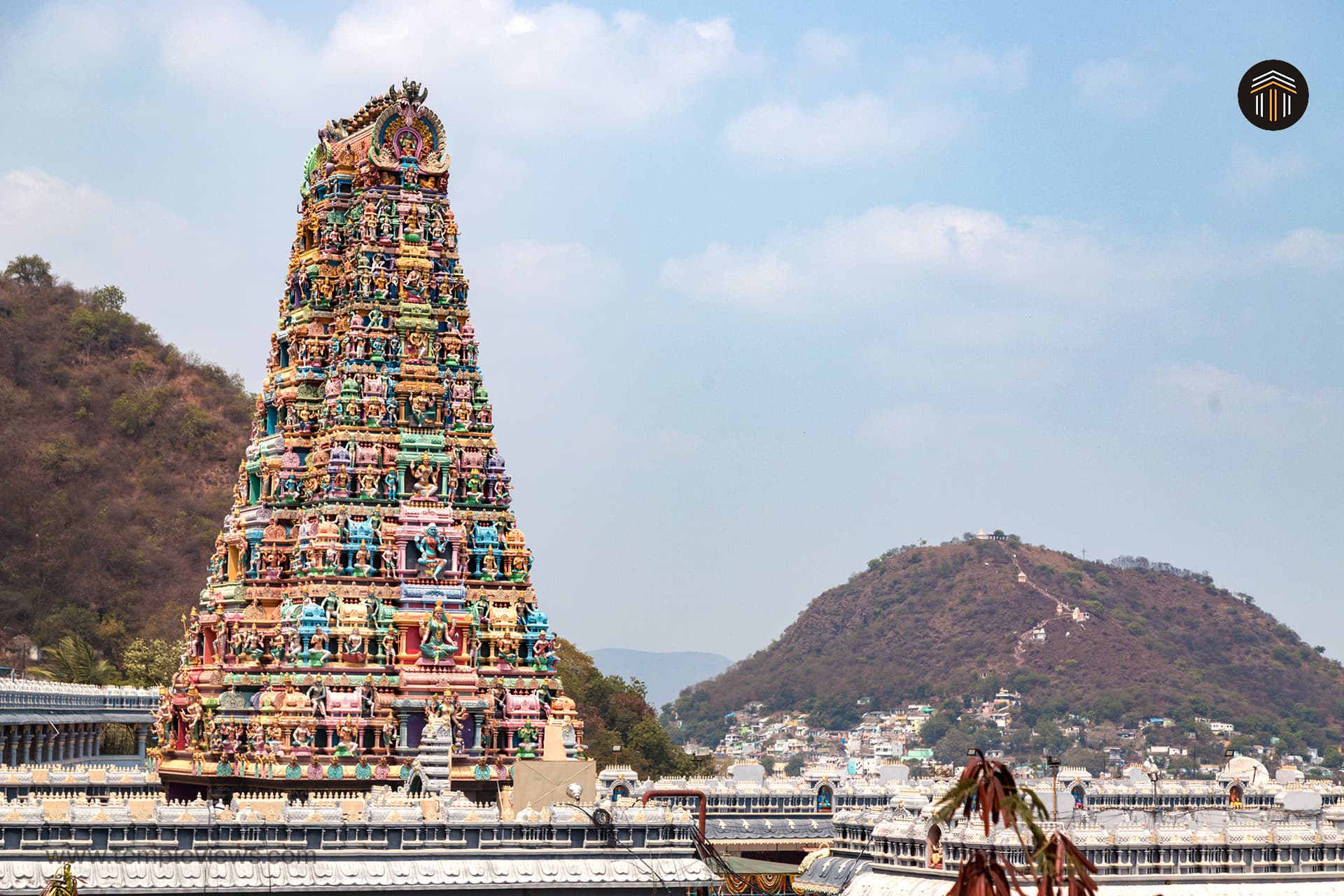
Your first stop is the entrance. The temple has four tall gopurams (gateway towers) facing the four directions. In the gateway passages, you can find carvings of dance poses called the 108 karanas, which come from the Natya Shastra, an ancient Indian treatise on performing arts.
Most people hurry through these passages. Slow down and look at the walls. It is a rare chance to see classical dance postures carved in stone.
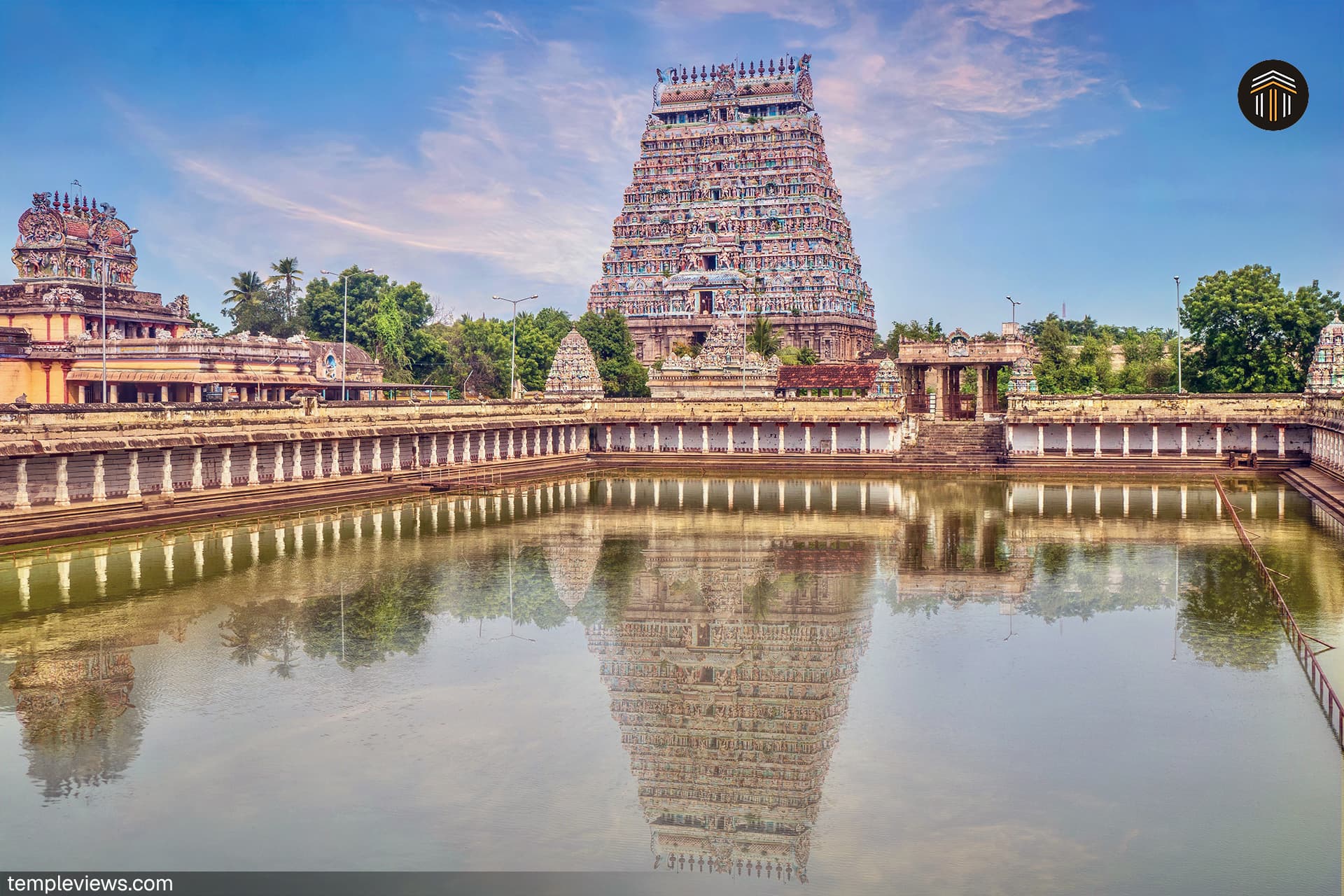
Stop 2: The Shivaganga Tank
Inside the complex, the Shivaganga tank is a quiet place to pause. Many devotees treat the tank as part of the temple's sacred space. It is also one of the calmer spots if the main hall is crowded.
Stop 3: A Dancing Shiva Instead of a Linga
In most Shiva temples, the main image is a linga. Here, the central form is the Chidambaram Nataraja statue, Shiva performing the Cosmic dance of Shiva (Ananda Tandava).
The dance is traditionally read as a symbol of creation, preservation, and dissolution. Devotees see it as a reminder that the universe is always in motion, and that the divine is present in that motion.
Stop 4: The Golden Roof of the Chit Sabha
The main sanctum is called the Chit Sabha (hall of consciousness). Its roof is covered with gold-plated tiles, and tradition links the roofing to Chola kings. Popular accounts connect the number of tiles and nails to the human breath and the body's energy channels. These are traditional beliefs, so present them as such rather than as measured facts.
Nearby are other halls, including the Kanaka Sabha, Nritta Sabha, and Raja Sabha. Each plays a role in the temple's rituals and festivals.
Stop 5: The Chidambaram Rahasya
This is the detail that gives the temple its reputation for "secrets." Beside the Nataraja image, a curtain is drawn aside during specific pujas. Behind it, devotees see a space marked by hanging golden garlands.
That space is the Chidambaram Rahasya. It represents the formless nature of Shiva, the idea that the divine cannot be limited to a shape. The space is often called the Akasha Lingam, linking it to the element of space.
Stop 6: The Pancha Bhuta Connection
Chidambaram is one of five temples associated with the five elements:
-
Chidambaram: space (akasha)
-
Tiruvannamalai: fire
-
Thiruvanaikaval: water
-
Sri Kalahasti: air
-
Kanchipuram (Ekambareswarar): earth
Together, these are the Pancha Bhuta Sthalams. If you plan a pilgrimage circuit in Tamil Nadu, Chidambaram is the one that stands for space, which is why its worship centres on the formless Rahasya.
Stop 7: The Dikshitars and a Vishnu Shrine
Daily worship is traditionally conducted by the Chidambaram Dikshitars, a priestly community long associated with the temple. Their role is central to its rituals, so observe quietly and follow their guidance.
Within the same complex, you will also find the shrine of Govindaraja Perumal, a form of Vishnu. Seeing both Shaiva and Vaishnava worship in one temple is uncommon and reflects how the traditions have lived side by side here. Many devotees also pay attention to the worship of the crystal linga, traditionally associated with the temple's daily rituals. Ask the temple staff about timings.
Festivals Worth Planning Around
-
Arudra Darshan (Margazhi month, usually December or January): celebrates the cosmic dance of Nataraja and draws very large crowds.
-
Ani Thirumanjanam (Aani month, usually June or July): a major annual festival with special abhishekam.
-
Maha Shivaratri: observed with night-long worship.
-
Natyanjali festival: classical dancers perform at the temple, usually around Maha Shivaratri.
Practical Visiting Tips
-
Dress modestly. Traditional attire is preferred, and a dress code may be enforced.
-
Go early. Mornings are generally calmer, except on festival days.
-
Ask before photographing. Photography is restricted in some areas.
-
Carry little. Expect queues and security checks.
-
Allow time. A relaxed visit takes around two to three hours, longer on festival days.
-
Eat and stay nearby. Chidambaram town has modest lodges and eateries within walking distance.
How to Reach Chidambaram
-
By road: About 230 km south of Chennai, roughly a 4 to 5-hour drive via the East Coast Road or NH 32. Travel times vary with traffic.
-
By train: Chidambaram Junction is on the Chennai to Tiruchirappalli line, a short distance from the temple.
-
By air: Chennai is the main airport for most travellers.
-
Nearby: Pichavaram mangrove forest is about 15 km east and works well as a half-day add-on.
Final Thoughts
The Chidambaram Nataraja Temple rewards slow visitors. Look at the carvings, learn what the Rahasya represents, and think about what a dancing god says about time and change. Visit once for darshan, then return when you can sit quietly.
For more guides to Tamil Nadu temples, rituals, and travel tips, visit Templeviews.
Frequently Asked Questions
It is famous for Lord Nataraja, Shiva in his cosmic dance form, for the Chidambaram Rahasya, and for being the Pancha Bhuta Sthalam of space. Its golden-roofed Chit Sabha and dance carvings add to its importance.
The "secret" is the Chidambaram Rahasya: a curtained space beside the Nataraja image with no deity form, representing the formless divine. It is a spiritual idea, not a hidden object.
Chidambaram represents akasha (space or ether) in the Pancha Bhuta Sthalam tradition.
It is a ritual and philosophical concept in which a curtain is drawn back to reveal a space adorned with golden garlands. It represents Shiva's formless nature.
The temple is generally open in the morning and again in the evening, with a midday break. Commonly listed timings are around 6:00 AM to noon and 4:00 PM to 10:00 PM, but timings and puja schedules can change, especially on festival days.