
-1°C
Rudraprayag
Kedarnath Temple
 Rudraprayag, Uttarakhand, India
Kedarnath Temple, dedicated to Lord Shiva, is a sacred Hindu shrine nestled in the Himalayas of Uttarakhand. It is one of the twelve Jyotirlingas and a key pilgrimage site in the Chota Char Dham Yatra.
- ReligionHindu
- DeityLord Shiva (as Kedarnath)
- TimingsMorning: 04:00 AM - 07:00 AM, Evening: 06:00 PM - 07:30 PM

About the temple
About the temple
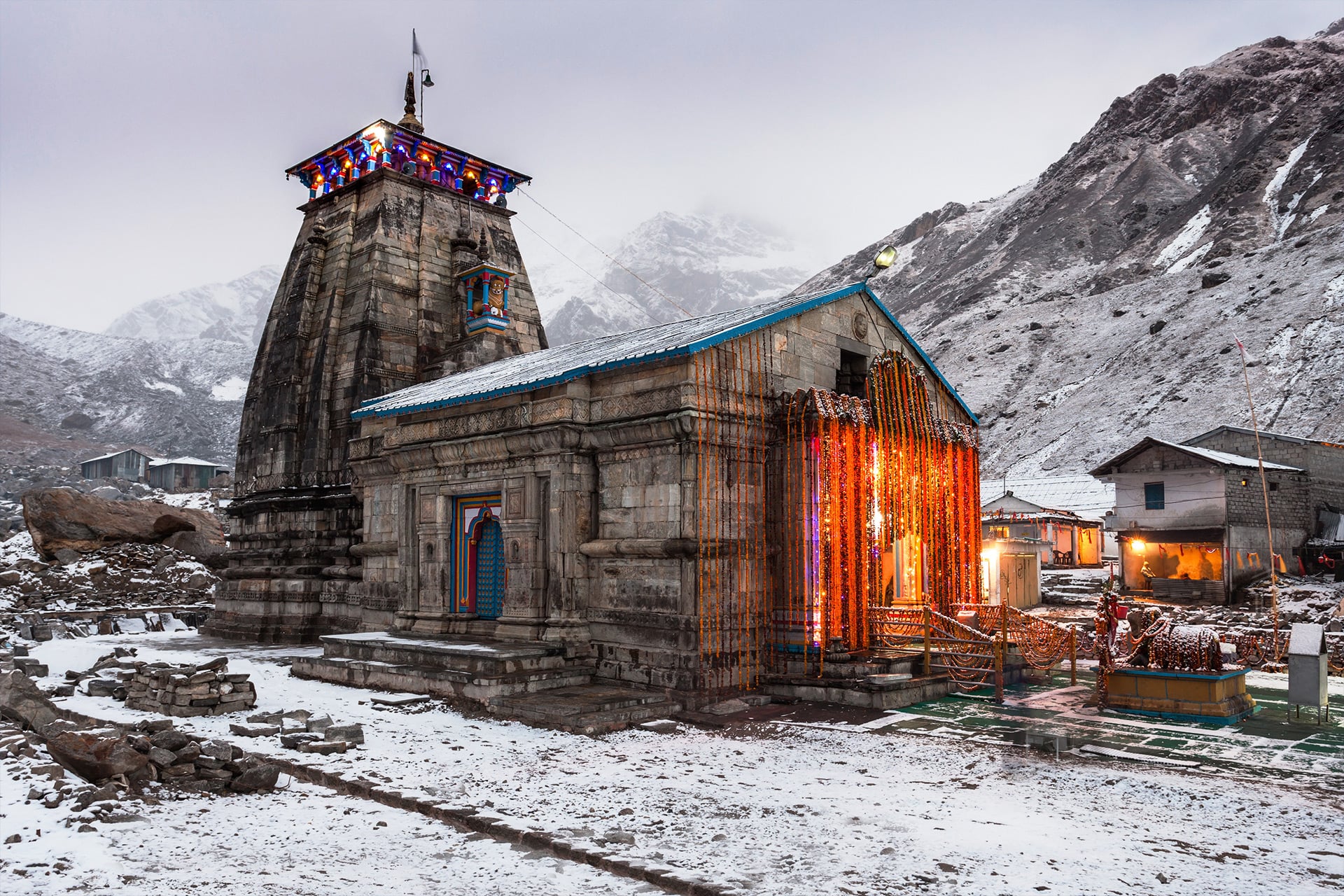
Kedarnath Temple is one of the holiest and most ancient Hindu temples, dedicated to Lord Shiva, located in the majestic Himalayas of Uttarakhand. As one of the twelve Jyotirlingas and part of the Chota Char Dham Yatra, the temple draws pilgrims for its spiritual significance, mythological legends, and awe-inspiring mountain setting.
Kedarnath Temple
Kedarnath Temple
The Enduring Majesty of Kedarnath Temple in Numbers
Explore the spiritual significance and remarkable heritage of Kedarnath Temple - a sacred Himalayan shrine dedicated to Lord Shiva, symbolizing centuries of devotion, resilience, and pilgrimage. Its numbers reflect not just history but the living faith of millions drawn to its divine presence.
- Estimated Age of the Present Temple Structure (Attributed to Adi Shankaracharya's 8th-Century Reconstruction)
- 1200+ yrs
- Elevation of the Temple Above Sea Level
- 3583 meters (11,755 ft)
- Distance of the Pilgrimage Trek from Gaurikund to Kedarnath
- 16 km
- Period of Annual Winter Closure Due to Snowfall
- 6 months
- Approximate Number of Pilgrims Visiting Annually (Pre-2013 Floods)
- 500000+
- Year of the Devastating Flash Floods That Tested the Temple's Resilience
- 2013
- Amount of Mortar Used - Massive Interlocking Grey Stone Slabs Held Together with Iron Clamps
- Zero
Estimated Age of the Present Temple Structure (Attributed to Adi Shankaracharya's 8th-Century Reconstruction)
Elevation of the Temple Above Sea Level
Distance of the Pilgrimage Trek from Gaurikund to Kedarnath
Period of Annual Winter Closure Due to Snowfall
Approximate Number of Pilgrims Visiting Annually (Pre-2013 Floods)
Year of the Devastating Flash Floods That Tested the Temple's Resilience
Amount of Mortar Used - Massive Interlocking Grey Stone Slabs Held Together with Iron Clamps
Historical Background
Kedarnath Temple, nestled in the majestic Himalayas of Uttarakhand, is one of the twelve sacred Jyotirlingas dedicated to Lord Shiva and a key destination of the Chota Char Dham Yatra. Rooted in ancient Hindu traditions, the temple is closely associated with legends of the Pandavas and the spiritual legacy of Adi Shankaracharya, who is credited with reviving the pilgrimage site. Despite enduring the devastating 2013 floods, the historic temple structure survived and has since undergone extensive restoration and development. Today, Kedarnath remains a revered symbol of faith, devotion, and Himalayan spirituality.
Mythological Era (Satya Yuga)
Mythological Era (Satya Yuga)
Tradition holds that sages Nar and Narayan - avatars of Vishnu - performed penance at Kedarnath, leading to Shiva's presence being established here as a Jyotirlinga.Mythological Era (Dwapara Yuga)
Mythological Era (Dwapara Yuga)
According to legend, the Pandavas visited Kedarnath to seek Lord Shiva's forgiveness after the Kurukshetra war. Shiva took the form of a bull and left his hump here, giving rise to the temple site.8th Century CE
8th Century CE
Adi Shankaracharya, the great Hindu philosopher and reformer, is credited with reviving Kedarnath Temple and establishing it as a major pilgrimage site. He is also believed to have attained Mahasamadhi behind the temple, where his samadhi shrine stands today.12th-14th Century CE (traditionally held)
12th-14th Century CE (traditionally held)
The temple is said to have been patronized by various Himalayan dynasties and kings of Garhwal, with pilgrimage to Kedarnath growing as part of the Chota Char Dham circuit.19th Century CE (traditionally held)
19th Century CE (traditionally held)
Gorkha and local rulers are said to have contributed to the temple's upkeep. The Rawal (chief priest) tradition, drawn from the Veerashaiva community of Karnataka, continues to this day.1960s-1980s
1960s-1980s
Roads and trekking routes to Kedarnath are developed, gradually making the pilgrimage more accessible.2013 - Devastating Floods
2013 - Devastating Floods
A massive flash flood hit the Kedarnath valley on June 16-17, causing widespread destruction and heavy loss of life. The main temple structure survived largely intact, shielded by a large boulder - now revered as Bhim Shila - that diverted the debris and floodwater.2014-2022 - Restoration and Development
2014-2022 - Restoration and Development
Kedarnath undergoes major restoration under the Kedarnath Master Plan, backed by the Uttarakhand Government and Prime Minister Narendra Modi. New infrastructure, wider trek routes, a rebuilt Adi Shankaracharya samadhi, and better pilgrim facilities are developed.Present Day
Present Day
Kedarnath Temple remains a major spiritual and tourism destination, attracting lakhs of pilgrims annually. It is one of the twelve Jyotirlingas and a key site in the Chota Char Dham Yatra.


Synopsis
Kedarnath Temple, nestled in the Garhwal Himalayas, is a revered Hindu shrine dedicated to Lord Shiva. Believed to be built by the Pandavas and revived by Adi Shankaracharya, it is one of the twelve Jyotirlingas and a vital part of the Chota Char Dham Yatra. Accessible via a mountain trek or helicopter, the temple stands as a symbol of faith, resilience, and spiritual devotion amidst breathtaking natural beauty.
Kedarnath Temple, nestled in the Himalayas, traces its origins to the Dwapara Yuga, rooted in the Mahabharata epic. According to legend, the Pandavas sought Lord Shiva's forgiveness after the Kurukshetra war, and Shiva, evading them, took the form of a bull and disappeared into the earth at Kedarnath - leaving his hump behind. This divine manifestation marked the site as sacred. Though the original temple's date is lost to time, the spiritual sanctity of Kedarnath has endured through millennia, passed down through scriptures, oral traditions, and the unwavering devotion of pilgrims from across India.
In the 8th century, the revered philosopher and saint Adi Shankaracharya undertook the mission of reviving Sanatana Dharma. During his journey across India, he arrived at Kedarnath, where he restored the temple and reestablished its prominence. It is believed that Adi Shankaracharya attained Mahasamadhi near the temple, and a samadhi shrine stands behind the main sanctum to this day. Around the same period, he is credited with founding the original Char Dham circuit (Badrinath, Dwarka, Puri, and Rameswaram), while Kedarnath itself affirmed its own standing as one of the twelve Jyotirlingas and a pillar of the separate, regional Chota Char Dham circuit.
Throughout the medieval period, various Himalayan and Garhwal rulers are said to have supported Kedarnath as a spiritual center. Pilgrimage to Kedarnath was a rigorous, seasonal religious journey undertaken on foot through treacherous mountain paths, with the temple closing for the harsh winter and the deity moved to Ukhimath - a practice tied to the region's climate rather than a later reform. The Rawal, or head priest, traditionally from Karnataka's Veerashaiva community, was entrusted with preserving ritual traditions - a custom that continues today.
Following India's independence, government and temple-board initiatives - particularly through the 1960s to 1980s - developed roads to Gaurikund and improved trekking infrastructure, and the Chota Char Dham Yatra gained nationwide significance. The temple's allure grew beyond saints and sages, drawing lakhs of devotees each year. Pilgrimage camps, dharamshalas, and porter services evolved, making the once-arduous trek achievable for people of all backgrounds. Helicopter services were later introduced to assist elderly pilgrims, further modernizing access without diminishing the spiritual rigor.
On June 16-17, 2013, devastating flash floods, caused by a cloudburst and a glacial-lake breach, ravaged Kedarnath Valley, sweeping away entire villages, roads, and hundreds of lives. Miraculously, the Kedarnath Temple stood largely unharmed, shielded by a massive boulder - now revered as Bhim Shila - that diverted the deadly floodwaters. This event reaffirmed devotees' faith in the divine protection of Lord Shiva and transformed Kedarnath into a symbol of resilience and grace under destruction.
In the years following the disaster, massive reconstruction efforts were launched under the Kedarnath Master Plan, supervised by the Uttarakhand Government with strong personal backing from Prime Minister Narendra Modi. Trekking paths were widened, shelters modernized, and eco-friendly infrastructure developed, including medical centers, helipads, and paved pilgrimage trails. The reconstruction preserved the ancient temple while integrating sustainable, modern amenities - reinvigorating the Chota Char Dham pilgrimage and restoring Kedarnath's spiritual rhythm.
Today, Kedarnath stands not only as a pilgrimage destination but as a national spiritual icon. Live darshan broadcasts, eco-tourism, and international interest have expanded its reach. Pilgrims gather in the thousands during the seasonal opening, and ceremonies like the Kapat Opening, Baba Bhairavnath Worship, and Shrawan month rituals are followed by devotees worldwide.
Sacred significance
Sacred Jyotirlinga of Lord Shiva
Kedarnath Temple is one of the twelve Jyotirlingas, the holiest abodes of Lord Shiva, believed to be self-manifested (Swayambhu) forms of divine energy. It is considered the most remote and physically demanding of all Jyotirlingas to reach, where Lord Shiva's presence is felt in its raw Himalayan setting. Worshipping here is believed by devotees to absolve one of past sins and grant liberation (moksha).
Pandava Connection and Penance
The temple is deeply connected to the Mahabharata, where the Pandavas sought atonement for their sins after the Kurukshetra war. Lord Shiva, avoiding them, took the form of a bull and left his hump at Kedarnath. This sacred legend adds profound karmic significance, drawing devotees who seek forgiveness and spiritual renewal.
Winter Worship at Ukhimath
When Kedarnath closes for winter due to snow, the idol is shifted to Ukhimath and worshipped there. This continuation of rituals reflects the unbroken reverence and eternal presence of Shiva, reminding devotees that divinity is beyond geography and seasons.
Architecture
Kedarnath Temple features a traditional stone-built Himalayan temple architecture, constructed from large, precisely fitted stone slabs. The temple has a simple yet imposing structure with a sanctum (Garbhagriha) and a mandapa (assembly hall). Its design reflects the region’s ancient architectural traditions and is built to withstand the harsh mountain climate.
Shikhara
Stone Shikhara Above the Sanctum
The towering Shikhara of Kedarnath Temple is built from massive stone slabs and rises above the sanctum in a pyramidal form. Unlike the ornately sculpted towers seen in southern temples, this structure is simple yet commanding, symbolizing divine strength. Its form merges with the Himalayan backdrop, reflecting the elemental presence of Lord Shiva.
Sanctum
Garbhagriha (Sanctum Sanctorum)
The Garbhagriha houses a naturally formed, irregularly shaped conical rock worshipped as the Shiva Lingam, representing Lord Kedarnath. The sanctum is made of ancient grey stone, with a minimalistic design that heightens spiritual focus. As per the Pandava legend, the rock is worshipped as the hump of Lord Shiva in his bull form, making this space intensely sacred.
Mandapa
Mandapa (Assembly Hall)
The Mandapa is a stone-pillared hall where devotees gather before entering the inner sanctum, housing statues of the Pandava brothers, Nandi, Shiva, and Parvati. It reflects early Himalayan temple craftsmanship and serves as the space for collective worship, Vedic chanting, and special rituals during festivals and pilgrimages.
Material
Cyclopean Architecture with No Mortar
Kedarnath Temple is built using massive, interlocking stone blocks joined with iron clamps and no mortar - an ancient technique often described as cyclopean masonry. The architectural stability of the temple, even in an earthquake-prone, high-altitude region, is considered remarkable. The design is both resilient and spiritual, intended to last through nature's extremes.
Platform
Elevated Platform for Protection
The temple stands on a high stone platform, protecting it from floods and snow accumulation. This base elevation provides a commanding view of the valley below and symbolizes the temple's separation from worldly concerns - elevating devotees both physically and spiritually.
Backdrop
Mandakini and Mountain Integration
The rear of the temple opens toward the majestic Kedarnath range, with the Mandakini River flowing nearby. This strategic positioning blends temple architecture with the divine Himalayan environment, making the temple appear as an extension of the natural sacred geography of Lord Shiva.
Doorways
Temple Entrance and Threshold
The entrance to Kedarnath Temple is understated in keeping with the temple's overall austere character, serving as the spiritual gateway between the material world and divine sanctity rather than a heavily ornamented facade.
Nandi
Nandi Statue in Front of the Sanctum
A large stone idol of Nandi, the sacred bull and vehicle of Lord Shiva, sits facing the sanctum in the courtyard outside the temple. Devotees traditionally offer their prayers to Nandi before entering the temple, following the widespread devotional belief - common at many Shiva temples - that wishes offered here are carried to Lord Shiva.
Interesting facts

The Shiva Lingam at Kedarnath is a self-manifested (Swayambhu) idol believed to have existed for thousands of years, formed naturally from stone. Its unique, irregular shape represents the hump of Lord Shiva's bull form, connecting it deeply with the temple's mythological origins.
Deities & Shrines
Goddess Parvati (Shiva's Consort)
Inside the temple's pillared hall, images of Goddess Parvati are enshrined alongside statues of the five Pandava brothers. As Shiva's divine consort, she represents devotion and compassion, and devotees regard her presence as completing the temple's spiritual symbolism of Shiva and Shakti together.
Lord Shiva's Divine Bull, Nandi
A large stone idol of Nandi, Shiva's sacred mount, is positioned in the courtyard directly facing the sanctum. Nandi is regarded as the gatekeeper and devoted attendant of Lord Shiva, believed to carry the prayers of devotees to the deity. Devotees often whisper their wishes into Nandi's ears, a tradition common at Shiva temples generally.
Bhukund Bhairavnath, Guardian Deity
Bhukund Bhairavnath, a fierce protective form of Shiva, is the kul-devta (guardian/patron deity) of Kedarnath Temple. His open-air shrine sits on a ridge overlooking the main temple complex. Worship of Bhairavnath is a formal part of the pilgrimage calendar - a Bhairavnath Puja marks the start of the Kedarnath Yatra each year, and his blessing is also sought at the season's close, reflecting his role in protecting the shrine and its devotees.
Darshan & Service Offerings
| Service | Timing | Price | Notes |
|---|---|---|---|
| Free General Darshan | 7:00 AM - 3:00 PM (morning) and 5:00 PM - 7:00 PM (evening); temple closed 3:00 PM - 5:00 PM | Free | General darshan is open to all pilgrims without prior booking, offering a view of the Shiva Lingam inside the sanctum. Before 3:00 PM, devotees may touch the idol and take part in Abhishek with ghee; after 5:00 PM, darshan is from a distance only, as the deity is dressed in royal/emperor attire for the evening. The temple closes daily between 3:00 - 5:00 PM for pooja preparations. |
| Morning Aarti | 4:00 AM - 7:00 AM | Free (general attendance) | The day's worship opens with the Morning Aarti, performed before general darshan begins, as part of the temple's daily ritual cycle. |
| Evening Aarti | 6:00 PM - 7:30 PM | Free (general attendance) | The Evening Aarti closes the day's temple rituals, performed after evening darshan hours begin. |
Visitor information
Location
Kedarnath Temple is situated in the town of Kedarnath, Uttarakhand, nestled high in the Himalayas at an altitude of about 3,583 meters (11,755 feet). The nearest roadhead is at Gaurikund, approximately 16 km away, from where pilgrims trek to the temple. The closest major airport is Jolly Grant Airport in Dehradun, around 238-250 km from Kedarnath.
Best Time to Visit
The temple is open for pilgrims only during the summer months, typically from late April or early May to late October/November (before winter snowfall). The best time to visit is between May and June or September to October, when weather conditions are favorable and the temple hosts major festivals like the opening and closing ceremonies.
Accessibility
Access to Kedarnath Temple involves a steep trek of around 16 km from Gaurikund. Helicopter services are also available from Phata, Guptkashi, and Dehradun to the temple vicinity, providing an easier option for elderly or physically challenged pilgrims. Horses, palanquins (doli/dandi), and porters can be hired for part of the journey.
Accommodation
Basic accommodations including guest houses, dharamshalas, and hotels are available in Kedarnath town and nearby areas like Gaurikund and Sonprayag. Due to the remote location, it is advisable to book lodging in advance during the pilgrimage season.
Facilities for Pilgrims
Kedarnath offers essential facilities such as medical aid centers, refreshment stalls, and clean drinking water points along the trek route. Several government and private-run emergency rescue services operate during peak season to assist pilgrims.
Important Visitor Tips
Pilgrims are advised to acclimatize properly due to the high altitude, carry warm clothing, and be physically prepared for the trek. It is recommended to check weather conditions before planning the visit and to follow all safety guidelines issued by temple authorities.
Location
Rudraprayag, Uttarakhand, India
Best Time to Visit
Ideal Season to Visit Kedarnath
The best time to visit Kedarnath Temple is from May to mid-June and September to October, when the weather is cool and stable. The temple opens in summer (April/May) and remains accessible until early November, depending on snowfall. These months offer safe trekking conditions and pleasant temperatures.
Visit During Opening and Closing Ceremonies
The opening (April/May) and closing (October/November) ceremonies of Kedarnath Temple are marked by grand Vedic rituals, chants, and special darshans. Thousands of devotees gather to witness these spiritual events, making it a powerful and uplifting time to visit.
Less Crowded Window for Peaceful Pilgrimage
For those seeking a more peaceful experience, the post-monsoon period in late September to mid-October is ideal. The crowd is relatively lower than during opening months or peak festivals, and the weather remains stable with scenic views of the snow-kissed Himalayas.
Monsoon Risks (July to August)
It is not advisable to visit during the monsoon season (July to August) due to heavy rains, frequent landslides, and slippery trekking paths. Temple access and local transport services can also be disrupted, affecting overall safety and travel experience.
Nearby places
Triyuginarayan Temple
25 km from Sonprayag
- This ancient temple is believed to be the divine site of Lord Shiva and Goddess Parvati’s celestial marriage, witnessed by Lord Vishnu. A sacred flame, said to have been burning since the wedding, still burns here, and devotees visit it as part of a spiritual circuit around Kedarnath.
Bhairavnath Temple
500 meters from Kedarnath Temple
- Perched on a hillock overlooking Kedarnath, this temple is dedicated to Bhairava, the fierce manifestation of Lord Shiva. It is believed that Bhairava protects the Kedarnath region during the harsh winters when the temple is closed.
Omkareshwar Temple, Ukhimath
45 km
- Omkareshwar Temple serves as the winter abode of Kedarnath and Madhyamaheshwar deities. When Kedarnath closes during winter, the idol of Lord Kedarnath is shifted here. The temple has rich mythological and spiritual significance.
Guptkashi Vishwanath Temple
35 km
- Located in Guptkashi, this temple is dedicated to Lord Shiva and resembles the Kashi Vishwanath Temple in Varanasi. It is believed that Lord Shiva once hid here from the Pandavas. Pilgrims often visit it en route to Kedarnath.
Festivals & culture
Kedarnath Temple, dedicated to Lord Shiva as one of the twelve Jyotirlingas, observes a festival calendar built around its unique seasonal rhythm - the temple opens and closes each year due to Himalayan snowfall, so its two biggest events are its own Opening and Closing Ceremonies. Maha Shivaratri (February-March) honors Lord Shiva with night-long worship. The Badri-Kedar Utsav (June, sometimes also September) is a joint cultural festival celebrated across both Badrinath and Kedarnath, featuring classical music, dance, and Vedic rituals.
Opening Ceremony of Kedarnath Temple
April-May (Akshaya Tritiya)
The temple reopens to devotees after six months of winter closure. A ceremonial procession carries the utsava idol (processional deity) from Ukhimath back to Kedarnath, accompanied by Vedic chants and rituals, marking the start of the pilgrimage season.
Closing Ceremony of Kedarnath Temple
October-November (Kartik, after Diwali)
The temple closes for winter as snowfall makes the region inaccessible. The utsava idol is ceremonially carried to Ukhimath, where worship continues through the winter months, marking the end of the pilgrimage season.
Maha Shivaratri
February-March (Phalguna)
One of the most significant festivals for any Shiva temple, marked by night-long worship, abhishekam (ritual bathing) of the Shivalinga, mantra chanting, and devotional singing dedicated to Lord Shiva.
Badri-Kedar Utsav
June (also observed in September in some years)
A multi-day cultural and spiritual festival jointly celebrated across Badrinath and Kedarnath, organized by Uttarakhand's Cultural Department. It features classical music, folk dance, devotional performances, and Vedic rituals, celebrating the region's spiritual and cultural heritage.
Additional information
Daily Opening Hours
Kedarnath Temple follows a structured daily schedule during the Char Dham Yatra season (April/May to October/November): Morning Aarti 4:00 AM - 7:00 AM, General Darshan 7:00 AM - 3:00 PM, closed 3:00 PM - 5:00 PM for pooja preparations, Evening Darshan 5:00 PM - 7:00 PM, and Evening Aarti 6:00 PM - 7:30/8:30 PM. The temple remains closed in winter due to heavy snowfall and reopens in summer.
No Footwear Beyond Designated Point
Shoes and slippers must be removed before entering the temple, consistent with standard Hindu temple custom followed across major pilgrimage sites.
First Aid and Emergency Help
A primary health center and emergency medical tents are set up during Yatra season along the route. Helicopter evacuation is available for serious cases, reflecting the well-documented altitude-related medical infrastructure of the Char Dham Yatra.
On-Site Security and Assistance
Uttarakhand Police maintains a strong presence around the temple and along the yatra route, with security checkpoints and crowd control measures in place, as consistently reported during pilgrimage seasons.
Uttarakhand Char Dham Yatra Helpline
Pilgrims can call the toll-free number 1364 (or 0135-1364 from outside Uttarakhand) for registration assistance and Yatra-related queries. The Tourism Helpline/Yatra Control Room can also be reached at 0135-2559898. One source describes the dedicated call center as operating 7:00 AM-10:00 PM; confirm current hours directly with Uttarakhand Tourism before relying on 24/7 availability.
Shri Badrinath-Kedarnath Temple Committee (BKTC)
The temple is managed by BKTC, the official governing body overseeing rituals, festivals, and facilities at both Kedarnath and Badrinath. Online booking for poojas and helicopter services is available via badrinath-kedarnath.gov.in.
Temple facilities
Rest Areas
Seating areas and rest zones are provided for devotees to relax during their visit, especially during peak pilgrimage hours. Benches and shaded shelters are available along the trekking route and near the temple complex.
Drinking Water Stations
Safe and filtered drinking water stations are installed near the temple and en route to Kedarnath. Devotees are encouraged to carry reusable water bottles to stay hydrated during the trek.
Public Toilets
Clean and well-maintained toilets are available near the temple, helipad, and along the trekking path. These facilities are managed by local authorities and charitable organizations.
Pilgrim Guest Houses
Affordable accommodation options, including GMVN lodges and dharamshalas, are available at Kedarnath, Gaurikund, and Sonprayag. Advance booking is recommended during the Yatra season.
Medical Camps
Medical aid centers and emergency response teams are stationed at strategic points along the yatra route and near the temple. Oxygen support and paramedics are available for high-altitude issues.
Mobile Connectivity
Limited mobile network coverage is available around Kedarnath. BSNL and Jio offer the best connectivity. Satellite phones are also available at the base camps for emergency use.
Helicopter Services
Helicopter services to Kedarnath operate from Phata, Sersi, Guptkashi, and other points. These are ideal for senior citizens and those unable to trek. Booking can be done via the official website or authorized operators.
Pony, Doli & Palki Services
For devotees unable to walk the 16 km trek, pony rides, palanquins (palki), and battery-operated carts (till limited distances) are available. Prices are regulated and services are overseen by local authorities.
Emergency services
Goverment hospital
0.5 km (Near temple complex)
Contact
Not publicly listed
- A small charitable hospital operated during yatra season offering basic first aid, oxygen support, and treatment for high-altitude sickness. Primarily caters to pilgrims facing altitude or fatigue-related issues.
Top picks
Chainsoo
A protein-rich Garhwali dish, Chainsoo is a thick curry served with rice. It's packed with earthy flavors and is commonly prepared in homes and local eateries. A must-try for those wanting authentic mountain cuisine.
Mandua Roti (Finger Millet Roti)
A staple food of Uttarakhand, Mandua roti is gluten-free and full of nutrients. It keeps the body warm, making it ideal for the cold Kedarnath climate. It’s often served with local curries and lentils.
Jhangora Kheer
A sweet delicacy made from local millets, Jhangora Kheer is both nutritious and delicious. This traditional dessert is especially popular during religious fasts and festivals.
Phaanu
A hearty Garhwali dish made from soaked lentils, Phaanu is rich in flavor and often served with rice. It’s warming and perfect for the high-altitude weather.
Aloo Ke Gutke
A beloved snack across Uttarakhand, this dish is simple yet flavorful. It's often served with rice or puris and pairs perfectly with a glass of buransh (rhododendron) juice.
Visitor guide
Sonprayag Bus Stand
15 km
- The nearest motorable point to Kedarnath. Buses and shared jeeps run from Haridwar, Rishikesh, and Dehradun to Sonprayag. Pilgrims then proceed by shuttle to Gaurikund and trek from there.
Gallery
Videos
Third-party videos may include ads or external commentary.
Frequently Asked Questions
The temple is open from 5:00 AM to 12:30 PM and 4:00 PM to 9:30 PM every day. Timings may vary slightly during festivals and special occasions.
The ideal time to visit is between May and June or September to October when the weather is pleasant and the temple is accessible. The temple remains closed during winter (November to April) due to heavy snowfall.
While there is no strict dress code, devotees are encouraged to wear modest and traditional attire. Woolen clothing is recommended due to the cold climate.
Kedarnath is accessible via a 16 - 18 km trek from Gaurikund. Helicopter services are also available from places like Phata, Guptkashi, and Sersi during the pilgrimage season.
Mobile phones are not allowed inside the sanctum area. It’s advisable to leave phones in your accommodation or a secure locker facility.
Yes, special poojas, Rudrabhishekams, and other sevas can be booked online via the official Uttarakhand Char Dham portal.
Yes, a range of accommodations including GMVN guest houses, budget lodges, and some luxury tents are available within walking distance of the temple.
Basic medical facilities are available through the temple’s first aid center and government medical posts. It’s advisable to carry personal medicines.
Yes, but the trek is moderately difficult. Elderly people or those with health concerns should consult a doctor. Pony, palanquin, and helicopter services are available for easier access.
Photography is strictly prohibited inside the temple premises. You may take photos outside the temple complex.