
26°C
Thiruvananthapuram
Attukal Bhagavathy Temple
 Thiruvananthapuram, Kerala, India
Attukal Bhagavathy Temple in Thiruvananthapuram, Kerala, is a revered shrine dedicated to Goddess Bhagavathy. Known as the "Sabarimala of Women," it is famous for the Attukal Pongala festival, one of the largest women-led religious gatherings in the world.
- ReligionHindu
- DeityGoddess Bhagavathy (Kannaki/Parvati)
- TimingsMorning: 04:30 AM - 12:30 PM, Evening: 05:00 PM - 08:30 PM

About the temple
About the temple
Attukal Bhagavathy Temple in Thiruvananthapuram, Kerala, is dedicated to Goddess Attukal Bhagavathy, revered as an incarnation of Kannagi. Popularly called the "Women's Sabarimala," it hosts the famed Attukal Pongala festival, where millions of women prepare payasam offerings on roadside hearths. Recognized by Guinness World Records as the largest congregation of women globally, the festival drew 1.5 million devotees in 1997 and 2.5 million in 2009. The 10-day event blends devotion, ritual, and cultural heritage, drawing devotees from across Kerala and beyond each year.
Attukal Bhagavathy Temple
Attukal Bhagavathy Temple
The Sacred Scale of Attukal Bhagavathy Temple in Numbers
A spiritual epicenter for millions, Attukal Bhagavathy Temple exemplifies divine femininity, unmatched devotion, and cultural unity. Known globally for hosting the world's largest gathering of women, the temple is a beacon of faith, ritual, and tradition in Kerala.
- Certified Guinness World Record Figure for Women Participating in the Attukal Pongala Festival (2009)
- 2.5M (Guinness-certified)
- Commonly Cited Estimate of Women Participating Annually in Recent Years (unofficial figures have ranged higher, and some media estimates have been questioned as inflated)
- 3.5M+
- Duration of the Grand Attukal Pongala Festival Each Year
- 10 Days
- Approximate Radius Around the Temple Covered by Women Cooking Pongala on Makeshift Hearths During the Festival
- 12-15 sq km
- Deities with Confirmed Shrines Within the Temple Complex (Attukal Amma, Ganesha, Shiva, and Nagaraja/serpent deities)
- 4
- Years the Festival Was Recognized by Guinness World Records (1997 and 2009)
- 2
Certified Guinness World Record Figure for Women Participating in the Attukal Pongala Festival (2009)
Commonly Cited Estimate of Women Participating Annually in Recent Years (unofficial figures have ranged higher, and some media estimates have been questioned as inflated)
Duration of the Grand Attukal Pongala Festival Each Year
Approximate Radius Around the Temple Covered by Women Cooking Pongala on Makeshift Hearths During the Festival
Deities with Confirmed Shrines Within the Temple Complex (Attukal Amma, Ganesha, Shiva, and Nagaraja/serpent deities)
Years the Festival Was Recognized by Guinness World Records (1997 and 2009)
Historical Background
Attukal Bhagavathy Temple in Thiruvananthapuram, Kerala, is a renowned Hindu temple dedicated to Goddess Bhagavathy. Its origins are rooted in local traditions, including the legend of the goddess appearing near the Killi River and the belief connecting the temple with Kannagi of the Tamil epic Silappathikaram. The temple is especially famous for the Attukal Pongala, a major festival celebrated by millions of women. The festival gained wider recognition in the late 20th century and entered the Guinness World Records in 1997 and 2009 for its remarkable gatherings. Today, Attukal Bhagavathy Temple is a major centre of devotion, culture, and women’s religious participation, often known as the “Sabarimala of Women.”
Origin (undated legend)
Origin (undated legend)
The temple's origin is rooted in local legend, not documented history. According to one tradition, the goddess appeared as a young girl to the head (Karanavar) of the Mulluveettil family at the Killi River, asking his help to cross. She later vanished and appeared to him in a dream, instructing him to build her shrine at a sacred grove marked by three lines -this became the Attukal Bhagavathy Temple. A separate legend connects the site to Kannagi, heroine of the Tamil epic Silappathikaram, who is said to have rested at Attukal on her journey from Madurai toward Kodungalloor.25 years before recent reporting (roughly late 1990s/early 2000s)
25 years before recent reporting (roughly late 1990s/early 2000s)
The Pongala festival was previously a modest affair confined to the temple premises. Around this time, families associated with the temple formed a trust, after which the festival became more organized, gained wider publicity, and began attracting women from across the state and abroad.1997
1997
Guinness World Records first certified the crowd strength, recording 1.5 million (15 lakh) women in attendance. 2009: The Guinness World Records recognized the festival again, with 2.5 million (25 lakh) women participating - cited as the largest gathering of women for a religious event.Present Day
Present Day
Attukal Bhagavathy Temple is internationally known as the "Sabarimala of Women" and remains a major center of worship, culture, and women's collective devotion.


Synopsis
Attukal Bhagavathy Temple, located in Thiruvananthapuram, Kerala, is a highly revered Hindu temple dedicated to Goddess Bhagavathy, an incarnation of the divine mother Kannaki. Often referred to as the “Sabarimala of Women,” it is world-famous for the Attukal Pongala festival, which sees the largest annual gathering of women devotees offering Pongala - a ritualistic preparation of sweet rice. The temple, steeped in legend and tradition, stands as a symbol of feminine strength, devotion, and cultural unity, drawing millions of pilgrims and admirers every year.
The origins of Attukal Bhagavathy Temple are rooted in two connected local legends. The first ties the site to Kannagi, central figure of the Tamil epic Silappathikaram - after avenging her husband Kovalan's wrongful execution by cursing and burning the city of Madurai, she journeyed toward Kerala via Kanyakumari, resting at Attukal on her way to Kodungalloor. The second legend holds that the goddess appeared as a young girl to the head (Karanavar) of the Mulluveettil family at the banks of the Killi River, asking his help to cross. He took her home in reverence, but she vanished; that night she appeared in his dream, instructing him to build her shrine at a sacred grove marked by three lines. This spot became the Attukal Bhagavathy Temple, where she is worshipped as Attukal Amma, the Supreme Mother - creator, preserver, and destroyer.
The Pongala festival gradually evolved from a small observance held within the temple premises into a large public religious event. The formation of a trust associated with the temple helped improve the festival’s organization and publicity, contributing to its growth and attracting women devotees from across Kerala and from other parts of India and abroad.
In 2009, the Attukal Pongala was officially recognized by the Guinness World Records as the largest gathering of women for a religious event, with 2.5 million (25 lakh) participants. This built on an earlier 1997 record of 1.5 million (15 lakh) participants. The temple continues to be known globally as a center of women's collective devotion and is popularly called the "Sabarimala of Women."
Sacred significance
Manifestation of the Divine Mother
Attukal Bhagavathy is revered as a form of the Divine Mother, associated with Shakti (cosmic feminine energy). She is considered a deified form of Kannagi and is worshipped alongside associations with Goddess Parvathy, venerated as the Supreme Mother - creator, preserver, and destroyer of all beings.
Sacred Feminine Power and Shakti Worship
The temple is one of the prominent centers of Devi worship in South India, with the goddess regarded as the supreme source of creation, preservation, and destruction - a central theme in her veneration at Attukal.
Women-Centric Devotion and Ritual Practice
Attukal Temple is distinctive for the overwhelming majority of its devotees being women, a feature that has earned it the popular title "Sabarimala of Women" (or "Women's Sabarimala"). Its central ritual, Pongala, can only be performed by women.
Rituals and Sacred Offerings
The primary offering is Pongala, a sweet dish of rice, jaggery, and coconut prepared by women on roadside hearths. Other confirmed offerings made during the festival include therali appam, mandaputtu, and palpayasam. The festival also includes Kuthiyottam, a ritual involving boys under 13 who observe a period of penance, and concludes with a ritual called Kuruthi Tharpanam.
Architecture
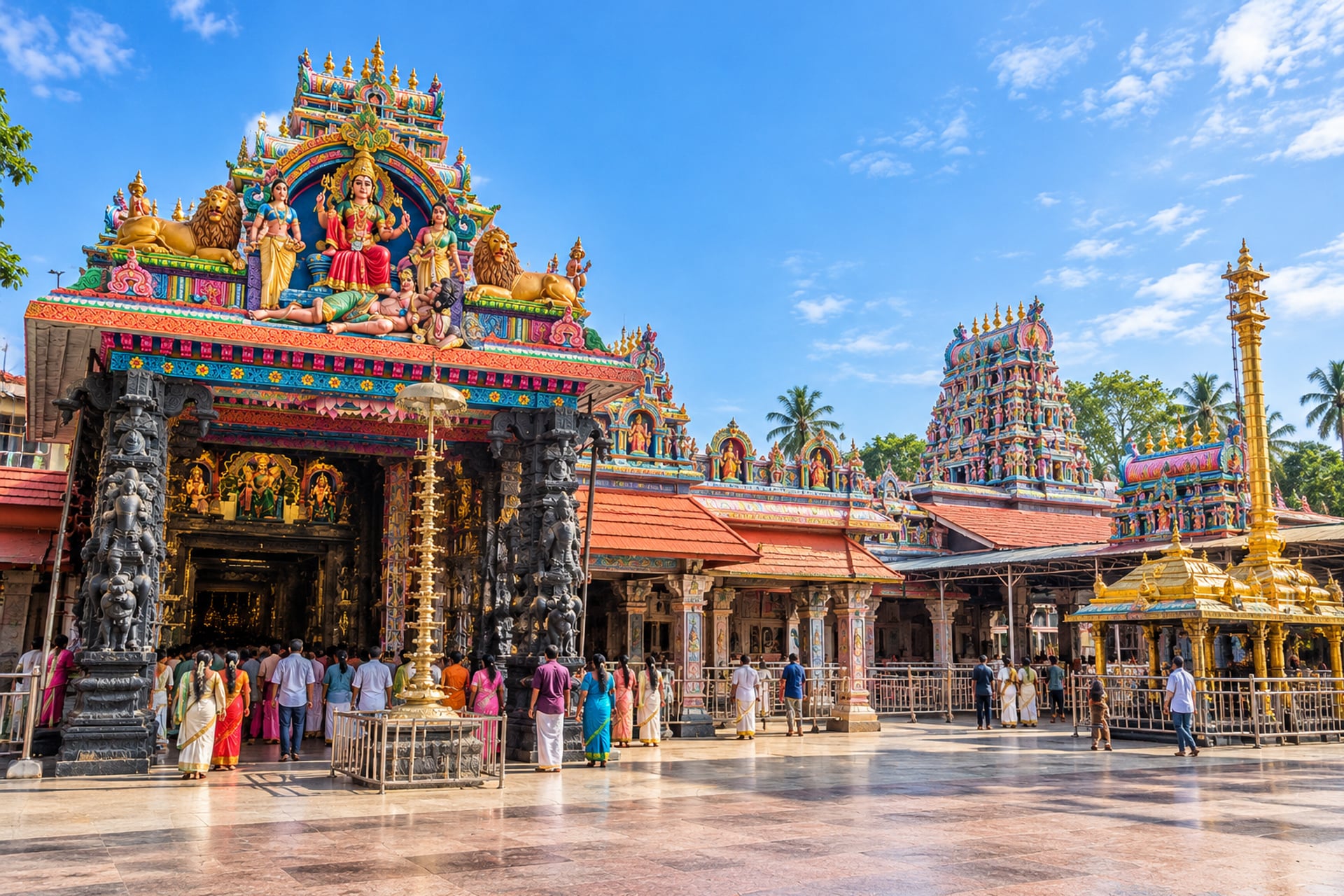
The architecture of Attukal Bhagavathy Temple reflects a blend of traditional Kerala and Tamil (Dravidian) architectural styles. The main gopuram (temple tower) is decorated with icons depicting the story of Goddess Kannaki, while the southern gopuram depicts the puranic story of Dakshayaga, where the goddess Sati immolates herself. The sanctum sanctorum houses two idols of the goddess - the original idol, enclosed in a gold covering embedded with jewels, and a second idol installed beside it. Corridors around the temple feature carved depictions of Mahishasuramardini, Goddess Kali, Rajarajeswari, and Parvathi with Lord Shiva, along with the ten incarnations of Lord Vishnu (Dashavatara).
Gopuram
Ornate Temple Tower (Gopuram)
The temple's front gopuram features icons on either side based on the story of Goddess Kannaki. The southern gopuram separately depicts the Dakshayaga episode from Hindu mythology. Overall, the temple's structure is described as more colorful than traditional Kerala temples, carrying a stronger Tamil architectural influence with traces of Kerala design.
Sanctum
Sanctum Sanctorum
The sanctum houses two idols of Attukal Bhagavathy: the original idol at the center, enclosed in gold ornamentation embedded with jewels, and a second idol installed beside it.
Temple Wall / Corridors
Corridor Carvings and Depictions
The corridors surrounding the temple feature carved depictions of Mahishasuramardini, Goddess Kali, Rajarajeswari, and Parvathi with Lord Shiva, along with the epic stories of the ten incarnations of Lord Vishnu (Dashavatara).
Sub-Shrines
Deities Within the Temple Complex
Alongside the primary deity, the temple complex includes representations of Goddess Kali, Goddess Parvathy, Lord Shiva, and Goddess Sri Rajarajeswari.
Construction Materials
General Kerala Temple Construction Style
Kerala temples typically make heavy use of wood, granite, and laterite stone, owing to the region's forest cover and climate. Roofs are often steep and needle-like, made of wood and covered with copper plates to withstand monsoon rains.
Interesting facts

The Attukal Pongala festival holds the Guinness World Record for being the largest gathering of women for a religious activity, first certified in 1997 with 1.5 million participants and again in 2009 with 2.5 million. In some years, turnout has been reported at over 3 million women offering Pongala (a sweet rice dish) to the goddess, transforming the city into a vast spiritual hearth.
Deities & Shrines
Lord Ganesha
A shrine dedicated to Lord Ganesha is located within the Attukal Bhagavathy Temple complex, alongside the temple's other sub-shrines.
Lord Shiva
A sub-shrine dedicated to Lord Shiva is present within the temple complex, forming part of the broader pantheon of deities worshipped alongside Attukal Bhagavathy.
Serpent Deities (Nagaraja)
The temple houses a shrine dedicated to serpent deities (Nagaraja), consistent with a common feature of Kerala temples associated with protection and ancestral worship.
Darshan & Service Offerings
| Service | Timing | Price | Notes |
|---|---|---|---|
| General Darshan | 4:30 AM - 8:30 PM (temple opening hours) | Free - no general entry fee | The temple has no entry fee for general darshan and operates within these daily hours. |
Visitor information
Location
Attukal Bhagavathy Temple is located in Attukal, Thiruvananthapuram, the capital city of Kerala. It is approximately 2 km from Thiruvananthapuram Central Railway Station and around 7 km from Trivandrum International Airport, making it easily accessible by road, rail, and air.
Ideal Visiting Season
The Attukal Pongala Festival is held annually in February or March, drawing the largest crowds of the year. Outside festival dates, cooler months (November-March) are generally more comfortable for visiting Kerala, though this is general regional travel guidance rather than something specific to the temple.
Dress Expectations
The temple does not enforce a specific dress code on regular days; modest attire is a general courtesy rather than a strict rule. During major festivals, devotees are typically expected or encouraged to wear traditional attire.
Entry and Admission
Entry to the temple is free for all devotees, with no restrictions based on caste, creed, or religion - the temple and its festivals are known for drawing participants "of all caste, creed and religion." Photography may be restricted in certain areas of the temple, based on visitor accounts, though this is not confirmed as official policy.
Location
Thiruvananthapuram, Kerala, India
Best Time to Visit
Best Time to Visit Attukal Bhagavathy Temple
The most pleasant time to visit is between November and March, when the weather in Thiruvananthapuram is cooler and generally more comfortable for temple visits and sightseeing. (This is general regional travel guidance rather than something specific to the temple).
Visit During Attukal Pongala Festival
The temple comes alive during the Attukal Pongala Festival, celebrated in February or March. It attracts millions of women devotees, making it a spiritually powerful and culturally rich experience - the temple's most important annual festival.
Visit During Navaratri
As one of Kerala's prominent Devi (Shakti) temples, Attukal Bhagavathy holds devotional significance during Navaratri (usually September-October). Specific details on special pujas or cultural programming during this period at Attukal are not independently confirmed.
Quieter Visit During Monsoon Months
June to August, Kerala's monsoon season, generally sees fewer tourists statewide, which may offer a calmer visiting experience. This is general regional travel logic rather than a confirmed Attukal-specific detail.
Nearby places
Sree Padmanabhaswamy Temple
2.5 km
- One of the richest and most famous Vishnu temples in the world, this temple is renowned for its intricate Dravidian architecture and the reclining idol of Lord Padmanabha. It's a must-visit for pilgrims and history enthusiasts alike.
Sree Pazhavangadi Ganapathy Temple
2.2 km
- Dedicated to Lord Ganesha, this temple is popular for its ritual of coconut breaking to remove obstacles. It's located close to the East Fort and is usually visited along with the Padmanabhaswamy Temple.
Irumkulangara Durga Devi Temple
1.8 km
- An ancient shrine dedicated to Goddess Durga near Manacaud. It has a documented historical relationship with Sree Padmanabhaswamy Temple (priests reportedly traveled there by boat for rituals) - not, as sometimes assumed, with Attukal Bhagavathy Temple. It remains a peaceful spot for spiritual seekers.
Sreekanteswaram Mahadeva Temple
3.5 km
- An ancient temple dedicated to Lord Shiva, known for its spiritual ambiance and traditional rituals. It's a favored spot for devotees seeking blessings from Lord Mahadeva in Trivandrum.
Festivals & culture
The temple is renowned for hosting some of the most spiritually vibrant and culturally significant festivals in Kerala. The most iconic among them is Attukal Pongala, which draws millions of women devotees, earning the temple global recognition. The temple is also linked to Navaratri-period observances, including Vidyarambham on Vijayadashami. These occasions transform the temple into a hub of devotion, cultural expression, and celebration, reflecting the deep-rooted faith of devotees in the power of the Divine Mother.
Attukal Pongala
February-March (Malayalam month of Kumbham)
The most significant festival at Attukal Temple, celebrated by millions of women who prepare Pongala (a sweet offering of rice) in open spaces around the temple. It holds a Guinness World Record for the largest gathering of women for a religious activity.
Navaratri / Vidyarambham
September-October
Attukal Bhagavathy Temple is recognized by Kerala Tourism as one of the key destinations for Vidyarambham, the ceremony initiating children into learning, performed on Vijayadashami - the concluding day of Navaratri.
Additional information
Daily Darshan Timings
The temple operates from approximately 4:30 AM to 8:30 PM with no entry fee. The specific split you listed (4:30 AM-12:30 PM, 5:00 PM-8:30 PM) is a common pattern for South Indian temples, but is not independently confirmed for Attukal specifically. During Pongala, timings and access are adjusted for crowd management.
General Dress Guidance
The temple does not enforce a strict formal dress code on regular days; modest attire is a general courtesy. The "no shirt for men in the sanctum" convention is common at South Indian temples generally, but is not confirmed as a specifically enforced Attukal rule.
Footwear Removal
It is customary to remove footwear before entering the temple. Storage arrangements are typically provided near the entrance.
On-Site Police and Security
Confirmed and substantial - police deployment for Attukal Pongala has ranged from roughly 3,300 to over 5,800 personnel in different years, organized into multiple zones (temple/inner area, outer area, traffic, and emergency response) under Superintendents of Police, supported by drone surveillance, dozens of CCTV cameras, watchtowers, and a dedicated 24-hour police control room.
First Aid & Ambulance Services
Confirmed - the Health Department stations around 10 ambulances during the festival, supplemented by Fire and Rescue Services, City Corporation, and private hospital ambulances. Dedicated medical camps, heat clinics, and a paediatrician's service for the young Kuthiyottam participants are also arranged.
Attukal Bhagavathy Temple Trust
Confirmed - the temple is administered by a trust with named office-bearers (Chairman, Secretary, Treasurer, etc., as reported around festival time), which oversees festival organization and public services.
Multilingual Support
Festival announcements during Pongala are made in Malayalam and Tamil to reach devotees from different linguistic backgrounds.
Temple facilities
Drinking Water Stations
The Water Authority installs approximately 1,500-1,550 temporary drinking water taps, plus around 50 shower facilities, across the festival area. Clean drinking water is specifically arranged for devotees waiting in queues.
Organized Queue System
The temple has facilities for 3,000 devotees to queue at a time, with authorities coordinating queue management especially during Attukal Pongala and other major observances.
Sanitation Facilities
Around 3,000 cleaning workers are deployed by the City Corporation during the festival to maintain sanitation across the festival zone, implying substantial toilet/sanitation infrastructure, though separate men's/women's facilities are not explicitly documented in these terms.
Temporary Shelters
Extensive temporary infrastructure (pandals, stages, hearth zones) is set up throughout the festival area, though a dedicated "sheltered walkway" system is not specifically documented.
Emergency services
PRS Hospital
1.8 km
Contact
+91 4714073333
- A well-equipped multi-specialty hospital offering emergency care, outpatient services, and diagnostic facilities. Known for reliable medical services near Thiruvananthapuram city center.
Ananthapuri Hospitals and Research Institute
4.3 km
Contact
+91 4716609900
- Providing advanced medical services across departments including cardiology, neurology, orthopedics, and emergency medicine.
Top picks

Puttu & Kadala Curry
A steamed cylindrical rice cake layered with grated coconut, served with a spiced black chickpea curry. A staple Trivandrum breakfast, found at roadside stalls and restaurants across the city.
Appam
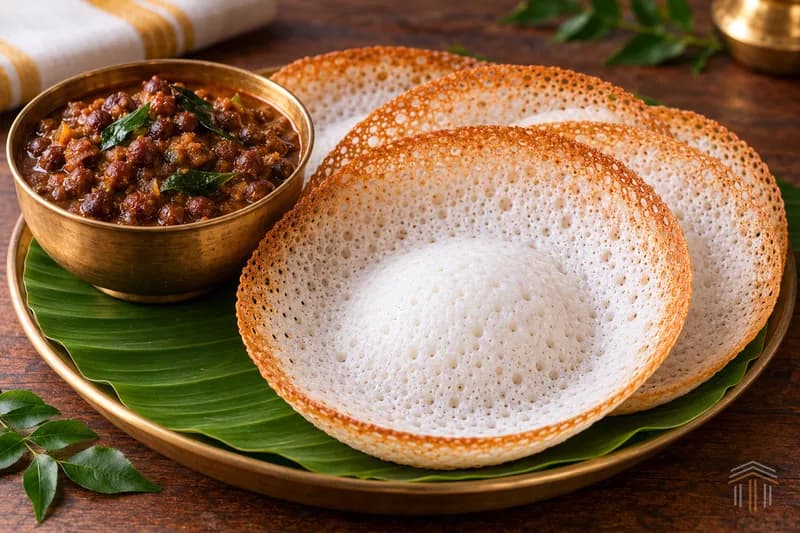
A fermented rice-and-coconut batter pancake with a soft, thick center and lacy, crisp edges, cooked in a special mould called 'appa chatty.' Typically served with vegetable, chicken, or mutton stew. Also known by regional names like Kallappam, Palappam, and Velayappam.

Trivandrum Sadya
A traditional vegetarian feast served on a banana leaf, featuring rice with an array of accompaniments such as avial, thoran, and pachadi. The Trivandrum version distinctively includes Trivandrum boli (a sweet flatbread) and paalpayasam (creamy rice pudding) as dessert.
Erissery
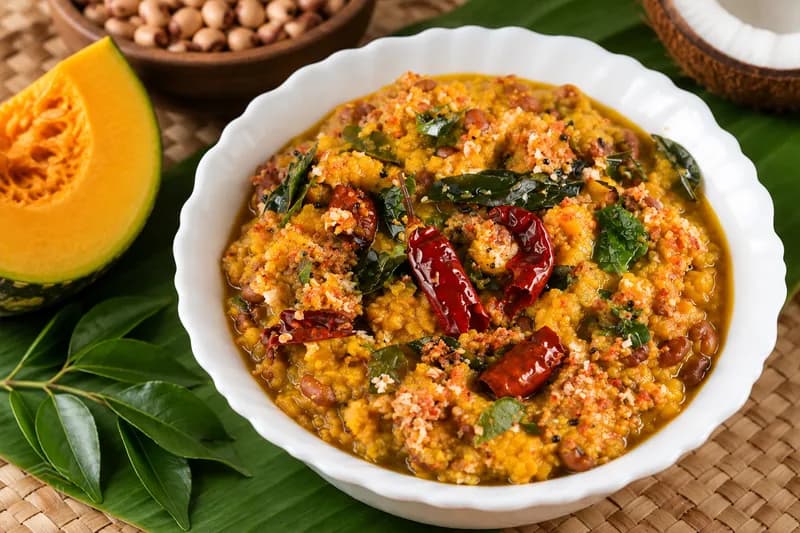
A mildly sweet, spiced stew made from pumpkin and lentils, cooked with grated coconut. A well-known local dish found across Trivandrum's traditional eateries.
Seafood & Biryani
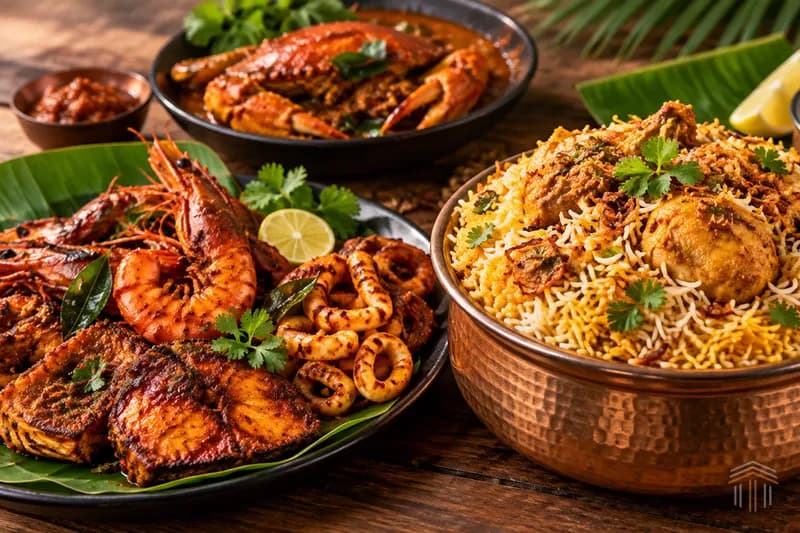
Spiced biryani, mutton preparations, and coastal seafood dishes, reflecting Trivandrum's coastal location and diverse culinary influences.

Pazham Pori
Ripe banana slices coated in a sweet batter and deep-fried until golden. A popular tea-time snack served hot at local tea shops.
Visitor guide
Kerala State Road Transport Corporation
2.2 km
- Closest local bus station to the temple, well-connected with frequent buses from various parts of Thiruvananthapuram.
Videos
Third-party videos may include ads or external commentary.
Frequently Asked Questions
Attukal Bhagavathy Temple is located in Attukal, Thiruvananthapuram, Kerala, India. The temple is one of the most prominent pilgrimage centers dedicated to Goddess Bhagavathy in Kerala.
Attukal Bhagavathy Temple is famous for the Attukal Pongala, a major annual festival in which millions of women devotees traditionally gather to prepare and offer Pongala to the Goddess.
The main deity of Attukal Bhagavathy Temple is Attukal Amma, a form of Goddess Bhagavathy. The Goddess is worshipped as a powerful manifestation of Shakti and is deeply revered by devotees.
Attukal Bhagavathy Temple has a rich history rooted in Kerala's devotional traditions and the legend of Kannaki, the heroine of the Tamil epic Silappadikaram. According to temple tradition, Kannaki is associated with the divine form of Attukal Bhagavathy.
Attukal Pongala is the most famous festival of the temple. Women devotees prepare Pongala, a traditional offering made from rice, jaggery, coconut, and other ingredients, in earthen pots and offer it to Attukal Amma as an act of devotion.
Attukal Bhagavathy Temple generally opens in the morning and remains open during designated morning and evening hours for darshan and rituals. Timings may change during festivals and special occasions, so devotees should check the latest temple schedule before visiting.
General darshan at Attukal Bhagavathy Temple is generally free for devotees. Certain special poojas, offerings, and sevas may have separate charges or booking requirements.
Attukal Pongala is the principal festival of Attukal Bhagavathy Temple. Other Hindu festivals and special religious ceremonies are also celebrated throughout the year with traditional rituals and offerings.
The best time to visit Attukal Bhagavathy Temple depends on your purpose. For a quieter temple visit, weekdays and non-festival periods are generally preferable. Devotees seeking to experience Attukal Pongala should plan according to the annual festival calendar.
Attukal Bhagavathy Temple is located in Thiruvananthapuram and is easily accessible by road from different parts of the city. Thiruvananthapuram Central Railway Station and Thiruvananthapuram International Airport are convenient transport points for visitors.