

21°C
Chikkamagaluru
Sringeri Sharadamba Temple
 Chikkamagaluru, Karnataka, India
A revered center of Advaita Vedanta, Sringeri Temple is more than a spiritual destination. It's a living heritage of devotion, tradition, and sacred scholarship amidst nature's tranquil beauty.
- ReligionHindu
- DeityGoddess Sharadamba (form of Saraswati)
- TimingsMorning: 06:00 AM - 02:00 PM, Evening: 05:00 PM - 09:00 PM
About the temple
About the temple
Sringeri Sharadamba Temple is a revered Hindu temple located in Karnataka, dedicated to Goddess Sharadamba, an incarnation of Saraswati, the goddess of wisdom and learning. Established by Adi Shankaracharya, it serves as the southern seat of the Advaita Vedanta tradition. Surrounded by the serene Western Ghats and the Tunga River, the temple is a renowned spiritual and educational center, attracting devotees, scholars, and seekers from all over India.
Sringeri Sharadamba Temple
Sringeri Sharadamba Temple
The Timeless Heritage of Sringeri Sharadamba Temple in Numbers
Explore the spiritual and cultural significance of Sringeri Sharadamba Temple a beacon of Advaita Vedanta, centuries-old traditions, and unbroken lineage. From its foundation by Adi Shankaracharya to its continuous role in Vedic learning, Sringeri stands as a symbol of devotion and wisdom.
- Unbroken Guru-Shishya Lineage Since 8th Century CE
- 1200+ yrs
- Number of Jagadgurus (Spiritual Leaders) in Sringeri Matha
- 36
- Construction Year of Vidya Shankara Temple within the Complex
- 1338 CE
- Zodiac-Aligned Pillars in Vidya Shankara Temple
- 12
- The First of the Four Peethams Established by Adi Shankaracharya
- 1
Unbroken Guru-Shishya Lineage Since 8th Century CE
Number of Jagadgurus (Spiritual Leaders) in Sringeri Matha
Construction Year of Vidya Shankara Temple within the Complex
Zodiac-Aligned Pillars in Vidya Shankara Temple
The First of the Four Peethams Established by Adi Shankaracharya
Historical Background
Sringeri Sharadamba Temple, located in Karnataka, is a renowned Hindu pilgrimage and spiritual centre associated with Adi Shankaracharya and Advaita Vedanta. Traditionally linked to Adi Shankaracharya’s establishment of the Sringeri Sharada Peetham in the 8th century, the temple grew into a major centre of Vedic learning and spiritual traditions. Royal patronage, particularly from the Vijayanagara Empire, contributed to its architectural and cultural development. The present golden idol of Goddess Sharadamba was installed in 1916. Today, Sringeri Sharadamba Temple continues to attract devotees and scholars, and is celebrated for its spiritual heritage, Vedic education, festivals, and historic temple architecture.
- 8th Century CE - Establishment by Adi Shankaracharya:
- 8th Century CE - Establishment by Adi Shankaracharya:
Adi Shankaracharya visits Sringeri during his travels and, impressed by the sacred harmony of nature (cobra shielding a frog), establishes the first of the four cardinal mathas (Sharada Peetham). He installs a sandalwood idol of Goddess Sharadamba in a modest shrine.- 9th to 12th Century CE - Growth as a Learning Center:
- 9th to 12th Century CE - Growth as a Learning Center:
Sringeri develops as a major center of Vedic learning and Advaita Vedanta, attracting scholars and disciples. The matha maintains and passes on Shankaracharya's teachings through an unbroken lineage of Jagadgurus.- 14th Century CE - Patronage by Vijayanagara Empire:
- 14th Century CE - Patronage by Vijayanagara Empire:
The Vijayanagara rulers, especially Harihara and Bukka, recognize the importance of Sringeri. They offer royal support and donate land and wealth, aiding the development of the temple complex and the matha. Several structures, including parts of the temple, are built or expanded during this era.- 17th to 19th Century - Cultural Flourishing:
- 17th to 19th Century - Cultural Flourishing:
Successive Jagadgurus enhance the temple's spiritual and cultural activities. Temples to other deities like Adi Shankaracharya, Lord Chandramoulishwara, and Torana Ganapati are constructed within the temple complex.- 1916 - Installation of the New Sharadamba Idol:
- 1916 - Installation of the New Sharadamba Idol:
The original sandalwood idol is replaced with a golden idol of Goddess Sharadamba, reflecting her elevated status as the principal deity of the temple. The golden idol is in a seated posture with a book and rosary, symbolizing knowledge.- 20th Century - Modern Development:
- 20th Century - Modern Development:
The matha undertakes the renovation of temple structures and enhancement of Vedic education. Infrastructure like schools, libraries, guest houses, and Veda Pathashalas are developed under the guidance of Jagadgurus.- Present Day:
- Present Day:
Sringeri Sharadamba Temple continues to serve as the Southern spiritual headquarters of Advaita Vedanta. It remains a key pilgrimage site and educational center, celebrating major festivals like Navaratri, Vasantotsava, and Guru Purnima with grandeur.


Synopsis
Sringeri Sharadamba Temple, located in the scenic town of Sringeri in Karnataka, is one of the most prominent centers of Hindu learning and spirituality. Established by Adi Shankaracharya in the 8th century, the temple is dedicated to Goddess Sharadamba, the embodiment of wisdom and knowledge. As the southern seat of the Advaita Vedanta tradition, it continues to be a vibrant hub for Vedic studies, classical arts, and spiritual practices. The temple's peaceful ambiance, traditional rituals, and scholarly heritage make it a revered destination for devotees and seekers alike.
The origins of the Sringeri Sharadamba Temple trace back to the 8th century CE, when Adi Shankaracharya, the great philosopher and proponent of Advaita Vedanta, established the first of the four cardinal mathas (Sharada Peetham) in Sringeri, Karnataka. Legend holds that Shankaracharya was moved by a divine vision of a cobra shielding a pregnant frog a rare symbol of peace and harmony on the banks of the Tunga River. He recognized the site's profound spiritual energy and chose it as the southern seat of his teachings. He installed a sandalwood idol of Goddess Sharadamba, representing Saraswati, the goddess of wisdom and learning, initiating a sacred legacy of knowledge and devotion that continues to this day.
Though early inscriptions are sparse, the oral lineage of Jagadgurus (spiritual heads) and ancient manuscripts preserved in the matha chronicle the temple's unbroken spiritual tradition. Over time, Sringeri developed into a hub of Vedic scholarship and Advaita philosophy, drawing students and seekers from across India. During the 14th century, the temple received significant patronage from the Vijayanagara Empire, particularly through Jagadguru Sri Vidyaranya (the 12th pontiff), whose association with the royal founders Harihara and Bukka helped expand and elevate the temple and matha. It was during this period that the original sandalwood idol of Sharadamba was replaced with the current golden idol, crafted in a seated posture holding a book and rosary, symbolizing her role as the goddess of wisdom. Centuries later, the temple complex -including the main sanctum - was rebuilt in granite, with the new structure consecrated in May 1916 under Jagadguru Sri Chandrasekhara Bharati.
The Vijayanagara rulers were the earliest major royal patrons who supported the temple and matha's religious and academic activities. Their contributions helped establish Sringeri as a vital spiritual institution in South India. In later centuries, regional kings, local chieftains, and wealthy devotees continued this tradition. In modern times, the Jagadgurus of Sringeri Sharada Peetham themselves have played a central role in the temple's administration, preservation, and outreach. Under the leadership of recent Shankaracharyas like Jagadguru Sri Abhinava Vidyatirtha Mahaswamiji and Jagadguru Sri Bharati Tirtha Mahaswamiji, the matha has expanded its educational institutions, Veda Pathashalas, charitable activities, and preservation of spiritual traditions. Their sustained stewardship has ensured Sringeri's status as a beacon of Dharma, scholarship, and devotion in the modern era.
Sacred significance
Seat of Goddess Sharadamba - The Embodiment of Wisdom
Sringeri Sharadamba Temple is dedicated to Goddess Sharadamba, a form of Saraswati, the goddess of knowledge, learning, and wisdom. Worship at this temple is believed to bless devotees with clarity of mind, sharp intellect, and academic success. The goddess is said to personally reside here, making it a sacred spot for spiritual seekers and students alike.
Southern Matha of Adi Shankaracharya
Sringeri is the first and foremost of the four Amnaya Peethams established by Adi Shankaracharya to uphold the principles of Advaita Vedanta. It is the spiritual epicenter of non-dualistic philosophy, with an unbroken lineage of Jagadgurus preserving and teaching Shankaracharya's doctrine. The matha is revered for its profound role in maintaining the Vedic traditions and safeguarding Sanatana Dharma.
Architecture
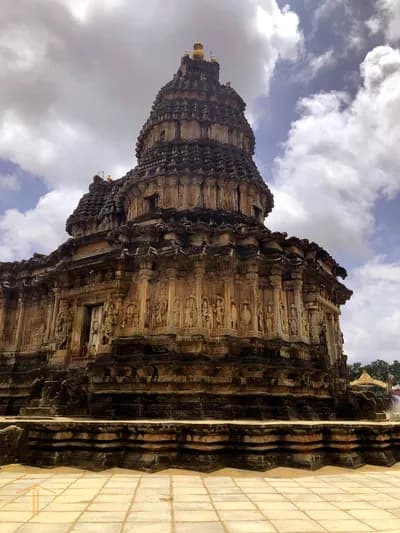
The architecture of Sringeri Sharadamba Temple reflects a blend of traditional South Indian and Vijayanagara-style temple architecture, developed and renovated over several centuries. The temple is dedicated to Goddess Sharadamba, the goddess of knowledge and wisdom, and features an elegant sanctum sanctorum, ornate pillars, intricate carvings, and traditional architectural elements. The present temple structure is distinguished by its Dravidian-style features, including a beautifully designed entrance and decorative tower. The temple complex is situated on the banks of the sacred Tunga River, enhancing its serene and spiritual atmosphere. Nearby, the historic Vidyashankara Temple showcases remarkable Hoysala and Vijayanagara architectural influences, adding further cultural significance to the Sringeri Sharada Peetham complex. Together, the temples, river surroundings, and traditional structures make Sringeri an important center of architectural heritage and spiritual learning in Karnataka.
Sanctum
Garbhagriha (Sanctum Sanctorum)
The Garbhagriha houses the golden idol of Goddess Sharadamba, seated in a yogic posture with a book and rosary in hand. Built with granite and carved stone, the sanctum radiates spiritual energy and serves as the focal point of the temple. The inner walls are adorned with ancient motifs and Vedic symbols, enhancing the divine ambiance.
Tower
Vimana (Temple Tower Above Sanctum)
The Vimana, rising directly above the sanctum, follows Dravidian architectural tradition, crowned with a golden Kalasha. The tower's tiers are sculpted with deities and celestial motifs, symbolizing the ascension of the soul toward enlightenment. Its symmetrical design enhances both visibility and sanctity.
Hall
Navaranga Mandapa (Main Prayer Hall)
The Navaranga Mandapa is an elaborately designed hall supported by finely carved stone pillars, leading devotees toward the sanctum. This hall serves as the venue for major pujas, Vedic chanting, and festival gatherings. The carvings on each pillar depict scenes from the Vedas, Puranas, and mythological lore, reflecting divine narratives in stone.
Shrine
Vidya Shankara Temple
Located adjacent to the Sharadamba Temple, the Vidya Shankara Temple is a marvel of medieval architecture. Built in 1338 CE, it blends Dravidian, Hoysala, and Vijayanagara styles, featuring twelve zodiacal pillars (Rashistambhas) aligned with solar movement. Rays of the sun fall on each pillar during the corresponding zodiac month, showcasing astronomical precision in sacred design.
Corridor
Pradakshina Patha (Circumambulatory Passage)
The inner corridor encircling the sanctum is designed for pradakshina (ritual circumambulation). It is a spiritual path where devotees walk in reverence, symbolizing the journey of life and spiritual progression. The corridor is built with polished granite, often illuminated with oil lamps and Vedic chants echoing through its length.
Riverfront
Tunga River Ghat (Ritual Bathing Area)
On the banks of the Tunga River, near the temple, lies a traditional ghat where devotees perform ritual baths before entering the temple. The riverfront is built with stepped stone platforms and small shrines, forming a tranquil space for reflection and purification.
Shrine
Chandramoulishwara and Adi Shankaracharya Shrines
Within the temple complex are shrines dedicated to Lord Chandramoulishwara (a form of Shiva) and Adi Shankaracharya himself. These shrines are built in classic granite stone, featuring minimalist but spiritually potent architecture. They reinforce the temple's deep roots in Shaiva and Advaita philosophy.
Ornamentation
Carved Pillars and Sculptural Details
The temple's stone pillars and lintels are intricately carved with motifs of divine beings, sacred animals, mythological scenes, and lotus patterns, displaying exceptional artistry. These elements narrate symbolic stories from scriptures and serve both aesthetic and meditative functions.
Campus
Sringeri Matha Campus and Educational Buildings
Surrounding the temple is the vast Sringeri Sharada Peetham campus, housing Veda Pathashalas, libraries, spiritual halls, and residential quarters for students and monks. The architecture follows South Indian traditional layouts, emphasizing simplicity, discipline, and serenity, aligning with the ideals of spiritual learning.
Interesting facts

Sringeri Sharadamba Temple was established by Adi Shankaracharya in the 8th century CE, making it one of the oldest and most spiritually significant Advaita Vedanta centers. He chose this site after witnessing a cobra shielding a pregnant frog from the sun, symbolizing the sanctity and harmony of the place.
Deities & Shrines
Lord Chandramoulishwara
A significant shrine within the temple complex is dedicated to Lord Shiva in the form of Chandramoulishwara, who is believed to be the ishta-devata (personal deity) of Adi Shankaracharya. The Linga worshipped here is said to have been personally consecrated by Adi Shankaracharya, and rituals are performed with profound reverence. Devotees seek blessings for inner strength, wisdom, and liberation from karmic cycles.
Adi Shankaracharya
A sanctified shrine honors Adi Shankaracharya, the founder of the Sringeri Sharada Peetham. The shrine features an idol and padukas (footwear) symbolizing his presence and spiritual authority. Pilgrims offer prayers here to gain clarity, knowledge, and guidance on the Advaita path.
Thorana Ganapathi
A dedicated shrine to Lord Ganesha, the remover of obstacles, is located near the temple entrance. Devotees begin their visit with prayers to Ganesha to ensure a smooth darshan and to seek blessings for success, wisdom, and prosperity in their lives and endeavors.
Goddess Durgamba
A shrine for Goddess Durgamba, an aspect of divine feminine energy and protection, is part of the larger temple complex. Worshipped for courage, protection from evil, and spiritual empowerment, her presence strengthens the Shakti tradition upheld in Sringeri.
Darshan & Service Offerings
| Service | Timing | Price | Notes |
|---|---|---|---|
| Sharadamba Temple Darshan | 6:00 AM - 2:00 PM & 4:00 PM - 9:00 PM (Maha-Mangalarati at 10:00 AM, 12:00 PM, and 7:30 PM) | Free | Devotees can have darshan of Goddess Sharadamba during regular temple hours, with Maha-Mangalarati performed three times daily. Other temples in the complex follow slightly different hours (6:00 AM - 1:00 PM, 5:00 PM - 8:00 PM). |
| Special Sevas and Audiences | Guru Darshanam: 10:30 AM -11:30 AM daily · Chandramoulishwara Puja (by Jagadguru): 9:00 PM - 10:00 PM (8:30 PM - 10:00 PM Fridays) · Aksharabhyasa: bookable daily | Not specified on the official site - recommend confirming fees directly with the temple office | Devotees can seek a personal audience with the Jagadguru during Guru Darshanam, witness the Chandramoulishwara Puja performed by the Jagadguru, or book the Aksharabhyasa initiation ceremony for children. |
Visitor information
Location
Sringeri Sharadamba Temple is located in the town of Sringeri, Chikkamagaluru district, Karnataka. It is situated on the banks of the sacred Tunga River, surrounded by lush Western Ghats.
Accessibility
Sringeri is well connected by road, with regular bus services from major cities like Bangalore (approx. 320-340 km), Mangalore (approx. 108-110 km), and Chikmagalur (approx. 85 km). Private taxis and cab services are also available. The route involves hilly, ghat-section roads through towns like Balehonnur, so visitors -especially those driving themselves - should plan accordingly.
Accommodation
The temple town offers various accommodation options, including guest houses run by the Sringeri Matha, budget lodges, and nearby hotels. Advance booking is recommended during peak pilgrimage seasons like Navaratri and Sharadotsava festivals.
Best Time to Visit
The ideal time to visit Sringeri Sharadamba Temple is between October and March when the weather is pleasant. Special festivals such as Navaratri and Sharadotsava attract large crowds, offering a unique spiritual experience.
Facilities
The temple complex provides amenities including drinking water, restrooms, cloakrooms, and prasadam counters. Devotees can also access Vedic classes and cultural programs organized regularly by the matha.
Location
Chikkamagaluru, Karnataka, India
Best Time to Visit
Best Time to Visit Sringeri Temple
The ideal months to visit Sringeri are October to March, when the weather is cooler and more pleasant. This period allows for comfortable temple visits and exploration of the scenic surroundings along the banks of the Tunga River.
Visit During Navaratri Festival
Navaratri (September-October) is the most grandly celebrated festival at Sringeri, when the temple comes alive with vibrant decorations, special alankarams, daily homas, and cultural programs. It is a spiritually charged time to witness Goddess Sharadamba's divine presence.
Chaturmasya of Jagadgurus
During Chaturmasya (July-September), when the Sringeri Jagadguru stays at the temple, many spiritual discourses, Vedic chanting sessions, and special events are conducted. It's a rare opportunity to receive darshan and blessings from the Acharya.
Peaceful Weekday Visits
To avoid crowds and long queues, plan your visit during weekdays, especially between Monday and Thursday, and avoid public holidays. These days offer a calm and meditative environment, perfect for introspection and peaceful darshan.
Nearby places
Sri Parshwanatha Tirthankarara Basadi
0.5 km
- Perched atop a small hill called Mallappa Betta, this ancient temple is dedicated to Lord Shiva in the form of Malahanikareshwara, the remover of impurities. It offers panoramic views of Sringeri and is ideal for meditation and quiet reflection.
Ganapathi Temple
1.2 km
- A unique open-air Ganesha temple with no sanctum structure - the idol sits under the open sky, surrounded by thousands of brass bells tied by devotees as vows.
Sri Kaalikamba Temple Sringeri
1.4 km
- A small shrine consecrated by Adi Shankaracharya as one of the four guardian deity temples protecting Sringeri (along with Kalabhairava, Vana Durga, and Kere Anjaneya).
Sri NagaBramha Swamy Temple
1.4 km
- A sacred shrine dedicated to Naga Bramha, worshipped as a serpent deity for protection, fertility, and ancestral blessings, following the region's traditional snake-worship (Nagaradhane) customs.
Festivals & culture
Sringeri Sharadamba Temple is known for its vibrant festivals and traditional celebrations dedicated to Goddess Sharadamba. Navaratri is one of the most important festivals, featuring special poojas, devotional rituals, cultural programs, and elaborate decorations. Other significant celebrations include Sharada Jayanti and Rathotsava, which attract devotees from across Karnataka and other parts of India. These festivals highlight Sringeri’s rich spiritual heritage, devotion to Goddess Sharadamba, and longstanding traditions of the Sharada Peetham.
Navaratri Mahotsavam
September-October (Ashwayuja)
This is the most significant festival at Sringeri, dedicated to Goddess Sharadamba. Celebrated for nine nights, it features daily alankaras (decorations), homas, special poojas, cultural performances, and the grand Saraswati Pooja on the ninth day. Thousands of devotees gather to witness the divine celebrations.
Guru Purnima
July (Ashadha Purnima)
Dedicated to honoring the Guru Parampara (lineage), this day is especially important at Sringeri Math. Devotees offer respects to Jagadguru Shankaracharya and participate in spiritual discourses and poojas.
Mahashivaratri
February-March (Phalguna)
A night-long observance dedicated to Lord Shiva, especially at the Sri Vidyashankara Temple in Sringeri. Includes special abhishekams, bhajans, and Vedic chanting throughout the night.
Shankara Jayanti
April-May (Vaishakha Shukla Panchami)
Celebrates the birth anniversary of Adi Shankaracharya, the founder of the Sringeri Math. The event includes processions, scholarly talks, chanting of Shankara's compositions, and honoring spiritual teachers.
Additional information
Daily Opening Hours
The temple is open daily from 6:00 AM - 12:00 PM and then from 4:00 PM to 8:00 PM for darshan and pooja ceremonies.
Traditional Attire Recommended
Devotees are requested to wear traditional Indian attire. Men are advised to wear dhoti or kurta-pajama, and women are recommended to wear sarees or salwar kameez. Avoid shorts, sleeveless tops, and jeans inside the temple.
Remove Footwear Before Entry
Shoes and slippers must be removed before entering the temple premises. Dedicated shoe racks and cloakrooms are available near the entrance.
Safe Storage for Belongings
Cloak room facilities are available near the temple entrance for storing bags and personal items during darshan. Use of cloak rooms is recommended to avoid inconvenience.
Assistance for Lost Items
The temple administration maintains a Lost & Found counter near the main entrance. Devotees can inquire here for misplaced belongings during their visit.
First Aid and Emergency Services
A first aid center is located near the temple premises, staffed during peak hours. For medical emergencies, nearby hospitals in Sringeri town can be accessed quickly.
Security and Law Enforcement
Temple security is managed by local police personnel stationed on-site. Visitors are advised to cooperate with security measures for a safe and smooth visit.
Emergency and General Enquiries
Devotees can contact the temple helpline at +91-8258-xxxxxx for information on pooja timings, sevas, and emergency assistance.
Authorized Temple Guides
Trained guides are available on request to provide detailed tours explaining the temple's history, architecture, and religious significance. Advance booking is recommended.
Administration and Governance
The temple is managed by the Sringeri Sharada Peetham Trust, which oversees religious activities, festivals, maintenance, and community services.
Internet Access for Devotees
Complimentary WiFi service is available within the temple complex for the convenience of visitors.
Multilingual Support
Assistance in Kannada, English, Hindi, and Telugu is available for foreign and domestic pilgrims to facilitate smooth communication.
Restricted Photography
Photography is generally prohibited inside the sanctum sanctorum and during poojas. Visitors are requested to follow temple rules and signage.
Temple facilities
Rest Areas
Seating areas and rest zones are provided for devotees to relax during their visit, especially during peak pilgrimage hours.
Drinking Water Stations
Clean and safe drinking water facilities are available at multiple points within the temple premises for visitors' convenience.
Storage Facilities
Cloak rooms are available near the temple entrance where devotees can securely store their bags and belongings during darshan.
Clean Washrooms
Well-maintained and hygienic restrooms are available for men and women within the temple complex.
Facilities for Differently-Abled
Wheelchairs and assistance services are provided for elderly and differently-abled devotees to ensure comfortable access throughout the temple.
Vehicle Parking
Separate parking zones for four-wheelers and two-wheelers are available within close proximity to the temple entrance.
Help and Guidance
An information desk staffed by temple volunteers provides assistance regarding darshan timings, sevas, and temple rules.
Prasadam Counters and Annadhanam
Prasadam distribution counters and annadhanam services offer devotees access to sacred food offerings within the temple premises.
Medical Assistance
First aid facilities and medical help are available on-site for any health emergencies during the visit.
Authorized Tour Guides
Trained guides are available to provide in-depth knowledge about the temple's history, architecture, and rituals.
Emergency services
Sri Abhinava Vidyatirtha Multi Speciality Hospital
1.8 km
Contact
+91 6364327544
- Multi-specialty hospital offering 24-hour emergency care, general medicine, and outpatient services.
Government Hospital Sringeri
1.9 km
Contact
N/A
- Well-equipped government-aided hospital providing inpatient and outpatient treatments, including emergency and maternity care.
Top picks

Akki Roti
A traditional Karnataka flatbread, Akki Roti is crispy, mildly spiced, and best served hot with chutney. Popular among pilgrims for breakfast or a light meal.

Kesari Bath
A sweet dish served during breakfast or after meals, Kesari Bath is soft, fragrant, and often paired with savory Upma (Khara Bath).

Maddur Vada
A crunchy snack native to Karnataka, Maddur Vada is a favorite with hot filter coffee. It's ideal for a quick bite near the temple.
Visitor guide
Sringeri Bus Stand
0.7 km
- Main local bus stand serving Sringeri town with frequent buses to nearby towns like Chikmagalur, Mangalore, and Bangalore. Shared autos and taxis are available for temple access.
Videos
Third-party videos may include ads or external commentary.
Frequently Asked Questions
Sringeri Sharadamba Temple is located in Sringeri, Chikkamagaluru district, Karnataka, India. The temple is situated on the banks of the Tunga River and is an important spiritual destination in South India.
Sringeri Sharadamba Temple is famous for its shrine dedicated to Goddess Sharadamba, the goddess of knowledge and wisdom. Sringeri is also renowned as one of the important Advaita Vedanta centers established by Adi Shankaracharya.
Sringeri Sharadamba Temple is traditionally associated with Adi Shankaracharya, who established the Sringeri Sharada Peetham in the 8th century. The temple and monastery have since developed into a major center of Hindu philosophy and learning.
The principal deity of Sringeri Sharadamba Temple is Goddess Sharadamba, a form of Goddess Saraswati associated with knowledge, wisdom, learning, and the arts.
The temple is especially significant for its connection with Adi Shankaracharya and the Sringeri Sharada Peetham. Its location beside the Tunga River, traditional rituals, and association with Advaita Vedanta make it an important pilgrimage destination.
Sringeri Sharadamba Temple generally opens in the morning and remains open for devotees through the day, with specific breaks and timings for various poojas and rituals. Visitors should check the latest temple schedule before travelling.
General darshan at Sringeri Sharadamba Temple is generally free for devotees. Certain special poojas, sevas, and religious services may have separate charges or booking requirements.
Important festivals celebrated at Sringeri Sharadamba Temple include Navaratri, Sharada Navaratri, and other Hindu religious festivals. The temple is particularly vibrant during celebrations dedicated to Goddess Sharadamba.
The best time to visit Sringeri Sharadamba Temple is generally from October to March, when the weather is more comfortable for sightseeing and pilgrimage. Navaratri is also a popular period for devotees seeking the blessings of Goddess Sharadamba.
Sringeri Sharadamba Temple can be reached by road from Chikkamagaluru, Udupi, Mangaluru, and other parts of Karnataka. Mangaluru International Airport is one of the nearest airports, while Udupi and Kadur are among the nearby railway-connected locations.