
26°C
Dakshina Kannada
Sri Kshetra Dharmasthala Manjunatha Swamy Temple
 Dakshina Kannada, Karnataka, India
Sri Manjunatha Temple, Dharmasthala - Where Jain and Hindu Traditions Unite A Sacred Destination Celebrating Faith, Harmony, and Karnataka’s Rich Spiritual Heritage.
- ReligionHindu (with Jain administration)
- DeityLord Manjunatha (Lord Shiva)
- TimingsMorning: 06:30 AM - 11:00 AM & 12:15 PM - 02:30 PM, Evening: 05:00 PM - 08:30 PM

About the temple
About the temple
Sri Manjunatha Temple in Dharmasthala is a revered Hindu temple located in Karnataka, dedicated to Lord Manjunatha (a form of Lord Shiva). Unique for its harmonious blend of Hindu and Jain traditions, the temple is administered by a Jain family while Vaishnava priests perform the rituals. Renowned for its spiritual significance, charitable activities, and cultural unity, the temple draws millions of devotees annually.
Sri Kshetra Dharmasthala Manjunatha Swamy Temple
Sri Kshetra Dharmasthala Manjunatha Swamy Temple
The Living Legacy of Sri Manjunatha Temple, Dharmasthala In Numbers
Experience the spiritual, cultural, and charitable grandeur of Sri Manjunatha Temple in Dharmasthala - a beacon of Dharma, interfaith harmony, and timeless devotion. From centuries-old traditions to large-scale social service, the temple stands as a powerful symbol of divine service and human upliftment.
- Ancient Temple Legacy Upholding Dharma Since the 13th Century
- 800+ yrs
- Devotees Served Daily with Free Annadanam (Meals), Scaling to 30,000-70,000 During Festivals
- 25000+
- Annual Footfall of Pilgrims and Visitors from Across India and Abroad
- Millions
- Free Mass Wedding Ceremonies Held Since 1972, Marrying Over 13,000 Couples
- 54+ Editions
- Dharma Daivas Worshipped as Guardian Spirits of the Region
- 4
- Educational Institutions Run by the SDM Educational Society - from Primary Schools to a Full University
- 56 Institutions
- Tradition of Dharmic Justice, with the Heggade Adjudicating Civil Disputes (Hoyulus) at the Dharma Peetha
- Centuries-Old
Ancient Temple Legacy Upholding Dharma Since the 13th Century
Devotees Served Daily with Free Annadanam (Meals), Scaling to 30,000-70,000 During Festivals
Annual Footfall of Pilgrims and Visitors from Across India and Abroad
Free Mass Wedding Ceremonies Held Since 1972, Marrying Over 13,000 Couples
Dharma Daivas Worshipped as Guardian Spirits of the Region
Educational Institutions Run by the SDM Educational Society - from Primary Schools to a Full University
Tradition of Dharmic Justice, with the Heggade Adjudicating Civil Disputes (Hoyulus) at the Dharma Peetha
Historical Background
Sri Manjunatha Temple in Dharmasthala, Karnataka, is a revered shrine dedicated to Lord Manjunatha, a form of Lord Shiva. With traditions dating back around 800 years, the temple is renowned for its unique blend of Jain administration and Hindu worship, with the Heggade family overseeing its affairs while Vaishnava Brahmins conduct the rituals. Over the centuries, Dharmasthala has grown into an important centre of devotion, charity, and religious harmony. Today, the temple is especially known for its spiritual traditions, daily Annadanam, and service to devotees.
13th Century (c. 800 years ago)
13th Century (c. 800 years ago)
The temple's origin begins in the village of Kuduma, where Jain chieftain Birmanna Pergade and his wife Ammu Ballalthi are visited by the Dharma Daivas in human form. They request a space to propagate Dharma, leading to the sanctification of the site.Consecration of the Shiva Linga
Consecration of the Shiva Linga
Following divine instructions, Annappa Swamy brings a Shiva Linga from Kadri Manjunath Temple in Mangalore. The Linga is installed, and the temple is dedicated to Lord Manjunatha (Shiva), marking the formal establishment of the shrine.Adoption of Dual Religious Practice
Adoption of Dual Religious Practice
The temple adopts a unique model where Jain trustees (the Heggade family) oversee administration, while Vaishnava Brahmins conduct the pujas and rituals, creating a harmonious integration of Jain and Hindu beliefs.16th-18th Century
16th-18th Century
The temple's reputation grows across Karnataka and the surrounding regions. Dharmasthala evolves into a spiritual and cultural center, with emphasis on Dharma, charity, and justice.20th Century
20th Century
Dr. D. Veerendra Heggade assumes the role of Dharmadhikari (chief administrator) on 24 October 1968, at age 19 - just weeks before his 20th birthday. Under his leadership, the temple becomes a hub for social welfare, education, rural development, and preservation of heritage.Present Day
Present Day
The Sri Manjunatha Temple continues to attract millions of devotees annually. It is celebrated for its religious harmony, daily annadanam (free meals), mass marriages, and cultural inclusiveness. The nearby Bahubali statue and Manjusha Museum also enhance the temple's spiritual and cultural significance.


Synopsis
Sri Manjunatha Temple, located in Dharmasthala, Karnataka, is a unique and sacred pilgrimage site where Jain traditions and Hindu worship harmoniously coexist. Dedicated to Lord Manjunatha (Shiva), the temple is managed by the Jain Heggade family while daily rituals are performed by Vaishnava Brahmin priests, symbolizing interfaith unity. With a history spanning over 800 years, the temple is not only a spiritual hub but also a center for charity, education, and cultural preservation. Pilgrims visit the temple for divine blessings, participate in annadanam (free meals), and experience its serene and inclusive atmosphere.
The origins of the Sri Manjunatha Temple date back over 800 years to the 13th century in the village of Kuduma, now known as Dharmasthala, Karnataka. Founded by the Jain chieftain Birmanna Pergade and his wife Ammu Ballalthi, the temple was established after divine visits from the Dharma Daivas guardian spirits of righteousness. Following their instructions, a Shiva Linga was brought from the Kadri Manjunath Temple in Mangalore and installed, marking the sacred beginning of the temple. This unique foundation reflects a harmonious blend of Jain administration and Shaiva worship, symbolizing spiritual unity and communal harmony.
While formal inscriptions at the temple are limited, oral traditions and family records of the Heggade lineage confirm the temple's establishment and its sustained importance over centuries. The temple's administration has been consistently managed by the Jain Heggade family, while the religious rituals have been conducted by Vaishnava Brahmin priests, a rare model preserved since the temple's inception. Over the centuries, the temple evolved into a center for spiritual devotion, social service, and cultural activities. It became renowned for its annadanam (free meal service), charitable works, and promoting religious tolerance.
The temple's continued growth and upkeep have been largely attributed to the Heggade family, descendants of the original founders, who have maintained custodianship for generations. A notable historical milestone came in the 16th century, when the revered saint Vadiraja Swami of Udupi visited Dharmasthala at the invitation of Dharmadhikari Devaraja Heggade. Finding that the Shiva Linga had not been consecrated according to Vedic rites, Vadiraja Swami performed a proper re-consecration and is credited with naming the site 'Dharmasthala,' meaning the abode of religion and charity. In the modern era, Dr. D. Veerendra Heggade has played a pivotal role in expanding the temple's social and cultural outreach since 1968, emphasizing education, healthcare, rural development, and preservation of heritage. Unlike some ancient temples that received extensive endowments and inscriptions from ruling dynasties, Dharmasthala's growth relied primarily on the consistent stewardship of its Heggade trustees rather than direct royal patronage, though its early growth did unfold during the broader Vijayanagara-era flourishing of temple culture in the region.
Sacred significance
Divine Harmony of Shaiva and Jain Traditions
The temple uniquely blends Shaiva worship with Jain administration, where Lord Manjunatha (Shiva) is worshipped by Vaishnava Brahmin priests, while the Jain Heggade family manages the temple. This rare interfaith cooperation exemplifies religious tolerance and unity, making it a symbol of spiritual harmony.
Spiritual Sanctuary and Pilgrimage Destination
Millions of devotees visit the temple each year seeking blessings for health, prosperity, and peace. The temple's sacred rituals and powerful deity presence provide a transformative spiritual experience, reinforcing faith and devotion.
Rituals and Festivals
The temple celebrates major Hindu festivals like Maha Shivaratri and Navaratri with grandeur, including special pujas, processions, and cultural performances. The daily worship rituals, including abhishekam and archana, are performed with strict adherence to tradition, drawing devotees into a profound religious atmosphere.
Architecture
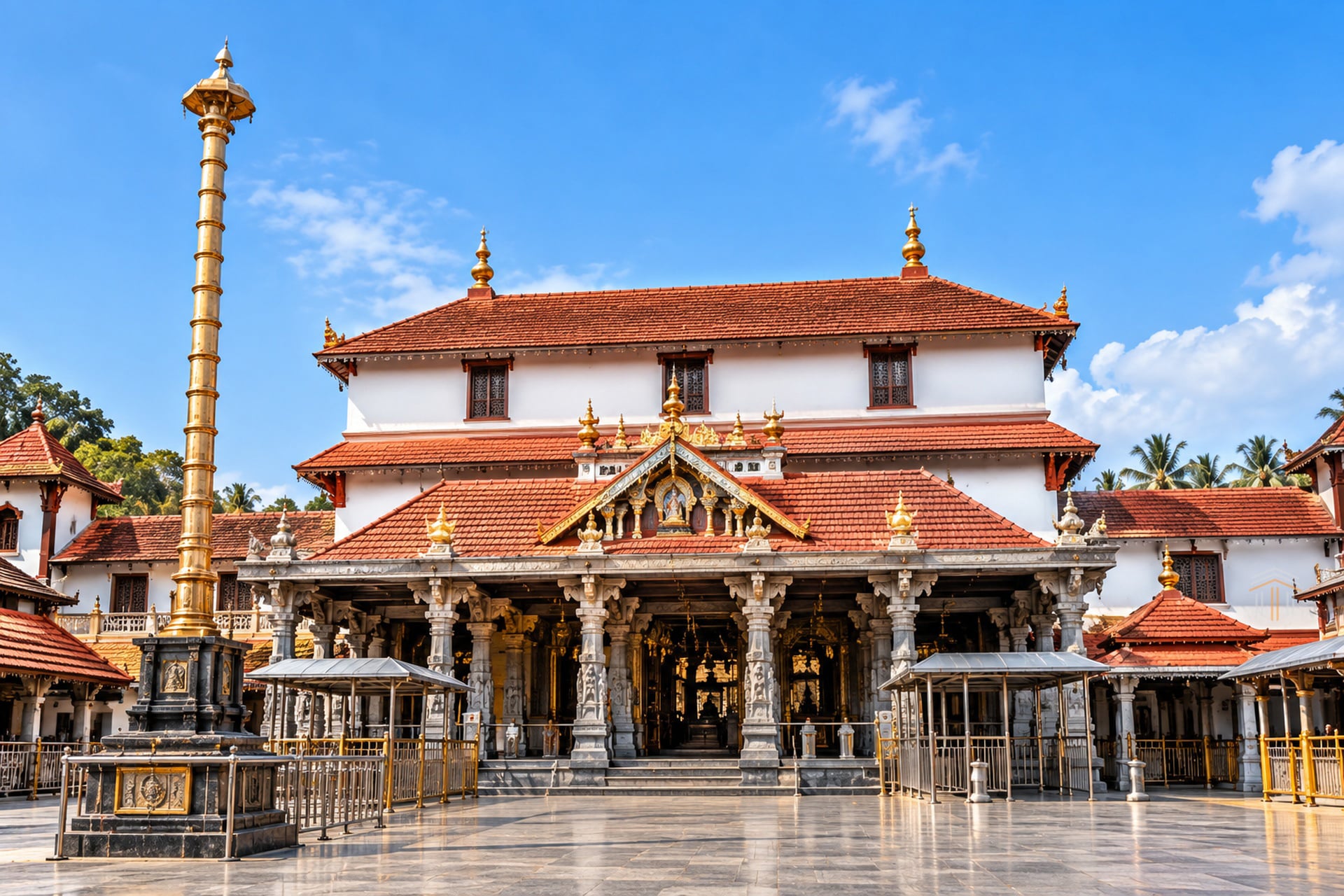
The architecture of Shri Kshetra Dharmasthala Temple reflects the traditional South Indian temple style, with influences of Karnataka’s regional architectural traditions. The temple complex is centered around the sacred shrine of Lord Manjunatha, a form of Lord Shiva, and features a distinctive entrance, traditional wooden elements, carved pillars, and a spiritually designed temple. The architecture combines simplicity with religious grandeur, creating a serene atmosphere for devotees. The temple is also notable for its unique religious tradition, where Shaiva worship is conducted under the administration of the Jain Heggade family. Surrounding structures, sacred spaces, and the well-maintained temple complex add to its cultural and spiritual importance, making Shri Kshetra Dharmasthala a significant center of faith, heritage, and traditional temple architecture in Karnataka.
Sanctum
The Sanctum Sanctorum (Garbhagriha)
The heart of the temple houses the Shiva Linga of Lord Manjunatha, enshrined in the Garbhagriha. This inner sanctum is simple yet profound, reflecting the temple's emphasis on spiritual purity over grandiosity. The sanctum is constructed with granite and decorated minimally to focus the devotee's attention on the divine presence. The cool, dimly lit chamber evokes a deep sense of reverence and meditation.
Courtyard
Outer Courtyard (Prakaram)
The temple's prakaram surrounds the sanctum, providing space for circumambulation (pradakshina). This courtyard is paved with stone and bordered by pillared corridors that shelter devotees during festivals and rituals. The simplicity of the courtyard design encourages collective devotion and reflects the temple's inclusive philosophy.
Pillared Halls
Mandapa and Sabha Mandapa
The temple includes open pillared halls or mandapas, used for congregational worship and cultural gatherings. These halls are crafted from stone and wood, featuring intricately carved pillars with motifs from Hindu mythology. The mandapas serve as venues for religious discourses, music, and dance during festivals, enhancing the temple's role as a cultural hub.
Sacred River
Sacred River (Nethravathi)
Rather than a temple tank, Dharmasthala's purification tradition centers on the Nethravathi River flowing beside the temple town. Pilgrims traditionally bathe at its ghats before darshan, symbolizing the cleansing of body and mind - a practice considered integral to the pilgrimage experience. The river holds sacred significance for the temple and is officially recognized on the temple's own website as "the holy river" of Dharmasthala.
Sculpture
Iconography and Deity Sculptures
The temple features sculptures and reliefs of Lord Manjunatha and other associated deities carved in granite. The artistry is understated but powerful, emphasizing symbolic elements like the serpent, trident, and crescent moon. These sculptures reflect the temple's deep Shaiva tradition while maintaining stylistic simplicity.
Heggade Residence
The Ancestral House of the Heggade Family
Adjacent to the temple is the Heggade family residence, architecturally blending traditional Kannada and Jain styles. This complex includes prayer halls, guest quarters, and spaces for administrative functions, reflecting the hereditary stewardship that has preserved the temple's legacy.
Natural Surroundings
Temple Landscape and Gardens
The temple complex is set amidst lush greenery and gentle hills, creating a tranquil natural backdrop. Well-maintained gardens and tree-lined pathways within the temple premises offer devotees a peaceful environment for reflection and meditation, connecting spirituality with nature.
Interesting facts

Uniquely, the Sri Manjunatha Temple is managed by a Jain family (the Heggade lineage) while the daily rituals are performed by Vaishnava Brahmins, and the deity worshipped is Lord Shiva. This rare coexistence of Jain administration and Hindu worship symbolizes interfaith harmony and tolerance.
Deities & Shrines
Lord Ganapathi (Ganesha)
A separate shrine is dedicated to Lord Ganapathi, the remover of obstacles and the god of beginnings. Devotees offer prayers to him before undertaking any rituals, seeking his blessings for success and prosperity. His presence is vital to temple rituals and festivals.
Goddess Ammanavaru (Parvati)
The temple includes a shrine to Goddess Ammanavaru, considered a form of Parvati, the divine consort of Lord Shiva. She represents Shakti (divine feminine energy) and is worshipped for health, fertility, and protection. Her shrine adds balance to the divine energies within the temple.
The Dharma Daivas (Guardian Spirits)
Unique to Dharmasthala, the temple also honors four Dharma Daivas Kalarahu, Kalarkayi, Kumaraswamy, and Kanyakumari who are considered guardian spirits. These deities are central to the temple's spiritual heritage and are revered as protectors of dharma and justice in the region.
Nandi - The Sacred Bull
As the vahana (vehicle) of Lord Shiva, Nandi has a prominent statue facing the sanctum. Devotees whisper their wishes into Nandi's ears, believing that he conveys them directly to Lord Manjunatha. Nandi represents unwavering devotion and loyalty.
Darshan & Service Offerings
| Service | Timing | Price | Notes |
|---|---|---|---|
| Free Darshan | General temple hours | Free | Devotees can have darshan of Lord Manjunatha without any charge during the temple’s regular visiting hours. The temple follows an organized queue system to accommodate devotees, particularly during weekends and major festivals. |
| Seegra Darshan | Available during designated darshan hours | Paid seva/darshan - as applicable | Seegra Darshan provides devotees with a quicker darshan experience through a separate arrangement, helping reduce waiting time. It can be particularly convenient for elderly devotees and those with limited time. |
| Shatharudra Abhisheka | As per temple seva schedule | As applicable | A sacred ritual dedicated to Lord Manjunatha, featuring the chanting of Rudra mantras and ceremonial abhisheka. Devotees may participate in this seva as an offering for divine blessings and spiritual well-being. |
| Panchamritha Abhisheka | As per temple seva schedule | As applicable | A traditional abhisheka in which the deity is ceremonially offered Panchamritha, a sacred mixture prepared from five auspicious ingredients. Devotees perform this seva as an expression of devotion and reverence. |
| Karpoora Arathi | As per daily temple schedule | As applicable | Karpoora Arathi is a devotional offering performed with camphor before Lord Manjunatha. Devotees can sponsor this seva as a prayer for blessings, prosperity, and spiritual well-being. |
Visitor information
Location
Sri Manjunatha Temple is located in Dharmasthala, a prominent pilgrimage town in Dakshina Kannada district, Karnataka. Nestled in the foothills of the Western Ghats, it lies about 75 km from Mangalore, the nearest major city with an airport and railway station. The temple is well-connected by road and is a part of many spiritual circuits in Southern Karnataka.
Ideal Visiting Season
The best time to visit the temple is October to March, when the weather is cooler and conducive for travel. Major festivals like Maha Shivaratri and Laksha Deepotsava (November-December) offer vibrant cultural experiences and spiritual ambiance.
Traditional Dress Guidelines
Men are required to remove their shirt and banian (vest) before entering the sanctum sanctorum - this is mandatory, not optional. Half pants for men and nighties for women are not permitted for darshan. Women are encouraged to wear sarees or salwar kameez. Short skirts, sleeveless tops, and shorts are discouraged to maintain temple decorum.
Daily Opening Hours
The temple remains open from 6:30 AM to 11:00 AM, then 12:15 PM to 2:30 PM (with a brief closure around 12:00-12:15 PM for Mahapooja), and again from 5:00 PM to 8:30 PM daily. Special poojas and rituals may alter these timings on festival days. It is advised to check in advance during peak seasons.
Entry Fee and Access
Entry is free for all devotees. The temple does not charge for general darshan, though specific sevas, rituals, and poojas can be availed by purchasing tickets at the temple's counter or online through the temple trust's portal.
Photography Rules
Photography and videography are strictly prohibited inside the temple premises. Mobile phones are not permitted on the temple premises at all - visitors are advised to securely store them (e.g., in a vehicle or with belongings left outside) rather than simply switching them to silent.
Accessibility for Seniors and Differently-Abled
Specific accessibility arrangements (ramps, wheelchairs, support staff) could not be independently confirmed. Visitors requiring accessibility assistance are advised to contact the temple office directly in advance to confirm current arrangements.
Facilities for Pilgrims
Dharmasthala Temple offers several facilities including restrooms, drinking water stations, and a massive Annadanam (free meal) hall that serves over 25,000 devotees daily, with capacity scaling to 30,000 - 70,000 during major festivals.
Getting Around Dharmasthala
Local transport includes auto-rickshaws, taxis, and buses that operate regularly between the temple and nearby towns such as Beltangady and Mangalore. Pilgrims can also hire private vehicles or travel through KSRTC buses, which have regular services from all major cities in Karnataka.
Location
Dakshina Kannada, Karnataka, India
Best Time to Visit
Ideal Months for Comfortable Weather
The best time to visit Dharmasthala is from October to March, when the climate is cool and pleasant. This season offers a comfortable atmosphere for darshan, temple exploration, and the scenic beauty of the Western Ghats.
Maha Shivaratri - The Grand Celebration
Maha Shivaratri (usually in February or March) is the most significant festival celebrated at the temple. Devotees from across India gather for all-night vigils, special poojas, and cultural programs, making it a spiritually charged time to visit.
Laksha Deepotsava - Festival of Lights
Held in November-December, Laksha Deepotsava is a unique festival where thousands of oil lamps are lit across the temple complex. The visual and spiritual grandeur of this event draws large crowds and is a once-in-a-lifetime experience.
Quiet Visits During Monsoon
Visiting during the monsoon season (June to September) offers a peaceful and lush green environment. While there may be occasional rain, crowds are thinner, making it ideal for those seeking quiet darshan and spiritual reflection.
Nearby places
Shri Bhagwan Bahubali Monolithic Statue
1 km
- If you are visiting Dharmasthala Temple, the Bahubali Statue is very close-about 1 km away. You can visit it conveniently as part of your Dharmasthala trip.
Shree Rama Kshethra
3.6 km
- Shree Rama Kshethra is very close to Dharmasthala Temple, so you can easily visit it during the same trip.
Festivals & culture
Sri Dharmasthala Manjunatha Swamy Temple is known for its grand festivals and traditional religious celebrations, with the annual Laksha Deepotsava being one of the most significant events. The five-day festival features the lighting of thousands of lamps, special poojas, cultural programs, religious discourses, and processions. Other important celebrations include Maha Shivaratri and the annual Manjunatha Swamy celebrations, attracting devotees from across Karnataka and beyond. These festivals beautifully showcase the temple’s rich spiritual traditions, cultural heritage, and spirit of devotion.
Laksha Deepotsava
November-December (last five days of Kartika Maasa)
The temple's grand annual festival of lights, where the Lord's statue is carried in procession around the sanctum and temple complex, followed by the Kshetrapaala pooje and the lighting of a hundred thousand lamps across the complex. The festival is coupled with the Sarva Dharma Sammelana and Sahitya Sammelana (interfaith and literary conferences), featuring handicraft exhibitions, folk dances, harikathas, and bhajans.
Shivarathri (with Car Festival)
February-March (Phalguna)
The temple's most significant Shaiva festival, combining the car festival (Rathotsava) - in which the decorated chariot of Lord Manjunatha is pulled through the temple streets - with night-long bhajans and special poojas in reverence of Lord Manjunatha Swamy.
Additional information
Temple Timings
he temple opens at 4:00 AM for purification rituals, with darshan from 6:30 AM – 11:00 AM, then 12:15 PM – 2:30 PM (a brief closure around 12:00–12:15 PM for Mahapooja), and again 5:00 PM – 8:30 PM in the evening. Timings may vary during festivals -confirm via the official website before visiting.
Dress Code for Devotees
Devotees are expected to wear modest, traditional attire. Men must remove their shirt and banian (vest) before entering the sanctum sanctorum -this is mandatory. Half pants for men and nighties for women are not permitted for darshan. Women should wear sarees, salwar kameez, or similar modest attire.
Official Temple Website
Sannidhana/Seegra Darshan (Special Darshan)
A faster darshan option is available for those wishing to avoid long queues, arranged via a separate booking process. The temple's official Seva page does not publish fixed rates and notes that pricing is subject to change without notice -confirm current fees directly with the temple.
Temple Facilities for Devotees
The temple offers guest houses and dharmashalas run by the trust (including Ganga, Kaveri, Narmada, and nine modern guest houses like Sannidhi and Netravathi), free daily Annadanam serving 25,000+ devotees, and restrooms along the darshan queue line. Note: bags of any kind are not allowed inside the temple for security reasons.
Major Festivals
The temple's key annual festivals are Laksha Deepotsava (Nov–Dec, the festival of a hundred thousand lamps), Shivarathri combined with the Car Festival/Rathotsava (Feb–Mar), Chaandramana Ugadi (Mar–Apr), and the nine-day Annual Jathre (April).
Photography Guidelines
Photography and videography are strictly prohibited inside the temple premises. Mobile phones are not permitted on the temple premises at all -not just switched to silent.
Parking Facilities
Free parking lots are available near the temple (e.g., near the Manjusha Museum and opposite the temple), with Google reviews confirming no parking fee at the main lots. Expect heavy congestion during festivals.
Heggade Family & Hereditary Dharmadhikari
Unlike temples with rotating monastic administration, Dharmasthala has been continuously managed for over 800 years by the Jain Heggade family as hereditary Dharmadhikari (chief administrator), currently Dr. D. Veerendra Heggade (since 1968), while Vaishnava Brahmin priests conduct the Shaiva rituals.
Temple facilities
Rest Areas
Seating areas are generally provided for devotees to rest during their visit, particularly useful during peak pilgrimage hours; specific arrangements were not independently confirmed by an official source, so availability may vary by location within the complex.
Drinking Water
Drinking water is available at points within the temple complex; carrying your own water is advisable during peak hours and festivals given the large crowds.
Sanitary Facilities
Restrooms are available along the darshan queue line, per the temple's official facilities information, as well as near the main parking areas close to the temple entrance.
Pilgrim Lodging
The temple trust (Sri Dharmasthala Manjunatheshwara Trust) operates a wide range of accommodation, including older dharmashalas — Ganga, Kaveri, and Narmada — plus nine modern guest houses: Sannidhi, Netravathi, Gayathri, Vaishali, Saketha, Gangothri, Sharavathi, Rajathadri, and Sahyadri. Rooms range from budget non-AC options (from ~₹1,000) to AC categories (~₹1,500-2,000). Booking opens online 20 days in advance via the official SDM portal, with a limited walk-in quota also available.
Organized Queue System
The temple maintains a structured queue system for darshan, with official rules explicitly prohibiting queue-jumping. Cooperation with temple volunteers and staff is expected, especially during peak hours and festivals like Laksha Deepotsava and Maha Shivaratri.
Pooja and Souvenir Shops
Local shops near the temple sell pooja materials, garlands, and general items — for example, Sri Guru Raghavendra Flowers and Decorators (open 3:00 AM-9:30 PM) near Temple Road, and general stores like Siri Dharmasthala Store. A dedicated souvenir/handicraft bazaar was not independently confirmed; Dharmasthala's shopping scene leans toward general stores and flower vendors rather than a large souvenir market.
No Bags Allowed Inside Temple
Bags of any kind are not permitted inside the temple premises for security reasons. Devotees must arrange to leave bags outside before joining the darshan queue — no official temple-run cloakroom was independently confirmed.
Emergency services
Government Hospital Dharmasthala
1.1 km
Contact
N/A
- Public hospital offering general medical services and emergency care for the surrounding region.
Top picks

Dharmasthala Neer Dosa
A popular breakfast dish in the region, neer dosa is light and easy to digest, making it a favorite among pilgrims and visitors alike.

Bisi Bele Bath
Served hot and often accompanied by papad or yogurt, this wholesome meal is a staple of South Karnataka cuisine.
Visitor guide
Dharmasthala Bus Stand
Within walking distance of the temple (under 1 km)
- The local bus stand serving Dharmasthala town, offering frequent local and intercity buses. Auto rickshaws and taxis are easily available for last-mile connectivity to the temple.
Videos
Third-party videos may include ads or external commentary.
Frequently Asked Questions
Shri Kshetra Dharmasthala is located in Dharmasthala, Dakshina Kannada district, Karnataka, India. It is one of the most important pilgrimage destinations in Karnataka.
Shri Kshetra Dharmasthala is famous for its unique tradition of religious harmony, where Lord Manjunatha, a form of Lord Shiva, is worshipped under the management of the Jain Heggade family. The temple is also renowned for its charity, annadanam, and social service activities.
The main deity at Dharmasthala Temple is Lord Manjunatha, a form of Lord Shiva. The temple also has important shrines dedicated to other deities, including Ammanavaru and the four Dharma Daivas.
The history of Dharmasthala dates back several centuries. The Kshetra developed into an important pilgrimage center through the devotion and service of the Heggade family and is known for preserving traditions of justice, charity, and religious harmony.
The special feature of Dharmasthala Temple is its blend of Shaiva worship, Jain administration, and local traditions. The temple is also well known for its free meals, charitable activities, and the annual Laksha Deepotsava celebration.
Dharmasthala Temple generally opens early in the morning and remains accessible to devotees throughout the day, with specific timings for darshan, poojas, and rituals. Visitors should check the latest official timings before planning their visit.
Yes, Shri Kshetra Dharmasthala is widely known for its free Annadanam, where vegetarian meals are served to devotees. Annadanam is an important part of the temple's tradition of service and hospitality.
Shri Kshetra Dharmasthala celebrates several important festivals and religious events, including Maha Shivaratri, Laksha Deepotsava, and the annual festival of Lord Manjunatha. These occasions attract large numbers of devotees.
Shri Kshetra Dharmasthala can be reached by road from Mangaluru, Bengaluru, and other major cities in Karnataka. The nearest major airport is Mangaluru International Airport, while Ujire is a nearby town with good road connectivity.
Popular places to visit near Dharmasthala include Bahubali statue at Ratnagiri, Manjusha Museum, Netravathi River, and the nearby town of Ujire. Visitors can also explore other spiritual and cultural attractions in the region.