
25°C
Tirupati
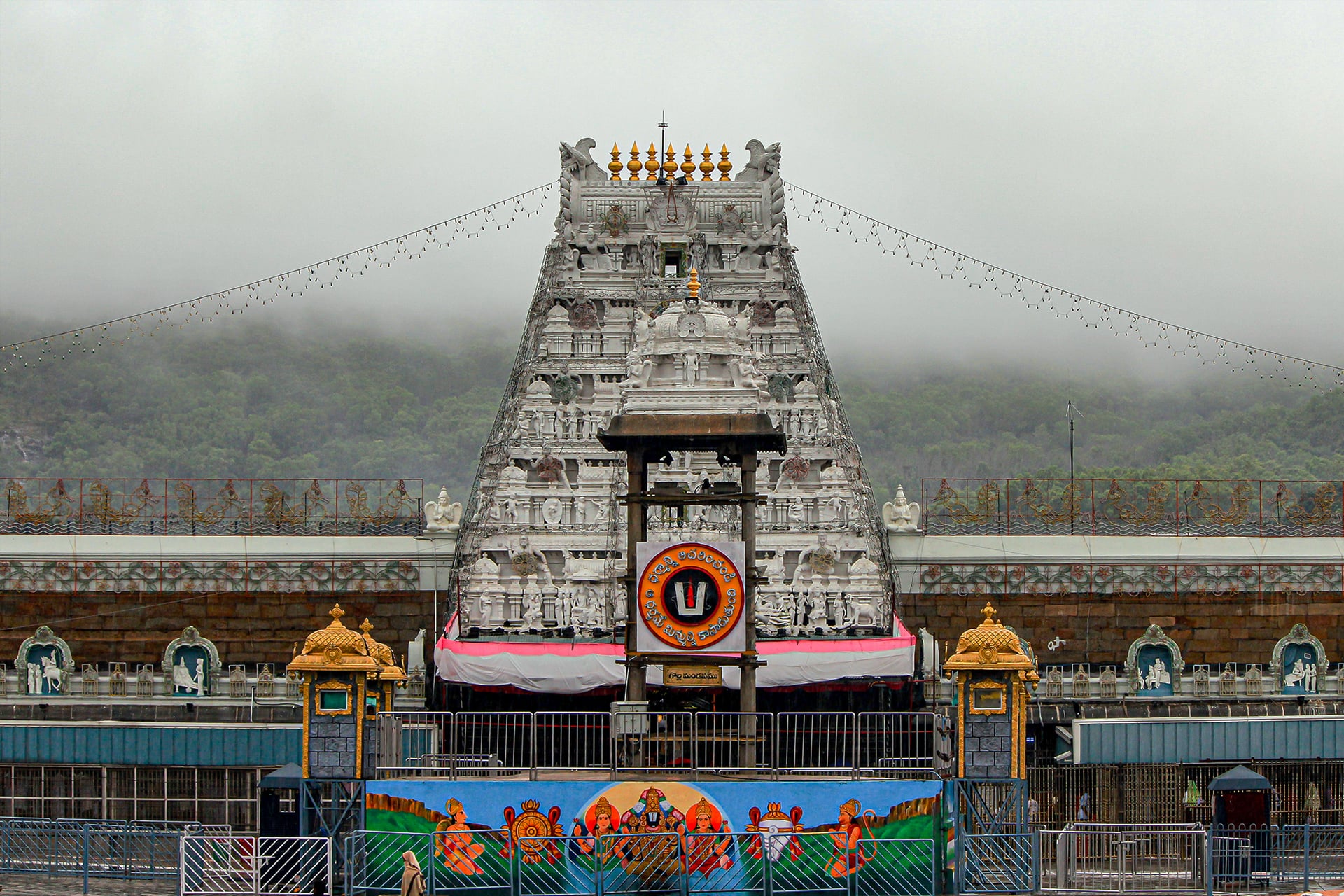
Tirupati Balaji Temple
 Tirupati, Andhra Pradesh, India
The sacred abode of Lord Venkateswara, atop Tirumala Hills, welcomes millions of devotees yearly seeking blessings and peace at one of the world's richest and most-visited pilgrimage sites.
- ReligionHindu
- DeityLord Venkateswara
- Timings02:30 AM - 01:00 AM
About the temple
About the temple
Tirupati Balaji Temple, also known as the Sri Venkateswara Swamy Temple (or Tirumala Venkateswara Temple), is one of the most revered pilgrimage sites in India. Located atop the Tirumala Hills in Chittoor district, Andhra Pradesh, the temple is dedicated to Lord Venkateswara (also called Balaji, Govinda, or Srinivasa), an incarnation of Lord Vishnu believed to have appeared on earth to protect humanity during the Kali Yuga. Renowned for its spiritual significance, distinctive Dravidian architecture, and divine atmosphere, the temple draws an estimated 30,000-40,000 devotees daily (rising to around 75,000 on New Year's Day), making it the most visited pilgrimage site in the world and, with a net worth estimated in the tens of billions of dollars, also the richest temple in the world. The temple is managed by the Tirumala Tirupati Devasthanams (TTD), under the Andhra Pradesh Government.
Tirupati Balaji Temple
Tirupati Balaji Temple
The Living Legacy Of Tirupati Balaji Temple In Numbers
Discover the spiritual grandeur of Tirupati Balaji Temple - the world's richest and most visited pilgrimage site, home to the self-manifested Lord Venkateswara. From its ancient Dravidian architecture to the millions of devotees it blesses each year, Tirumala continues to stand as a living testament of faith and devotion.
- Estimated Net Worth, Making It the World's Richest Religious Institution
- ₹2.5–3 lakh crore
- Approximate Number of Devotees Visiting Annually
- 30-40 Million
- Approximate Number of Devotees Visiting Daily
- 50000-100,000+
- Height of the Self-Manifested (Swayambhu) Idol of Lord Venkateswara
- 10 ft
- Laddus Prepared Daily in the Temple's Potu (Kitchen)
- 3.5 Lakh+
- Duration of the Grand Annual Brahmotsavam Festival
- 9 Days
- Tonsured Hair Sold in 2019 Alone, Fetching $1.6 Million
- 157 Tons
- urviving Annamacharya Keertanas (Devotional Songs), Out of an Estimated 32,000 Composed
- 12000+
Estimated Net Worth, Making It the World's Richest Religious Institution
Approximate Number of Devotees Visiting Annually
Approximate Number of Devotees Visiting Daily
Height of the Self-Manifested (Swayambhu) Idol of Lord Venkateswara
Laddus Prepared Daily in the Temple's Potu (Kitchen)
Duration of the Grand Annual Brahmotsavam Festival
Tonsured Hair Sold in 2019 Alone, Fetching $1.6 Million
urviving Annamacharya Keertanas (Devotional Songs), Out of an Estimated 32,000 Composed
Historical Background
Tirumala Venkateswara Temple in Andhra Pradesh is one of India’s most revered Vaishnavite pilgrimage centres, dedicated to Lord Venkateswara, a form of Lord Vishnu. With recorded endowments dating to the 10th century, the temple grew through centuries of patronage from the Cholas, Vijayanagara rulers, and other South Indian dynasties. Extensive development under the Vijayanagara Empire helped shape the magnificent temple complex seen today. Since the establishment of Tirumala Tirupati Devasthanams (TTD) in 1933, the temple has been administered through a structured institutional system. Its enduring rituals, including Suprabhatam, Brahmotsavam, and Vaikunta Ekadashi, continue to draw millions of devotees each year.
9th-10th Century - Early Foundations
9th-10th Century - Early Foundations
First recorded endowment made by Pallava queen Samavai in 966 CE, who donated jewels and land parcels (10 and 13 acres) for temple festivals. The Pallava dynasty (9th century) and early Chola dynasty (10th century) become committed patrons, establishing the temple as a growing South Indian Vaishnavite center.11th to 13th Century - Chola Dynasty Contributions
11th to 13th Century - Chola Dynasty Contributions
Chola rulers, including Rajendra Chola I, make significant donations and endowments - a dated inscription from 1019 CE (his 7th regnal year) at the temple records donations and even references the formation of a committee to oversee temple conduct and offerings. The temple gains further prominence as a major South Indian Vaishnavite center, with the Reddi kingdom (12th-13th centuries) also contributing.14th to 17th Century -Vijayanagara Empire's Patronage
14th to 17th Century -Vijayanagara Empire's Patronage
Krishnadevaraya (1509-1529 CE) donates gold and jewels on multiple visits, gilds the Vimana (Ananda Nilayam), and commissions statues of himself and his consorts within the temple. Massive expansions of the temple complex take place, including prakara walls, mandapas, and gopurams. Temples in Tirupati town are also constructed (Govindaraja Swamy Temple, Kapila Theertham). Tirumala becomes a major spiritual and cultural center under sustained Vijayanagara patronage.1600s to 1700s - Post-Vijayanagara Patronage
1600s to 1700s - Post-Vijayanagara Patronage
After the empire's decline, the Kingdom of Mysore and the Gadwal Samsthanam continue to donate ornaments and valuables, sustaining the temple's wealth and maintenance, though large-scale expansion slows.1801 to 1843 - Early Colonial Era
1801 to 1843 - Early Colonial Era
The East India Company takes control of temple revenues. Bruce's Code (1821) is established to manage temple finances and rituals under British oversight.1843 to 1933 - Hathiramji Muth Administration
1843 to 1933 - Hathiramji Muth Administration
The East India Company transfers temple administration to the Mahants of Hathiramji Muth, who govern the temple as Vicaranakartas for six generations, until 1933.1933 - Formation of Tirumala Tirupati Devasthanams (TTD)
1933 - Formation of Tirumala Tirupati Devasthanams (TTD)
The TTD Act is passed by the Madras Presidency Government, ending Mahant rule. TTD becomes the administrative body for Tirumala and Tirupati temples, with a structured committee taking charge of rituals, finances, and development.1951 - Hindu Religious and Charitable Endowments Act
1951 - Hindu Religious and Charitable Endowments Act
The 1933 Act is superseded by the Madras HR&CE Act of 1951, placing administration under a five-member Board of Trustees appointed by the state government.1966 - AP State Endowments Department
1966 - AP State Endowments Department
The temple is placed under direct state control via the Andhra Pradesh Charitable and Hindu Religious Institutions and Endowments Act, with an expanded board of up to 11 members.1979 - Modern TTD Act
1979 - Modern TTD Act
The 1966 Act is rolled back and replaced with a new TTD Act, establishing the modern governance structure - an Executive Officer, Chairman, and board members nominated by the Andhra Pradesh Government - that continues to administer the temple today.1980s to 2000s - Major Modernization
1980s to 2000s - Major Modernization
Pilgrim facilities, queue systems, annadanam halls, and transportation services are developed. TTD expands globally with satellite temples and cultural missions.Present Day (2020s)
Present Day (2020s)
Tirupati Balaji Temple is one of the richest religious institutions in the world, with a net worth estimated at over ₹2.5 lakh crore. It receives an estimated 30 - 40 million devotees annually (50,000 - 100,000 daily, spiking to 500,000+ during Brahmotsavam). TTD operates educational institutions, hospitals, Vedic universities, and free meal programs. Ancient traditions like Suprabhatam, Brahmotsavam, and Vaikunta Ekadashi continue unbroken.


Synopsis
Tirupati Balaji Temple, officially known as Sri Venkateswara Swamy Temple, is located in Tirumala, near Tirupati in Andhra Pradesh. It is one of the most important and most-visited pilgrimage sites for Hindus across the globe, drawing over 25 million devotees each year to seek the blessings of Lord Venkateswara, an incarnation of Lord Vishnu.
The temple's origins are deeply rooted in Hindu mythology. According to the Sri Venkatachala Mahatyam (part of the Skanda Purana) and various Puranas, Lord Vishnu incarnated as Venkateswara during the Kali Yuga to guide and protect humanity. He is believed to have settled on the Seshachalam Hills - specifically on Venkatadri, the seventh of its seven peaks - making the site sacred. The presiding deity is considered Swayambhu (self-manifested, not sculpted by human hands), a belief central to the temple's sanctity. This divine presence led to the establishment of the temple, which has been a significant pilgrimage center for centuries.
British Administration: In the early 19th century, the East India Company took over the temple's administration, implementing Bruce's Code in 1821 to regulate temple finances and rituals.
In 1843, the East India Company transferred temple administration to the Mahants of Hathiramji Muth, who governed the temple as Vicaranakartas for six generations, until 1933.
In 1933, the Tirumala Tirupati Devasthanams (TTD) was established under the TTD Act, ending Mahant rule and creating a structured administrative body to manage the temple's operations, preserve its traditions, and facilitate pilgrim services.
The temple showcases Dravidian architecture, characterized by intricate carvings, towering gopurams (gateway towers), and the gold-plated Ananda Nilayam. The sanctum sanctorum houses the self-manifested idol of Lord Venkateswara, attracting millions of devotees annually.
Sacred significance
Divine Manifestation of Lord Venkateswara
Lord Venkateswara, the presiding deity, is believed to be the living form of Vishnu who descended to Earth during Kali Yuga to guide humanity. The temple is regarded as "Kaliyuga Vaikuntha," a sacred abode where divine grace flows abundantly.
Spiritual Fulfillment and Moksha
Tirumala is revered as a sacred site where sincere devotion and pilgrimage can lead to moksha (liberation). The spiritual energy of the deity is said to cleanse karmic burdens and elevate one's soul.
Power of Vows and Faith
Devotees make personal vows (mokku) to Lord Balaji, ranging from tonsuring their heads to donating ornaments or wealth. Fulfilling these vows is believed to invoke divine blessings and miracles in their lives.
Ritualistic Sanctity and Daily Sevas
The temple conducts a range of prescribed rituals based on Vaikhanasa Agama, including Suprabhata Seva, Thomala Seva, Archana, and Ekanta Seva. These rituals are seen as essential for spiritual purification and divine connection.
Architecture
The Tirupati Balaji Temple is an exquisite example of Dravidian architecture, featuring intricate sculptures, towering gopurams (gateway towers), and ornate pillars. The sanctum sanctorum houses the self-manifested idol of Lord Venkateswara, which is surrounded by a golden dome known as the Ananda Nilayam. The temple's massive Maha Dwaram (also called Padikavali or Simhadwaram) and Vimana are symbols of the temple's grandeur, while the Carved Pillars and Mandapams showcase skilled craftsmanship from centuries of royal patronage.
Layout
Layout
The Tirupati Balaji Temple follows the traditional Dravidian architectural style with a structured layout designed to enhance spiritual progression. The temple complex consists of multiple prakarams (enclosures), with the outermost prakaram symbolizing the material world and the innermost sanctum representing the divine abode of Lord Venkateswara. These prakarams host sub-shrines, mandapams, and ritual spaces, all meticulously designed according to Vastu Shastra to maintain cosmic harmony and facilitate the journey of the devotee from the external to the inner sanctum.
Gopurams
Towering Gopurams
The temple features gopurams (gateway towers), the primary entrance being the Maha Dwaram (also known as Padikavali or Simhadwaram) - a three-storied, 50-foot tower built during the 12th-13th centuries, flanked by panchaloha statues of Sankhanidhi and Padmanidhi, guardians of Lord Venkateswara's nine treasures. These towering structures are adorned with vibrant sculptures of gods, goddesses, and mythological figures, serving as symbolic gateways from the earthly realm to the divine presence of Lord Venkateswara.
Vimana
Golden Vimana
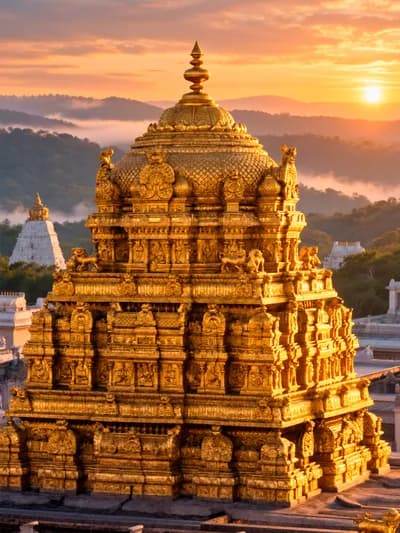
Above the sanctum sanctorum, the Ananda Nilayam, or golden Vimana, is a unique feature of the temple. It is made of gold and is considered one of the most important architectural components. The Vimana crowns the temple, symbolizing the celestial abode of Lord Venkateswara and reflecting the divine energy that radiates from the sanctum.
Pillars and Mandapams
Ornate Pillars and Mandapams
The temple is known for its intricately carved pillars and mandapams. Each pillar in the temple complex is designed with detailed sculptures depicting various deities, scenes from Hindu mythology, and divine figures. The mandapams (hallways) serve as ritual spaces for prayer, procession, and ceremonies, each contributing to the temple's majestic aesthetic.
Sanctum Sanctorum
Sanctum Sanctorum (Garbhagriha)
At the heart of the temple lies the Garbhagriha (sanctum sanctorum), which houses the self-manifested idol of Lord Venkateswara. The sanctum is a sacred and serene space, with a focus on the idol's divine presence. The architecture around the sanctum follows strict guidelines, with the Pradakshina Path (circumambulatory path) allowing devotees to walk around the deity, offering prayers and seeking blessings.
Ritual Spaces
Ritual Spaces and Theerthams
The temple complex includes several ritual spaces dedicated to various ceremonial practices, such as the Sahasra Deepam, and theerthams (sacred water bodies) scattered throughout the premises. These areas play a central role in conducting the daily rites and festivals. The temple's sacred water sources are linked to the divine power of the deity, with several small pushkarnas (holy ponds) offering spiritual purification to devotees.
Interesting facts

The idol of Lord Venkateswara in the sanctum of the Tirupati Balaji Temple is always adorned with a rich layer of gold and precious jewels, and the idol is continuously maintained with flower garlands and sandal paste. The idol is bathed with sacred water and decorated with new garments daily, ensuring that Lord Venkateswara is always presented in His most resplendent form for the devotees.
Deities & Shrines
Krishna and Rukmini in the Garbhagriha
Within the Garbhagriha (main sanctum), alongside Lord Venkateswara, are the idols of Lord Krishna and his consort Rukmini. Lord Krishna is depicted in the navanitha nritya (child's butter-dance) pose, with his left hand outstretched and left leg raised, while holding a dollop of butter in his right hand. Rukmini's idol holds a lotus in her left hand, with her right hand in a blessing pose.
Rama, Sita, Lakshmana, and Hanuman in the Garbhagriha
The Garbhagriha also houses beautifully crafted idols of Lord Rama, accompanied by Sita, Lakshmana, and Hanuman, installed alongside the main deity. Devotees seek blessings here for courage, righteousness, and peace, as Lord Rama is revered for his virtuous rule and devotion to dharma.
Lakshmi's Presence on the Main Idol
Unlike many temples, Tirumala has no separate shrine dedicated to Goddess Lakshmi. Instead, she is present symbolically as Vyuha Lakshmi, a small carved image on the right side of Lord Venkateswara's chest, near the Srivatsa mark on the main idol itself. Her incarnation, Padmavati, is worshipped separately at her own temple in Tiruchanur, about 5 km from Tirumala.
Other Deities in the Temple Complex
The temple complex also houses idols of Vishwaksena (Vishnu's commander-in-chief), Sugriva, and Angada. These were originally installed near the Ramar Medai (elevated platform of Rama) and later moved to a room outside the sanctum sanctorum, where pilgrims receive blessings and thirtam (holy consecrated water).
Chakrathalvar and Salagramulu
Among the temple's Pancha Beramulu (five principal deity forms), Chakrathalvar (the deified Sudarshana Chakra) and Salagramulu (sacred ammonite stones representing Vishnu) are also present within the temple, forming part of the complete ritual worship structure of the sanctum.
Darshan & Service Offerings
| Service | Timing | Price | Notes |
|---|---|---|---|
| Free Darshan (Sarvadarshan) | Varies daily; typically from 7:30 AM to late night (depending on crowd) | Free | Provides access to the main sanctum without any fee. This is the most common option for pilgrims. Queues can take several hours, especially on weekends, holidays, and festival days. No prior booking is needed. |
| Special Entry Darshan (Seegra Darshan) | 9:00 AM - 5:00 PM (in hourly slots, subject to availability) | ₹300 per person | Offers faster access to Lord Venkateswara's darshan through a dedicated queue at the ATC Car Parking Area (near VQC-I). Online booking via the TTD website is required, typically opening up to 3 months in advance. Complimentary laddu prasadam is provided after darshan (as with most darshan categories). |
| VIP Break Darshan (SRIVANI Trust) | Early morning hours (usually around 6:00 AM - 7:00 AM) | ₹10,000 SRIVANI Trust donation + ₹500 darshan ticket fee = ₹10,500 per person total | Reserved for donors under the SRIVANI Trust scheme, or protocol VIPs/those with official recommendation letters (who may bypass the donation requirement). Provides quick, less-crowded darshan with minimal waiting time. Limited daily quota (approx. 1,500 tickets across booking categories); often sells out within minutes of release. |
| Divya Darshan | Early morning to night (varies) | Free | For pilgrims who walk up the hills via Alipiri or Srivari Mettu footpaths. Tokens are issued along the way, granting darshan without charge. Prioritizes those taking the traditional pilgrimage route. |
| Senior Citizens and Differently-Abled Darshan | Typically twice daily (exact times may vary - check locally on arrival) | Free | Exclusive darshan facility for senior citizens (men 65+ years, women 60+ years) and people with disabilities, via the Supadam entrance. Valid identity or medical/disability proof is required. Limited slots available daily; unavailable on major festival days. |
| Infant Entry Darshan | Available via Supadam entrance (specific hours may align with the general Special Darshan window; confirm on arrival) | Free | Parents with infants (below 1 year) are allowed special access through a separate line at the Supadam entrance. No document required. Faster entry is provided to avoid discomfort for babies and mothers. |
Visitor information
Remove Footwear
Shoes and slippers must be removed before entering the temple premises. Footwear counters are available near the entrance.
Maintain Dress Code
Devotees are expected to wear traditional and modest attire. Men should wear dhoti or pyjama with upper cloth, and women should wear saree or salwar kameez.
Follow Queue Instructions
Always stay in the designated queue system. Follow the directions of temple staff and volunteers to ensure smooth and respectful movement toward the sanctum.
Respect Temple Customs
Maintain silence inside the sanctum area and respect the spiritual environment. Avoid pointing feet toward the deity or lying down inside the temple.
Deposit Offerings at Hundi
All monetary donations should be placed in the official Hundi boxes. Avoid giving money to individuals claiming to be intermediaries.
Declare Faith (Non-Hindu Visitors)
Non-Hindu devotees are required to sign a declaration form affirming their faith in Lord Venkateswara at the Vaikuntam Queue Complex before proceeding for darshan. This is a longstanding TTD policy applicable to all non-Hindu visitors.
Carry Valid ID Proof
Always carry a government-issued photo ID for verification during darshan or accommodation check-in. This is mandatory for special darshan and online bookings.
Use Official Booking Channels
Book darshan, accommodation, and sevas only through the official TTD website or mobile app to avoid fraud and unauthorized agents.
Cooperate with Security Checks
Security checks are mandatory at various points in the temple complex. Cooperate with security personnel for your safety and others.
Bathe Before Darshan
Pilgrims are expected to bathe and wear fresh clothes before entering the temple to maintain sanctity.
Use Cloakroom Facilities
Deposit any restricted items such as electronic devices, sharp objects, and extra baggage in the official cloakrooms available near the entry points.
Participate in Anna Prasadam
Avail the free meals provided by the temple (Annadanam) with gratitude. It is a sacred offering to the Lord and a part of temple tradition.
Be Punctual for Sevas
If you've booked a special seva (ritual), arrive at least 30-60 minutes early. Late arrivals may forfeit their booking.
Support Cleanliness
Use dustbins and sanitation facilities provided by TTD. Maintain the cleanliness of sacred spaces, public areas, and restrooms.
Respect Other Devotees
Be courteous and patient with fellow pilgrims. Avoid pushing or rushing in queues, especially in crowded conditions.
Location
Tirupati, Andhra Pradesh, India
Best Time to Visit
Festival Experience
For a spiritually uplifting experience, visit during Brahmotsavam (September-October), the grand annual festival of Lord Venkateswara. The temple hosts processions, rituals, and vibrant cultural performances that bring Tirumala to life.
Pleasant Weather
The best climate for a comfortable pilgrimage is from October to March. During these months, the temperature is mild, making it easier to explore the temple, attend darshans, and take part in outdoor spiritual activities.
Vaikuntha Ekadashi
Celebrated in December or January, Vaikuntha Ekadashi is one of the most auspicious days for darshan. On this day, the Vaikuntha Dwaram (Heavenly Gate) is opened, allowing devotees to symbolically enter Lord Vishnu's divine realm.
Rathasapthami Festival
Held in February, this unique festival is known as the "One-Day Brahmotsavam." Lord Venkateswara is taken out on seven different vahanas (divine chariots) from sunrise to sunset an unforgettable visual and spiritual spectacle.
Ugadi and Ram Navami
Visiting during Ugadi (Telugu New Year) in March-April or Ram Navami offers the chance to witness traditional rituals and festive joy. Special pujas, floral decorations, and devotional music fill the temple with spiritual energy.
Annamacharya Jayanti
In May, the birth anniversary of saint-poet Annamacharya is celebrated with musical tributes and spiritual gatherings. It's an ideal time for devotees interested in bhakti music and devotional literature.
Nearby places
Sri Padmavathi Ammavari Temple
5 km
- Located in Tiruchanur, this temple is dedicated to Goddess Padmavathi, the divine consort of Lord Venkateswara. It is customary for devotees to seek her blessings before ascending to Tirumala for Balaji darshan.
Sri Govindaraja Swamy Temple
1 km
- Situated in the heart of Tirupati, this ancient temple enshrines Lord Vishnu in the form of Sri Govindaraja Swamy. Known for its majestic gopuram and spacious courtyard, it is one of the oldest and largest temples in the city.
Sri Kapileswara Swamy Temple
4 km
- This temple is the only Shiva temple in Tirupati and is nestled at the foot of the Tirumala hills. It is dedicated to Lord Shiva and features a sacred waterfall called Kapila Theertham nearby, where devotees take holy baths.
Sri Kalyana Venkateswara Swamy Temple, Srinivasa Mangapuram
12 km
- Located on the outskirts of Tirupati, this temple is associated with Lord Venkateswara’s marriage to Goddess Padmavathi. It is especially visited by newlyweds and those seeking marital blessings.
Sri Prasanna Venkateswara Swamy Temple, Appalayagunta
16 km
- A serene and less-crowded temple where Lord Venkateswara is worshipped in a standing posture with the right hand in the blessing position (Abhaya Mudra). It is maintained by TTD and offers a peaceful darshan experience.
Sri Narayanavanam Temple
38 km
- Believed to be the site where Lord Venkateswara and Goddess Padmavathi's wedding took place, this temple is steeped in divine romance and historical significance.
Festivals & culture
The Tirupati Balaji Temple celebrates numerous grand festivals throughout the year, including Brahmotsavam, Vaikuntha Ekadashi, Rathasapthami, Pavithrotsavam, and Anivara Asthanam. These events are marked by elaborate processions, Vedic rituals, and devotional music and dance performances, drawing millions of pilgrims in vibrant spiritual celebration.
Brahmotsavam
September-October
The most significant and grand festival of Tirumala, celebrated for 9 days with daily vahana processions, chariot parades, special abhishekams, and spiritual discourses. Devotees gather in lakhs to witness the divine splendor of Lord Venkateswara.
Vaikuntha Ekadashi
December-January
Considered one of the holiest days, the Vaikuntha Dwaram (Heavenly Gate) is opened, symbolizing entry into Lord Vishnu's abode. Thousands participate in special darshans and rituals.
Rathasapthami
February
Known as the Mini Brahmotsavam, this one-day event includes Lord Venkateswara being taken out on seven vahanas from sunrise to sunset. A visually stunning and spiritually rich celebration.
Additional information
Official Temple Website
Darshan & Seva Booking
Devotees can book special darshan, seva, and accommodation online through the official TTD Seva Portal: tirupatibalaji.ap.gov.in
Hundi & Trust Donations
TTD accepts donations online for various trusts like Annadanam, Pranadana, and Veda Parirakshana, supporting pilgrim welfare and spiritual services. Visit: TTD Official Website
TTD Official App
Download the TTD official mobile app ("TTDevasthanams," launched in 2023 in partnership with Jio Platforms) from Google Play or App Store to access e-services, darshan bookings, e-Hundi donations, and live SVBC streaming.
TTD Contact Information
For queries, contact the TTD Call Centre at 1800-425-4141 (toll-free) or 155257 (official government-allotted pilgrim helpline), or email eottd@tirumala.org for support related to darshan, sevas, and accommodation.
SVBC Live Telecast
Daily rituals and sevas are broadcast live on Sri Venkateswara Bhakti Channel (SVBC), TTD's official 24-hour devotional channel. Also available via their YouTube channel: SVBC Live
Temple facilities
Cloak Room & Footwear Stand
Designated areas are available near the entrance for devotees to safely leave their footwear and store personal belongings during temple visits.
Waiting Rooms & Rest Areas
Comfortable waiting rooms and rest areas are provided for devotees who need to relax before or after darshan. These facilities are equipped with seating and basic amenities.
Free Meal Services
The temple offers free meals (Annadanam) to all devotees visiting the temple. This service is part of the TTD's welfare initiatives, and food is served daily at designated locations in the temple complex.
Information & Help Desks
Multiple information desks are set up at key locations throughout the temple complex to assist devotees with directions, booking details, and other inquiries regarding darshan and temple events.
First Aid & Medical Assistance
First aid centers are available within the temple complex, providing immediate medical care for devotees. Emergency medical services are also available 24/7 to ensure the well-being of pilgrims.
Senior Citizen Assistance
The temple provides special facilities for senior citizens, including wheelchair assistance and priority darshan lines, ensuring a comfortable and safe pilgrimage experience.
Emergency services
SVS Hospital
10 km
Contact
N/A
- A premier multi-specialty hospital offers advanced diagnostics, emergency services, and specialty treatments with 24/7 care.
Sree Sunshine Hospital
11 km
Contact
+91 8099937393
- providing general medical, surgical, and emergency services. Affordable care for all sections of society.
Top picks
Wooden Toys & Handicrafts
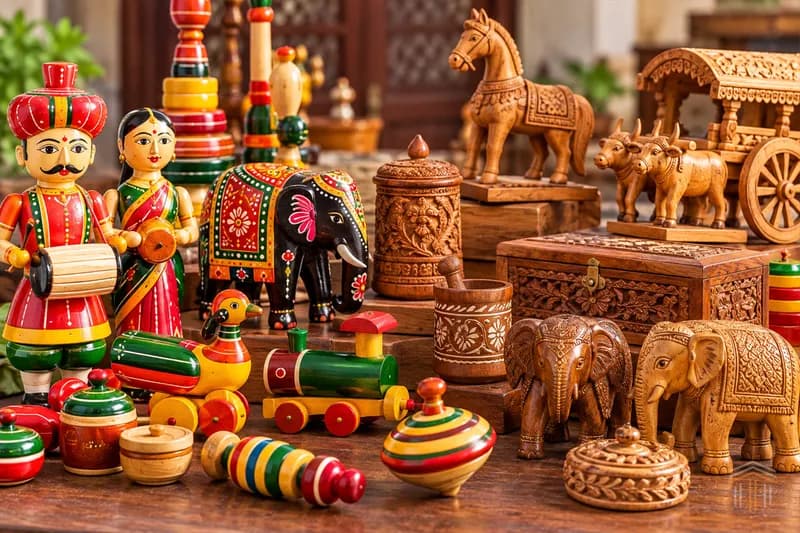
Tirupati and the wider Chittoor district are famous for red sanders (red sandalwood) woodcraft. You can buy intricately carved wooden idols of Lord Venkateswara, traditional mythology panels, and the region's signature "Raja-Rani" style handmade dolls and toys.
Visitor guide
Rambagicha Bus Stand
0.5 km
- Rambagicha Bus Stand is approximately 0.5 km from Tirupati Balaji Temple, making it a convenient nearby bus stop for visitors and devotees.
Tirupati Bus Stand
13 km
- The main bus terminal in Tirupati, offering frequent services to Tirumala, Tiruchanur, and Tirupati town. Local buses, autos, and share autos are easily available for reaching the temple complex.
Videos
Third-party videos may include ads or external commentary.
Frequently Asked Questions
Tirupati Balaji Temple, officially known as Sri Venkateswara Swamy Temple, is located in Tirumala, near Tirupati in Andhra Pradesh, India. The temple is situated on the Tirumala Hills and is one of the most visited Hindu pilgrimage sites in India.
Tirupati Balaji Temple is famous for Lord Venkateswara, a form of Lord Vishnu, its ancient religious traditions, grand rituals, and the large number of devotees who visit every year. The temple is also renowned for its offerings, including the famous Tirupati Laddu.
Lord Venkateswara, also known as Balaji, Srinivasa, or Venkatachalapati, is the main deity worshipped at Tirupati Balaji Temple. He is considered a manifestation of Lord Vishnu.
Tirupati Balaji Temple has a long and ancient history associated with Vaishnavism and the worship of Lord Venkateswara. The temple has received patronage and contributions from several South Indian dynasties and rulers over the centuries, contributing to its present grandeur.
Tirupati Balaji Temple is known for its powerful spiritual significance, elaborate daily rituals, traditional Vaishnavite worship, the sacred idol of Lord Venkateswara, and its location on the Tirumala Hills. The temple is also famous for its extensive charitable and religious activities.
Tirupati Balaji Temple follows a detailed daily schedule of darshan, sevas, and rituals. Timings can vary depending on the type of darshan and special occasions, so devotees should check the latest official schedule before planning their visit.
General temple entry is not typically charged, but different types of darshan, sevas, and special services may have separate fees. Devotees should check the latest official Tirumala Tirupati Devasthanams (TTD) guidelines for current booking details.
Tirupati Laddu is a famous prasadam offered at Sri Venkateswara Swamy Temple. It is prepared by the temple administration and is considered a sacred offering associated with the Tirupati pilgrimage.
The best time to visit Tirupati depends on weather, crowd levels, and festival schedules. Devotees seeking a relatively comfortable pilgrimage may prefer the cooler months, while those interested in major religious celebrations can plan around important festivals such as Brahmotsavam.
Tirupati can be reached by air, rail, and road. Tirupati Railway Station and Tirupati Airport provide convenient access to the region, while buses, taxis, and other transport services connect Tirupati with Tirumala Hills, where the temple is located.